
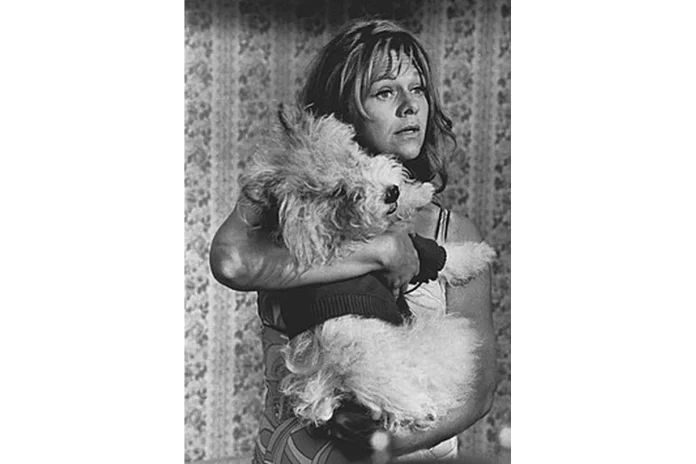
Estelle Parsons Bio
Estelle Parsons (born November 20, 1927) is an American actress whose career has spanned stage, film, and television for nearly seven decades. After initially studying law at Boston University, she changed course and pursued acting, eventually earning an Academy Award for Best Supporting Actress for her work in Bonnie and Clyde (1967). She has also built a substantial body of work behind the scenes as a Broadway director and as artistic director of the Actors Studio. Parsons remains widely recognized for her long-running role as Beverly Harris on the sitcom Roseanne and its spinoff The Conners.
Across her career, Parsons has moved fluidly between Hollywood, Off-Broadway, and regional theatre, earning critical recognition at every stop. She was inducted into the American Theatre Hall of Fame in 2004, an honor that reflects her lasting influence on American performing arts. Her work as a director, performer, and mentor has made her a respected figure in the industry well beyond her Academy Award-winning turn in the late 1960s.
Early Life and Background
Estelle Parsons was born on November 20, 1927, in Lynn Hospital in Lynn, Massachusetts. She was the younger of two children born to Eben Parsons, who was of English descent, and Elinor Ingeborg Parsons (née Mattsson), a native of Sweden. Her older sister, Elaine Parsons Ruggles, was born in 1923 and died in 1996. The family’s New England roots and her mother’s Swedish heritage gave Parsons a layered cultural background that informed her later artistic sensibilities.
As a young student, Parsons attended the Oak Grove School for Girls in Maine, where she first encountered structured theatrical training. After graduating from Connecticut College in 1949, she enrolled at Boston University School of Law and briefly studied law. She soon left those studies behind, working for a time as a singer with a band before committing fully to a career in acting in the early 1950s. This pivot from the legal profession to the stage set the foundation for a remarkable run in American entertainment.
Path to Acting
After settling on acting as her calling, Parsons moved to New York City and began working as a writer, producer, and commentator on The Today Show, gaining valuable on-camera experience. She made her Broadway debut in 1956 as part of the ensemble in the Ethel Merman musical Happy Hunting. Her Off-Broadway debut followed in 1961, and she soon collected her first major honor, a Theatre World Award in 1963 for her performance in Whisper into My Good Ear and Mrs. Dally Has a Lover.
Her momentum continued in 1964, when she won an Obie Award for Best Actress for her work in two Off-Broadway productions, Next Time I’ll Sing to You and In the Summer House. In 1967, she starred alongside Stacy Keach in the premiere of Joseph Heller’s play We Bombed in New Haven at the Yale Repertory Theatre. These early theatre credits established her as a serious dramatic actress and laid the groundwork for her move into film.
Estelle Parsons Career
Early Career (1956–1966)
Parsons’ earliest years in the industry were anchored by stage work. Her Broadway bow came in the ensemble of Happy Hunting in 1956, the same year she is generally credited with beginning her professional career. Throughout the early 1960s, she built a reputation in Off-Broadway circles, earning the 1963 Theatre World Award and the 1964 Obie Award for Best Actress. These honors positioned her as one of the most promising stage actresses of her generation.
During this period, Parsons also gained television exposure through appearances on programs like The Patty Duke Show and Love, American Style. Her work on The Today Show as a writer, producer, and commentator helped her develop a comfort with live performance that would later serve her in front of the camera. By the mid-1960s, she was ready to transition from the stage into major film productions.
Breakthrough (1967–1970)
Parsons achieved international recognition in 1967 with her portrayal of Blanche Barrow in the landmark crime film Bonnie and Clyde, opposite Warren Beatty and Faye Dunaway. Her performance earned her the Academy Award for Best Supporting Actress, the defining moment of her film career. The following year, she received another Academy Award nomination for Best Supporting Actress for her work in Rachel, Rachel (1968), directed by Paul Newman.
Throughout the late 1960s and into the 1970s, Parsons maintained a steady presence in film, taking on a variety of dramatic roles. She earned a BAFTA Award nomination for Watermelon Man (1970) and appeared in I Never Sang for My Father (1970). She also expanded into opera and classical theatre, playing Leokadia Begbick in the American premiere of the Weill–Brecht opera Rise and Fall of the City of Mahagonny in 1970 and appearing as Mrs. Peachum opposite Lotte Lenya in Threepenny Opera. On stage, she received Tony Award nominations for The Seven Descents of Myrtle (1968) and And Miss Reardon Drinks a Little (1971), cementing her reputation as a versatile dramatic actress.
Notable Works and Milestones
Beyond Bonnie and Clyde and Rachel, Rachel, Parsons has built a filmography that includes Two People (1973), For Pete’s Sake (1974), Dick Tracy (1990), and Boys on the Side (1995). On television, she became a household name as Beverly Harris on Roseanne and continued the role on The Conners. Her work as a director, including productions of Romeo and Juliet, Macbeth, and As You Like It on Broadway in 1986, made her the first woman invited to direct at the New York Shakespeare Festival. She also served as Artistic Director of the Actors Studio from 1998 to 2003.
Estelle Parsons Award Nominations
Estelle Parsons has earned a number of major award nominations across her career in film, television, and theatre. She was nominated for the Academy Award for Best Supporting Actress for Rachel, Rachel (1968) and received a BAFTA Award nomination for Watermelon Man (1970). On the stage, she has been nominated five times for the Tony Award, including four nominations for Lead Actress in a Play for The Seven Descents of Myrtle (1968), And Miss Reardon Drinks a Little (1971), Miss Margarida’s Way (1978), Morning’s at Seven (2002), and The Velocity of Autumn (2014), along with a Featured Actress nomination.
Estelle Parsons Awards Won
Parsons’ most celebrated win came at the 1967 Academy Awards, where she took home the Oscar for Best Supporting Actress for her role as Blanche Barrow in Bonnie and Clyde. She has also earned a Theatre World Award in 1963 and an Obie Award for Best Actress in 1964 for her Off-Broadway work in Next Time I’ll Sing to You and In the Summer House. In 2004, she was inducted into the American Theatre Hall of Fame, and in 2009 she received a Woman of Achievement Award from the Women’s Project Theater.
| Award | Wins | Year |
|---|---|---|
| Academy Award for Best Supporting Actress | 1 | 1967 |
| Obie Award for Best Actress | 1 | 1964 |
| Theatre World Award | 1 | 1963 |
| American Theatre Hall of Fame | 1 | 2004 |
Estelle Parsons Family
Parsons was born to Eben Parsons and Elinor Ingeborg Parsons (née Mattsson), and grew up with an older sister, Elaine Parsons Ruggles. In 1953, she married author Richard Gehman, and the couple had twin daughters, Abbie and Martha Gehman, before divorcing in 1958. Her grandson Eben Britton, the son of her daughter Abbie, played as a guard and tackle for the Chicago Bears and Jacksonville Jaguars, and was named after Estelle’s father.
Personal Life
In January 1983, after a partnership of ten years, Parsons married Peter Zimroth, a lawyer who had served as Assistant U.S. Attorney, Assistant District Attorney, and a court-appointed monitor of the NYPD’s stop-and-frisk policies. The couple adopted a son, Abraham, who was born in February 1983. Peter Zimroth died on November 8, 2021. Parsons has continued to balance her work as a director, theatre mentor, and actress with her family life throughout her long career.