
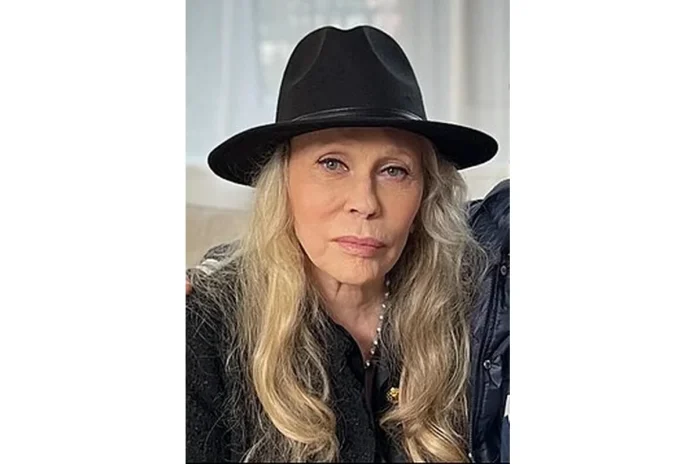
Faye Dunaway Bio
Dorothy Faye Dunaway (born January 14, 1941) is an American actress whose career has shaped American cinema from the late 1960s onward. She rose to international fame with her portrayal of outlaw Bonnie Parker in the crime film Bonnie and Clyde (1967), earning her first Academy Award nomination and a permanent place among the leading actresses of the New Hollywood era. Her commanding performances in Chinatown (1974), The Towering Inferno (1974), and Network (1976) established her as one of the most daring and influential screen actors of her generation.
Dunaway won the Academy Award for Best Actress for her role as the ruthless television executive Diana Christensen in Network. Over a career spanning more than six decades, she has worked in film, television, and theatre, building a body of work that includes Mommie Dearest (1981), The Handmaid’s Tale (1990), and Gia (1998). Known for her discipline, intensity, and willingness to take on complex, difficult characters, she remains one of cinema’s most enduring figures.
Early Life and Background
Dorothy Faye Dunaway was born on January 14, 1941, in Bascom, Florida. She is the daughter of Grace April Smith, a housewife, and John MacDowell Dunaway Jr., a career non-commissioned officer in the United States Army. Her parents married as teenagers in 1939 and later divorced in 1955. She has a younger brother, Mac Simmion Dunaway, who became a lawyer. Because of her father’s military postings, Dunaway spent much of her childhood traveling across the United States and Europe, with extended stays in Mannheim, Germany, and at Dugway Proving Ground in Utah.
While growing up, Dunaway studied ballet, tap, piano, and singing, and she graduated from Leon High School in Tallahassee, Florida. She went on to attend Florida State University and the University of Florida before earning her Bachelor of Fine Arts degree in theatre from Boston University in 1962. As a student, she trained with director Lloyd Richards and caught the attention of playwright Arthur Miller. She later studied at the American National Theater and Academy and at the HB Studio in New York City.
Soon after graduating, Dunaway joined the Lincoln Center Repertory Company under the direction of Elia Kazan. She soon made her Broadway debut as a replacement cast member in Robert Bolt’s drama A Man for All Seasons. She went on to appear in Arthur Miller’s After the Fall and in the award-winning Hogan’s Goat by Harvard professor William Alfred, who became a long-time mentor and spiritual guide.
Path to Acting
Dunaway’s early stage work in the 1960s laid the foundation for her screen career. Her Broadway performances drew strong reviews and introduced her to leading American directors. After her time at Lincoln Center, she continued to build her reputation through theatre work, including a 1973 Los Angeles production of Tennessee Williams’s A Streetcar Named Desire in which she played Blanche DuBois. Williams himself praised her performance and ranked it among the very best he had seen.
Her transition to film came in 1967, when she appeared in the comedy crime film The Happening and in Otto Preminger’s drama Hurry Sundown. The same year, director Arthur Penn cast her as Bonnie Parker in Bonnie and Clyde after seeing her early screen work. The role transformed her into a major star and earned her a BAFTA Award for Best Newcomer, a David di Donatello for Best Foreign Actress, and her first Academy Award nomination for Best Actress.
Following that breakthrough, Dunaway built a steady stream of leading roles across Hollywood and European productions, including The Thomas Crown Affair (1968), Little Big Man (1970), The Three Musketeers (1973), and The Four Musketeers (1974). These early films showcased her range, from stylish thrillers to revisionist westerns, and helped establish her as a dependable and bold leading actress.
Faye Dunaway Career
Early Career (1962-1967)
Dunaway’s professional career began on the New York stage, where she earned strong notices in A Man for All Seasons, After the Fall, and Hogan’s Goat. Her work in these productions led to her being cast by Elia Kazan and positioned her for a move into film. She made her screen debut in 1967 with The Happening and Hurry Sundown, demonstrating the poised screen presence that would soon make her famous.
Although her first film appearances were modest, they caught the attention of director Arthur Penn, who offered her the defining role of Bonnie Parker in Bonnie and Clyde. The performance earned her an Academy Award nomination for Best Actress, a BAFTA Award for Best Newcomer, and a Golden Globe nomination for New Star of the Year. The film was nominated for ten Academy Awards, including Best Picture, and elevated Dunaway to stardom almost overnight.
Breakthrough (1967-1976)
The success of Bonnie and Clyde made Dunaway one of the most sought-after actresses in Hollywood. She followed it with the stylish heist film The Thomas Crown Affair (1968), opposite Steve McQueen, in which her fashion and poise became cultural touchstones. She went on to star in Vittorio de Sica’s A Place for Lovers (1968), Elia Kazan’s The Arrangement (1969), and Arthur Penn’s revisionist western Little Big Man (1970).
After a string of more challenging projects in the early 1970s, Dunaway returned to prominence with the Richard Lester swashbuckler The Three Musketeers (1973) and its sequel The Four Musketeers (1974). She then delivered one of the defining performances of 1970s cinema as Evelyn Mulwray in Roman Polanski’s Chinatown (1974), a neo-noir mystery that earned her a second Academy Award nomination for Best Actress, as well as Golden Globe and BAFTA nominations.
That same year, she appeared in the disaster epic The Towering Inferno (1974), which became the highest-grossing film of the year. She also starred in Sydney Pollack’s political thriller Three Days of the Condor (1975). In 1976, she won the Academy Award for Best Actress for her portrayal of Diana Christensen in the Paddy Chayefsky satire Network, a role she pursued despite personal objections from those close to her.
Notable Works and Milestones
Among Dunaway’s most celebrated films are Bonnie and Clyde (1967), Chinatown (1974), The Towering Inferno (1974), Network (1976), and Mommie Dearest (1981). The American Film Institute ranked Bonnie and Clyde, Chinatown, and Network among the 100 greatest American films. Her work has been recognized with an Academy Award, three Golden Globe Awards, a BAFTA Award, and a Primetime Emmy Award.
Faye Dunaway Award Nominations
Dunaway has received multiple major award nominations across her career, including Academy Award nominations for Best Actress for Bonnie and Clyde (1968) and Chinatown (1975). She has also earned BAFTA, Golden Globe, and Screen Actors Guild nominations for leading and supporting roles in film and television, including a BAFTA nomination for Best Actor in a Leading Role for Born on the Fourth of July.
Faye Dunaway Awards Won
Dunaway won the Academy Award for Best Actress for Network in 1977, along with a Golden Globe Award for Best Actress in a Motion Picture Drama for the same role. She has received three Golden Globe Awards in total, a Primetime Emmy Award for Outstanding Guest Actress in a Drama Series for Columbo, a BAFTA Award, and a David di Donatello Award for Best Foreign Actress. She was also honored with a star on the Hollywood Walk of Fame in 1996, the Sarah Siddons Award for her stage work in Master Class, the Leopard Club Award, and a tribute at the Lumière Film Festival.
| Award | Wins | Year |
|---|---|---|
| Academy Award for Best Actress (Network) | 1 | 1977 |
| Golden Globe Award for Best Actress in a Motion Picture – Drama (Network) | 1 | 1977 |
| BAFTA Award for Best Newcomer (Bonnie and Clyde) | 1 | 1968 |
| Primetime Emmy Award for Outstanding Guest Actress in a Drama Series (Columbo) | 1 | 1993 |
Faye Dunaway Family
Dunaway was born to Grace April Smith, a housewife, and John MacDowell Dunaway Jr., a career non-commissioned officer in the United States Army. Her parents married as teenagers in 1939 and divorced in 1955. She has a younger brother, Mac Simmion Dunaway, who became a lawyer. The family moved frequently during her childhood because of her father’s military assignments, including extended stays in Germany and Utah.
Personal Life
Dunaway was married twice. Her first marriage was to singer Peter Wolf, the lead singer of the rock group The J. Geils Band, from 1974 to 1979. She later married British photographer Terry O’Neill in 1982, and the couple had a son, Liam Dunaway O’Neill, born in 1980. Terry O’Neill later revealed that their son was adopted. The couple divorced in 1987. In her personal life, Dunaway has described herself as a loner and a devout Catholic, having converted in 1996.