
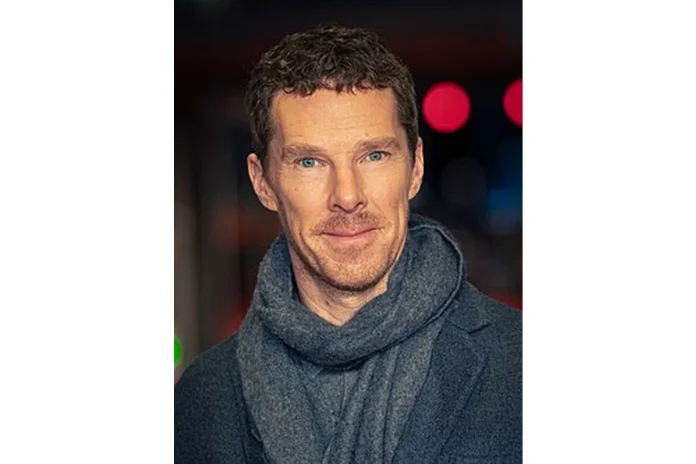
Benedict Cumberbatch Bio
Benedict Timothy Carlton Cumberbatch, born 19 July 1976, is an English actor widely recognized for his range across stage and screen. He has earned a British Academy Television Award, a Primetime Emmy Award, and a Laurence Olivier Award, along with nominations for two Academy Awards, two British Academy Film Awards, and four Golden Globe Awards. In 2014, Time magazine named him one of the 100 most influential people in the world, and in 2015, he was appointed Commander of the Order of the British Empire for services to the performing arts and charity.
Cumberbatch first drew international attention with his portrayal of Sherlock Holmes in the BBC series Sherlock and has since built a major film career that includes leading roles in The Imitation Game, Doctor Strange, and The Power of the Dog. He remains one of the most respected actors of his generation, equally committed to classical theatre and large-scale commercial cinema.
Early Life and Background
Benedict Timothy Carlton Cumberbatch was born on 19 July 1976 at Queen Charlotte’s Hospital in the London district of Hammersmith, England. He is the son of actors Timothy Carlton and Wanda Ventham, and he grew up in the borough of Kensington and Chelsea. From his mother’s first marriage, he has a half-sister named Tracy Peacock.
Cumberbatch began boarding school at the age of eight, attending Brambletye, a prep school near East Grinstead, West Sussex. He then took a scholarship at Harrow School, where he was an active member of the Rattigan Society, the school’s principal club for the dramatic arts, named after playwright Sir Terence Rattigan. He appeared in many Shakespearean works at school and made his acting debut as Titania, Queen of the Fairies, in A Midsummer Night’s Dream at the age of 12.
His first leading role came as Eliza Doolittle in a school production of George Bernard Shaw’s Pygmalion, staged by the Head of Classics, James Morwood. After leaving Harrow, Cumberbatch took a gap year, working as an English teacher at a Tibetan monastery in Darjeeling, India, an experience that helped shape his global outlook before he pursued formal training.
Path to Acting
Cumberbatch studied drama at the Victoria University of Manchester, where he built a strong foundation in performance. He then continued his training at the London Academy of Music and Dramatic Art, graduating with a Master of Arts in classical acting. In January 2018, he succeeded the late Timothy West as president of the London Academy of Music and Dramatic Art.
His early professional years were rooted in Shakespearean theatre, and he took on major roles at the Regent’s Park Open Air, Almeida, Royal Court, and Royal National Theatres. In 2005, he made his West End debut in Richard Eyre’s revival of Hedda Gabler, earning an Olivier Award nomination for his performance as George Tesman.
Television work soon followed, with guest appearances in series such as Heartbeat, Tipping the Velvet, Cambridge Spies, and Fortysomething, before he landed his first leading television role as Stephen Hawking in the BBC film Hawking in 2004. That performance earned him a BAFTA TV Award nomination for Best Actor and a Golden Nymph Award, marking his transition to wider recognition.
Benedict Cumberbatch Career
Early Career (1998–2009)
Cumberbatch’s professional career began in 1998, with steady work in theatre and on British television throughout the early 2000s. His portrayal of Stephen Hawking in the 2004 BBC television film Hawking brought him early critical praise and a BAFTA TV Award nomination for Best Actor, as well as a Golden Nymph Award for Best Performance by an Actor in a Television Film.
Throughout the decade, he took on a range of supporting roles in film, including parts in Amazing Grace, Atonement, and The Other Boleyn Girl, while continuing to build his stage reputation. His early theatre work, including performances at the Almeida Theatre and the Royal National Theatre, established him as a serious classical actor in the British tradition.
Breakthrough (2010–2015)
In 2010, Cumberbatch began playing Sherlock Holmes in the joint BBC and PBS series Sherlock, a role that brought him international fame. The series earned him a Primetime Emmy Award for Outstanding Lead Actor in a Miniseries or a Movie for the episode His Last Vow, and he received multiple additional Emmy and BAFTA nominations for the role over the following years.
On stage, he achieved the so-called Triple Crown of London Theatre in 2011 by winning the Laurence Olivier Award, Evening Standard Award, and Critics’ Circle Theatre Award for his performance in Danny Boyle’s production of Frankenstein at the Royal National Theatre. He also led the Royal National Theatre’s revival of After the Dance in 2010 and returned to play Hamlet at the Barbican Theatre in 2015, earning a third Olivier Award nomination.
On the big screen, his film career expanded with major roles in War Horse, the Hobbit trilogy as the voice and motion-capture performer of Smaug and the Necromancer, Star Trek Into Darkness as Khan, and 12 Years a Slave. His starring role as British cryptographer Alan Turing in The Imitation Game earned him nominations for the Academy Award, Golden Globe, BAFTA, and Screen Actors Guild Award for Best Actor.
In 2015, Cumberbatch was appointed Commander of the Order of the British Empire in the Birthday Honours for services to the performing arts and to charity. He received the honour from the Queen at an investiture ceremony at Buckingham Palace on 10 November 2015.
Notable Works and Milestones
Cumberbatch launched his major franchise work as Doctor Strange in the Marvel Cinematic Universe, beginning with Doctor Strange in 2016 and continuing through Avengers: Infinity War, Avengers: Endgame, Thor: Ragnarok, Spider-Man: No Way Home, and Doctor Strange in the Multiverse of Madness. He is set to reprise the role in the upcoming Avengers: Doomsday and Avengers: Secret Wars. His performance in Jane Campion’s The Power of the Dog earned him a second Academy Award nomination for Best Actor, along with Golden Globe, BAFTA, and Screen Actors Guild nominations.
Benedict Cumberbatch Award Nominations
Across film, television, and stage, Benedict Cumberbatch has received nominations for two Academy Awards for Best Actor, two British Academy Film Awards, and four Golden Globe Awards. He has earned multiple Primetime Emmy Award nominations, including for Outstanding Lead Actor in a Miniseries or a Movie for Sherlock and the miniseries Parade’s End, as well as a Satellite Award nomination for Best Actor in a Miniseries or Television Film for The Last Enemy.
Benedict Cumberbatch Awards Won
Cumberbatch has won a British Academy Television Award, a Primetime Emmy Award, and a Laurence Olivier Award, among other honours. He also achieved the Triple Crown of London Theatre in 2011 for his performance in Frankenstein. In 2015, he was appointed Commander of the Order of the British Empire for services to the performing arts and charity.
Benedict Cumberbatch Family
Benedict Cumberbatch is the son of actors Timothy Carlton and Wanda Ventham, and he has a half-sister, Tracy Peacock, from his mother’s first marriage. His grandfather, Henry Carlton Cumberbatch, was a submarine officer of both World Wars and a prominent figure of London high society, while his great-grandfather, Henry Alfred Cumberbatch, served as a British consul in Turkey and Lebanon. Cumberbatch is also a distant cousin of King Richard III, a role he portrayed in The Hollow Crown.
Personal Life
Cumberbatch was in a twelve-year relationship with actress Olivia Poulet, whom he met at the University of Manchester and remained with until 2010. He married English theatre and opera director Sophie Hunter on 14 February 2015 at the 12th-century St Peter and St Paul’s Church in Mottistone on the Isle of Wight, after a friendship of seventeen years. The couple have three sons. Cumberbatch is known as a supporter of Arsenal Football Club, subscribes to Buddhist philosophy, and has long supported charitable causes including the Motor Neurone Disease Association and The Prince’s Trust.