
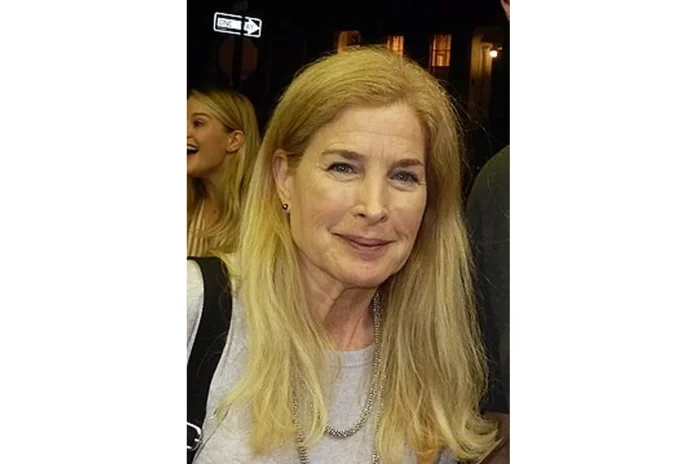
Blanche Baker Bio
Blanche Baker (born December 20, 1956) is an American actress whose career spans film, television, and Broadway theatre. She earned a Primetime Emmy Award for Outstanding Single Performance by a Supporting Actress in 1978 for her work in the television miniseries Holocaust. Baker is widely recognized for her role as Ginny Baker in the 1984 comedy Sixteen Candles and for originating the title role in Edward Albee’s stage adaptation of Lolita on Broadway in 1981. The daughter of actress Carroll Baker and director Jack Garfein, she has built a versatile résumé that includes dramatic films, television movies, and stage work.
Early Life and Background
Born Blanche Garfein in New York City, Baker is the daughter of actress Carroll Baker and director Jack Garfein. Her father was Jewish and originally from Carpathian Ruthenia, having survived the Holocaust, while her mother was a Roman Catholic who converted to Judaism. Baker also has a younger brother, Herschel Garfein. After her mother established a film career in Italy following her departure from Hollywood in the mid-1960s, Baker spent much of her early youth abroad.
She attended the American Overseas School of Rome during her formative years in Italy, an experience that exposed her to international perspectives at a young age. Returning to the United States for higher education, she enrolled at Wellesley College, where she studied from 1974 to 1976. The combination of overseas schooling and a New England liberal arts environment helped shape her early intellectual and creative interests.
Path to Acting
After her time at Wellesley, Baker committed to a career in performance and sought formal training in New York City. She studied acting at the Herbert Berghof Studio, a respected institution known for nurturing emerging talent. She continued her craft at the Lee Strasberg Theatre Institute, where she deepened her approach to character work and emotional authenticity.
These studies positioned her for a remarkable entry into professional acting. Her first major screen credit, the 1978 miniseries Holocaust, would arrive almost immediately after her training, marking one of the most striking early debuts in television drama. The role also carried personal resonance, as her father Jack Garfein had been imprisoned in Auschwitz during the war, and the production brought her face to face with a chapter of her own family history.
Blanche Baker Career
Early Career (1978–1980)
Blanche Baker made her television debut in 1978 with the miniseries Holocaust, playing the character Anna Weiss. Her performance earned her the Primetime Emmy Award for Outstanding Single Performance by a Supporting Actress, an extraordinary recognition for a young performer in one of her earliest professional roles. The miniseries was a major cultural event, and her contribution placed her on the national stage.
Building on this momentum, she appeared in the 1979 television movie Mary and Joseph: A Story of Faith in the role of Mary. She also made her feature film debut that same year in the political drama The Seduction of Joe Tynan, working alongside established stars and signaling her transition from television to film. These early projects established her as a serious dramatic actress with range.
Breakthrough (1981–1987)
In 1981, Baker took on one of the most talked-about theatrical roles of the decade when she originated the title role of Lolita in Edward Albee’s stage adaptation of Vladimir Nabokov’s novel. The production opened on Broadway on March 19, 1981, after 31 previews and closed after only 12 performances, a famously short run. Critics were divided on the play, with Frank Rich of The New York Times offering a harsh assessment, yet People Magazine singled out Baker herself as the bright spot of the production, calling her an ingenue whose time had come.
Baker achieved broad mainstream recognition in 1984 with her portrayal of Ginny Baker in John Hughes’s Sixteen Candles, a coming-of-age comedy that became a defining film of the era. That same year she appeared in the independent film Cold Feet, further expanding her film work. She also continued in television, with roles in productions such as The Day the Bubble Burst (1982), The Awakening of Candra (1983), Embassy (1985), and Nobody’s Child (1986).
In 1987, Baker originated the role of Shelby in the first Off-Broadway production of Steel Magnolias, a play that would later become a beloved American stage and screen classic. Her ability to launch a role that would travel widely demonstrated her instincts for material with lasting cultural value.
Notable Works and Milestones
Beyond her early Emmy-winning work, Baker’s signature screen role remains Ginny Baker in Sixteen Candles, a performance that has endured as part of a beloved comedy. Her origination of Lolita on Broadway and Shelby in Steel Magnolias mark her as a performer trusted to launch major stage roles. She has also taken on later projects including The Girl Next Door (2007) and Taking Chance (2009), maintaining a steady presence across decades.
Blanche Baker Award Nominations
Public records of additional Primetime Emmy or major industry nominations beyond her 1978 win are not clearly documented in available sources. Where supporting evidence is incomplete, specific nomination counts and categories have been omitted to avoid speculation. Her single confirmed Emmy recognition remains the 1978 win for Holocaust.
Blanche Baker Awards Won
Blanche Baker won the Primetime Emmy Award for Outstanding Single Performance by a Supporting Actress in 1978 for her portrayal of Anna Weiss in the television miniseries Holocaust. The award recognized her breakout performance and remains the most prominent verified honor in her career.
| Award | Wins | Year |
|---|---|---|
| Primetime Emmy Award (Outstanding Single Performance by a Supporting Actress) | 1 | 1978 |
Blanche Baker Family
Blanche Baker is the daughter of actress Carroll Baker and director Jack Garfein, both significant figures in mid-century American film. Her father, a Holocaust survivor originally from Carpathian Ruthenia, brought a deep personal history to the family’s artistic life. Baker also has a younger brother, Herschel Garfein, who has worked in musical theatre and composition, continuing the family’s creative legacy.
Personal Life
Baker married film director Bruce vanDusen on October 1, 1983, and the couple had three children before divorcing in 2002. She remarried in 2003 to Mark McGill, with whom she has one son. Across her two marriages, Baker is the mother of four children.