
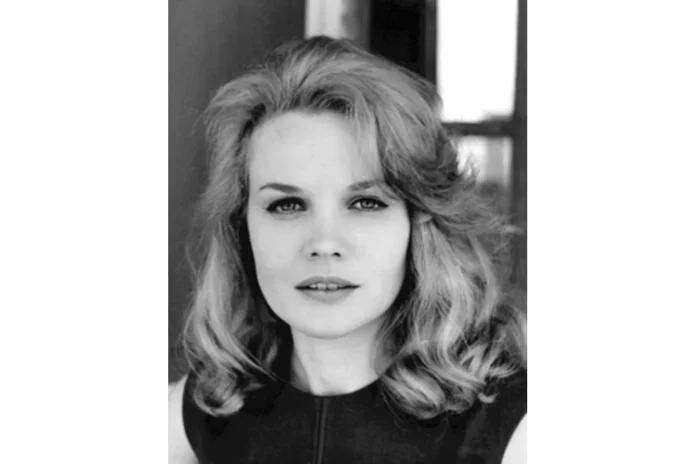
Carroll Baker Bio
Carroll Baker (born May 28, 1931) is a retired American actress and writer whose career in film, television, and theater spanned more than five decades. After studying at the Actors Studio under Lee Strasberg, she began on Broadway before being recruited by director Elia Kazan to star in the Tennessee Williams adaptation Baby Doll (1956), a role that earned her an Academy Award nomination and Golden Globe recognition. She remained a leading film star through the late 1950s and into the 1960s, appearing in acclaimed productions such as Giant (1956) and The Big Country (1958), and later became closely associated with The Carpetbaggers (1964) and Harlow (1965). Following a high-profile contract dispute, she relocated to Europe for a decade to work in Italian genre cinema, before returning to American film and television as a character actress. Baker has also written autobiographies and novels in addition to acting, and she formally retired from the screen in 2003.
Early Life and Background
Carroll Baker was born and raised in Johnstown, Pennsylvania, into a Catholic family, the daughter of Edith Gertrude (née Duffy) Baker and William Watson Baker, a traveling salesman. Her parents separated when she was eight years old, and she moved with her mother and her younger sister, Virginia, to Turtle Creek, Pennsylvania, where the family struggled with poverty for much of her upbringing. Baker is of Irish and Polish descent.
She attended Greensburg High School (now known as Greensburg Salem) in Greensburg, Pennsylvania, where she was a member of the debate team and active in the marching band and school musicals. At 18, she moved with her family to St. Petersburg, Florida, where she attended St. Petersburg Junior College. After her first year of college, she began working as a magician’s assistant on the vaudeville circuit and joined a dance company, working as a professional dancer. In 1949, Baker won the title of Miss Florida Fruits and Vegetables, and in 1951 she moved to New York City, where she rented a basement apartment in Queens and worked as a nightclub dancer and a traveling chorus girl.
Baker studied acting at HB Studio before enrolling at the Actors Studio in 1952, where she trained under Lee Strasberg. At the Actors Studio, her classmates included Mike Nichols, Rod Steiger, Shelley Winters, Ben Gazzara, and Marilyn Monroe, and she became a close friend of James Dean for the remainder of his life.
Path to Celebrity
After appearing in television commercials for Winston cigarettes and Coca-Cola, Baker was featured in an episode of Monodrama Theater performing a monodramatic piece, broadcast in 1952 on the DuMont Network. The following year, she made her film debut with a small walk-on part in the musical Easy to Love (1953), which led to Broadway roles in Roger MacDougall’s Escapade in the fall of 1953 and Robert Anderson’s All Summer Long opposite Ed Begley, which ran from September to mid-November 1954. In 1955, she screen tested and auditioned for the lead in Picnic, losing the part to Kim Novak, and was considered for the lead in Rebel Without a Cause (1955) after James Dean recommended her to director Nicholas Ray, a role she ultimately turned down.
Her first major screen role was the supporting part of Luz Benedict II in Giant (1956), opposite Elizabeth Taylor, Rock Hudson, and James Dean in his final role. She chose the supporting part because, in her words, she was “insecure” and “wanted to start out a little less ‘profile’.” Simultaneously, Baker was cast as the title character in Elia Kazan’s Baby Doll (1956), a role initially intended for Marilyn Monroe. Tennessee Williams had wanted Baker for the part after seeing her perform a scene from his script at the Actors Studio, and Kazan had been impressed by her performance in All Summer Long on Broadway the year prior.
The role of a sexually repressed teenaged bride in Baby Doll brought Baker overnight fame and a level of notoriety even before the film’s release. She was prohibited from eating around photographers in order to achieve better photos, bringing her weight down to 110 pounds. The controversial advertising campaign, including a 135-foot billboard in Times Square depicting Baker lying in a crib, drew condemnation from religious groups, including Cardinal Francis Spellman, and a formal rebuke from the Roman Catholic National Legion of Decency. In spite of the controversy, Baby Doll opened to strong box-office receipts and earned Baker her Academy Award nomination and her Golden Globe wins.
Carroll Baker Career
Early Career (1952–1957)
Baker’s earliest screen appearances included a walk-on part in Easy to Love (1953) and supporting roles on Broadway before she was cast in Giant (1956). Her first major studio film established her alongside some of Hollywood’s biggest stars, and her simultaneous casting in Baby Doll (1956) made her an A-list actress almost overnight. Among her early honors, she received a Film Achievement Award from Look magazine and was named “Woman of the Year” in 1957 by Harvard University’s Hasty Pudding Club, and she appeared on the cover of Life magazine in June 1956.
She also won a Golden Globe for Most Promising Newcomer, which she shared with Jayne Mansfield and Natalie Wood, in addition to nominations for the Academy Award for Best Actress and the Golden Globe for Best Actress in a Motion Picture – Drama for Baby Doll. Baby Doll would remain the film for which she is best remembered.
Breakthrough (1958–1963)
After the success of Baby Doll, Baker was offered parts in The Brothers Karamazov (1958), Too Much, Too Soon (1958), and The Devil’s Disciple (1959), but contract disputes with Warner Bros. led to her suspension when she refused to make Too Much, Too Soon, preventing her from starring in The Brothers Karamazov. She was also chosen for the lead in Cat on a Hot Tin Roof (1958) and The Three Faces of Eve (1957), but her Warner Bros. contract again blocked her from accepting.
Once her suspension was lifted, she appeared in William Wyler’s Western epic The Big Country (1958), a film well received by critics. She followed that with lead roles in two romances, portraying a nun in The Miracle (1959) opposite Roger Moore and in But Not for Me (1959) with Clark Gable. She disliked The Miracle so much that she bought out her contract with Warner Bros., putting her into considerable debt.
She went on to make the experimental film Something Wild (1961), directed by her then-husband Jack Garfein, playing a traumatized rape victim, a controversial role credited by historians as nearly halting her career. The same year, she appeared in Bridge to the Sun (1961), MGM’s production based on the 1957 autobiography of an American woman who married a Japanese diplomat. She then appeared in the British-German Station Six-Sahara (1962) and the blockbuster Western epic How the West Was Won (1962), and she returned to Broadway in the 1962 production of Garson Kanin’s Come on Strong.
Notable Works and Milestones
Across the 1950s and 1960s, Baker’s signature films included Giant (1956), The Big Country (1958), Something Wild (1961), How the West Was Won (1962), and Cheyenne Autumn (1964). Her dramatic range, from Southern ingénue in Baby Doll to victim in Something Wild to peace-seeking Quaker in Cheyenne Autumn, established her as one of the most versatile leading actresses of her generation.
Mid-Career (1964–1969)
Baker portrayed a pacifist Quaker schoolteacher in John Ford’s Cheyenne Autumn (1964), receiving critical acclaim, then had a supporting role as Saint Veronica in George Stevens’ The Greatest Story Ever Told (1965). She portrayed a cynical, alcoholic movie star in The Carpetbaggers (1964), which brought a second wave of notoriety despite lackluster reviews and was the top moneymaker of that year with domestic box-office receipts of $13 million. The film marked the beginning of a tumultuous relationship with producer Joseph E. Levine, who began developing her as a movie sex symbol, including a December 1964 pictorial in Playboy.
Levine cast her in the title roles of two 1965 films, Sylvia and the Jean Harlow biopic Harlow, both of which received lukewarm critical response. In 1966, Baker sued Levine over her contract with Paramount Pictures and was ultimately fired by the studio, with her paychecks from Harlow frozen during the legal dispute, leaving her hundreds of thousands of dollars in debt, though she was eventually awarded $1 million in compensation.
European Years (1967–1975)
After separating from Jack Garfein in 1967, Baker moved to Europe with her two children to pursue work there, eventually settling in Rome and becoming fluent in Italian. Over the next several years, she starred in hard-edged giallo, exploitation, and horror films, including The Sweet Body of Deborah (1968), So Sweet… So Perverse (1969), Orgasmo (1969), A Quiet Place to Kill (1970), Knife of Ice (1972), and Corrado Farina’s Baba Yaga (1973), a series of four films with Italian director Umberto Lenzi. Although these films received poor critical reception in the United States, they afforded Baker an income and fame abroad, and she later described the experience as having “brought me back to life” and given her “a whole new outlook.”
Return to American Film (1976–1987)
Baker’s first American film in over 10 years came in the Andy Warhol–produced black comedy Bad (1977), in which she played a Queens beauty salon owner who provides hitmen with jobs. She followed Bad with a part in the low-budget surrealist thriller The Sky Is Falling (1979) with Dennis Hopper, and by the 1980s had largely become a character actress based in London.
She had a supporting role in the 1980 Walt Disney-produced horror film The Watcher in the Woods alongside Bette Davis, then appeared as the mother of murdered Playboy model Dorothy Stratten in Star 80 (1983). She played the mother of Sigmund Freud in The Secret Diary of Sigmund Freud (1984) with Carol Kane and Klaus Kinski, and appeared in Hitler’s SS: Portrait in Evil (1985) and in the drama Native Son (1986) with Matt Dillon, Geraldine Page, and a young Oprah Winfrey. Her performance in Native Son was praised by critic Roger Ebert, who highlighted a “powerful” scene between Baker and Winfrey.
Following Native Son, she had a critically acclaimed lead role as the wife of a schizophrenic drifter played by Jack Nicholson in Ironweed (1987), alongside Meryl Streep, a performance Ebert praised as Baker finding “a whole new range” and “holding the screen against Jack Nicholson.”
Later Career (1988–2003)
In 1990, Baker played Eleanor Crisp, described by Roger Ebert as “an effective bitch on wheels,” in Ivan Reitman’s comedy Kindergarten Cop, starring Arnold Schwarzenegger, which she filmed in Astoria, Oregon, in the summer of 1990 and which grossed over $200 million worldwide. Her film and television work continued throughout the 1990s, including made-for-television movies such as Judgment Day: The John List Story (1993), Witness Run (1996), and Dalva (1996) with Farrah Fawcett.
In 1997, she was cast in a supporting role in David Fincher’s thriller The Game, playing a housekeeper to a billionaire San Francisco banker played by Michael Douglas, in a film that proved a major success among her later work. She also appeared in independent films such as Just Your Luck (1996) and Nowhere to Go (1997), and on television series including Tales from the Crypt (1991, opposite Teri Garr), Murder, She Wrote and L.A. Law (both 1993), Chicago Hope (1995), and Roswell (1999). In 2002, she appeared in the documentary Cinerama Adventure and guest-starred in an episode of The Lyon’s Den, which became her last screen appearance before she formally retired from acting in 2003, ending a 50-year career of more than 80 roles in film, television, and theater.
Carroll Baker Award Nominations
Across her career, Carroll Baker received multiple award nominations recognizing her performances, including a nomination for the Academy Award for Best Actress and a nomination for the Golden Globe Award for Best Actress in a Motion Picture – Drama, both for her role in Baby Doll (1956). She was also named Woman of the Year in 1957 by Harvard University’s Hasty Pudding Club and received a Film Achievement Award from Look magazine for the same role.
Carroll Baker Awards Won
Carroll Baker won the Golden Globe for Most Promising Newcomer for her performance in Baby Doll (1956), sharing the honor with Jayne Mansfield and Natalie Wood. She was also awarded a star on the Hollywood Walk of Fame at 1725 Vine Street, dedicated on February 8, 1960 and installed in spring 1961, and in 2001 a Golden Palm Star on the Palm Springs Walk of Stars was dedicated to her. In 2011 and 2012, she received Lifetime Achievement Awards from the Hoboken and Fort Lauderdale International Film Festivals.
| Award | Wins | Year |
|---|---|---|
| Golden Globe for Most Promising Newcomer (Baby Doll) | 1 | 1957 |
| Hollywood Walk of Fame Star | 1 | 1960 |
| Palm Springs Walk of Stars Golden Palm Star | 1 | 2001 |
| Hoboken International Film Festival Lifetime Achievement Award | 1 | 2011 |
| Fort Lauderdale International Film Festival Lifetime Achievement Award | 1 | 2012 |
Carroll Baker Family
Carroll Baker was the daughter of William Watson Baker, a traveling salesman, and Edith Gertrude (née Duffy) Baker. She had a younger sister, Virginia, with whom she moved to Turtle Creek, Pennsylvania, after her parents separated when she was eight years old.
Personal Life
Baker married three times. She first married Louie Ritter, owner of the Weylin Hotel, in 1953, and the marriage ended within a year. On April 5, 1955, she married Jack Garfein, a Holocaust survivor she met at the Actors Studio, for whom she converted to Judaism. They had one daughter, Blanche Baker, born in 1956, also an actress, and a son, Herschel Garfein, born in 1958, a composer and faculty member at the Steinhardt School of Music at New York University. Garfein and Baker separated in 1964 and divorced in 1969.
Baker married her third husband, British theater actor Donald Burton, on March 10, 1982, and the couple remained together until Burton’s death from emphysema at their home in Cathedral City, California, on December 8, 2007. Baker has four grandchildren through her daughter Blanche, and resided in New York City.