
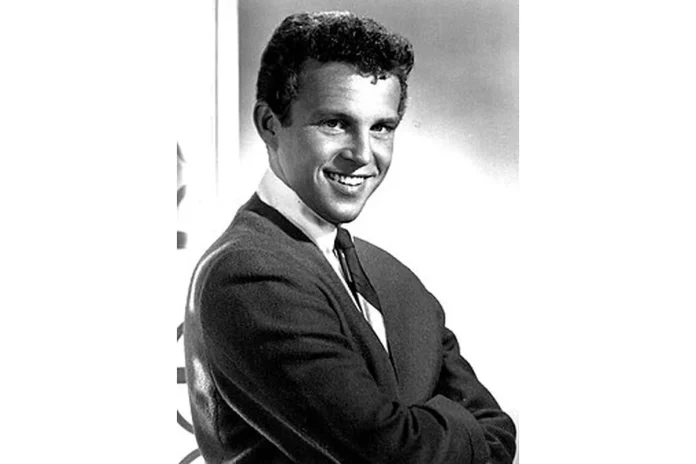
Bobby Vinton Bio
Stanley Robert Vinton (born April 16, 1935), known professionally as Bobby Vinton, is an American singer and actor celebrated for his romantic pop ballads and his reputation as a 1960s teen idol. Nicknamed “The Polish Prince” for his devotion to his Polish heritage, Vinton became one of the most successful love-song vocalists of the rock era, with chart-topping singles including “Roses Are Red” (1962), “Blue Velvet” (1963), and “Mr. Lonely” (1964). He later revived his career with the multilingual hit “My Melody of Love” (1974) and hosted his own self-titled television variety show in the mid-1970s. Vinton also maintained a parallel acting career, appearing in feature films and television series from 1964 through the 1990s.
Early Life and Background
Stanley Robert Vinton was born on April 16, 1935, in Canonsburg, Pennsylvania, the only child of locally popular bandleader Stan Vinton and Dorothy Studzinski Vinton. He is of Polish and Lithuanian descent, and the family surname was originally Vintula before being changed by his father. His parents actively encouraged his interest in music by giving him his daily 25-cent allowance only after he had practiced the clarinet, embedding discipline into his early artistic life.
While attending Canonsburg High School, Vinton formed his first band at age 15, performing in clubs around the Pittsburgh area to help finance his education. The earnings from those early gigs helped him enroll at Duquesne University, where he graduated in 1956 with a degree in musical composition. At Duquesne, he became proficient on piano, clarinet, saxophone, trumpet, drums, and oboe, building the broad musical foundation that would later support his work as both a bandleader and a solo vocalist. Because both he and his father performed under the name Stanley, his father suggested he use his middle name, Robert, professionally to avoid confusion between the two bandleaders.
Path to Music
Vinton’s first taste of the recording industry came in 1958, when he formed his own label, Bobby Records, and released “Twilight Time” backed with “Hallelujah.” He soon moved to larger outlets, including the Melody label in Philadelphia, where his 1959 single “Harlem Nocturne” drew attention in Pennsylvania, followed by two self-written releases for Alpine Records in 1959 and 1960 that received Billboard magazine mentions. His “young man with a big band” style took shape during this period, setting the template for his early identity as a vocalist-fronted orchestra leader.
After two years of service in the United States Army, where he worked as a chaplain’s assistant and began writing “Mr. Lonely,” Vinton signed with Epic Records in 1960. Initial singles for Epic, including “Posin’,” “Little Lonely One,” and “Well I Ask Ya,” failed to chart, and two early albums sold poorly, putting his contract in jeopardy. He found the song that would rescue his career, “Roses Are Red (My Love),” sitting in a reject pile, and after personally promoting it by distributing records and red roses to DJs, he launched a string of hits that defined the next decade of pop music.
Bobby Vinton Career
Early Career (1958–1961)
Vinton’s commercial recording career began in October 1958 with the formation of Bobby Records and the release of “Twilight Time,” a record that did not chart but marked his first commercially released vocal recording. His subsequent singles for the Philadelphia-based Melody label and Alpine Records between 1959 and 1960 earned Billboard mentions and established the “young man with a big band” persona that would carry through his early Epic work. After his discharge from the Army, he signed with Epic Records in 1960 as a bandleader, though his first three Epic singles and two albums failed commercially.
Breakthrough (1962–1964)
The turning point came in 1962 with “Roses Are Red (My Love),” which spent four weeks at number one on the Billboard Hot 100 and also charted on the Country and R&B charts, prompting Epic to renew his contract and reclassify him as a solo singer. In 1963, he scored an even bigger signature hit with “Blue Velvet,” which topped the Billboard, Cash Box, and Record World charts for three weeks and was later chosen by David Lynch as the title track for his 1986 film.
In 1964, Vinton had two number-one singles, “There! I’ve Said It Again” in January and “Mr. Lonely” in December, the former famously being the last pre-Beatles Billboard number-one hit in the United States. Throughout the British Invasion, he continued to thrive, posting 16 top-ten hits between 1962 and 1972, more than any other male vocalist of the era, including Elvis Presley and Frank Sinatra. Billboard Magazine later called him “the all-time most successful love singer of the ‘Rock-Era.’”
Notable Works and Milestones
Beyond his 1960s classics, Vinton sustained chart success into the 1970s with “Ev’ry Day of My Life,” “Sealed With a Kiss” (1972), and the partially Polish-language “My Melody of Love” (1974), the latter peaking at number three on the Billboard Hot 100 and earning a gold album with Melodies of Love. In 1975, he premiered The Bobby Vinton Show, a half-hour variety program that ran until 1978 and used “My Melody of Love” as its theme song. He also wrote a 1978 autobiography titled The Polish Prince, which became a bestseller, and in the same year Duquesne University awarded him an honorary doctorate in music. He was honored with a star on the Hollywood Walk of Fame at 6916 Hollywood Boulevard in recognition of his recording career.
Bobby Vinton Award Nominations
Verified individual award nominations for Bobby Vinton are limited in the available records, and the most clearly documented honors center on lifetime and career recognitions rather than competitive nominations. These include his Hollywood Walk of Fame star, awarded in recognition of his recording career, and the honorary doctorate in music conferred by his alma mater, Duquesne University, in 1978. Industry mentions, such as Billboard’s designation of him as the “all-time most successful love singer of the ‘Rock-Era’,” further reflect peer acknowledgment of his chart dominance between 1962 and 1972.
Bobby Vinton Awards Won
Vinton’s documented awards include the Jukebox Single of the Year honor for “Ev’ry Day of My Life” in 1972, the honorary doctorate in music from Duquesne University in 1978, and a star on the Hollywood Walk of Fame recognizing his recording career. He also received RIAA gold certifications for singles including “Please Love Me Forever” (1967) and “I Love How You Love Me” (1968), and a platinum certification for the album Party Music (1976).
Bobby Vinton Family
Bobby Vinton was born to Stan Vinton, a locally popular bandleader, and Dorothy Studzinski Vinton, who suggested the idea for his 1974 hit “My Melody of Love.” He is the couple’s only child and is of Polish and Lithuanian descent, with the family surname originally Vintula before being changed by his father. His hometown of Canonsburg, Pennsylvania, has honored him by naming Bobby Vinton Boulevard and Bobby Vinton Drive, and he and Perry Como are the town’s most celebrated musical figures.
Personal Life
Bobby Vinton married Dolores Vinton on December 17, 1962, and the couple has been married ever since. They have five children and reside in Englewood, Florida. In 2015, after contracting a serious case of shingles, Vinton retired from live performing and recording, and in February 2018 he spoke with fans on The Cousin Brucie Show on Sirius XM radio, encouraging listeners to get a shingles vaccination.