
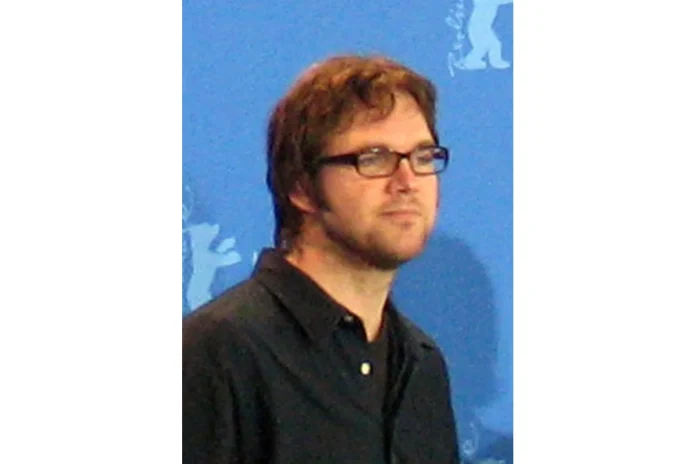
Brad Anderson Bio
Brad Anderson (born April 5, 1964) is an American film director, producer and writer known for his work in the thriller and horror genres. He first drew wide attention with the psychological thriller The Machinist (2004), which starred Christian Bale, and later built his reputation with titles such as Session 9 (2001) and The Call (2013). Over the course of his career, Anderson has moved between independent film and mainstream television, directing episodes of acclaimed series including Fringe, The Wire, Boardwalk Empire and The Killing. He is also the nephew of Emmy Award-winning actress Holland Taylor.
Born and raised in Madison, Connecticut, Anderson trained in anthropology before committing to filmmaking, a background that informs the atmospheric and character-driven style seen across his projects. His filmography spans romantic comedies, psychological horror, espionage thrillers and genre television, giving him one of the more varied résumés among contemporary American genre directors.
Early Life and Background
Brad Anderson was born on April 5, 1964, in Madison, Connecticut, and raised in the same small New England town. He is the son of Pamela Taylor Anderson, a community services administrator, and grew up in a family with strong ties to the performing arts through his aunt, Holland Taylor, the Emmy Award-winning actress known for her work on television and stage.
Before turning to film, Anderson attended Bowdoin College in Brunswick, Maine, where he majored in anthropology and Russian. The program exposed him to international perspectives and storytelling traditions, themes that would later echo in his interest in characters placed under extreme pressure. After completing his undergraduate studies, he moved to London to finish his film education at the London Film School, a training ground that has produced a number of internationally active directors.
Following his time in the United Kingdom, Anderson returned to Boston and began laying the groundwork for his move into professional filmmaking. The combination of liberal-arts training, foreign study and a formal film education helped shape the controlled, observant tone that runs through his later work.
Path to Filmmaking
Anderson’s path into the film industry began in the mid-1990s with small independent productions that played the festival circuit. He wrote and directed his first feature, The Darien Gap, in 1996, and followed it with the romantic comedies Next Stop Wonderland (1998) and Happy Accidents (2000). All three films premiered at the Sundance Film Festival, giving the young director early visibility among industry tastemakers and indie audiences.
In 2002, Anderson served as a member of the dramatic jury at the Sundance Film Festival, a mark of the respect he had earned within the independent film community in only a few years. His Sundance exposure helped him secure financing for more ambitious projects, including his pivot toward darker material. The transition from character-driven romantic comedies to psychological thrillers and horror allowed him to explore the suspense elements that would define his most recognized work.
Alongside his film work, Anderson began directing episodic television, an avenue that gave him steady creative employment and a wider canvas for visual storytelling. His early television credits included episodes of The Wire and the horror anthology Masters of Horror, where he directed the season two episode titled Sounds Like. These projects helped him refine a disciplined approach to mood and pacing that he would carry into his larger film assignments.
Brad Anderson Career
Early Career (1995–2001)
Brad Anderson began his professional career in 1995 and quickly established himself on the independent film scene. His first notable work, The Darien Gap (1996), was followed by Next Stop Wonderland (1998) and Happy Accidents (2000), romantic comedies that each earned screenings at the Sundance Film Festival. The trio of films positioned him as a promising voice in American independent cinema at the close of the 1990s.
Anderson moved into darker territory with Session 9 (2001), a psychological horror film set in an abandoned asylum. Though it underperformed at the box office on its initial release, the picture gradually built a devoted cult following, particularly among fans of atmospheric horror. That film marked the start of his long association with unsettling, character-driven genre storytelling.
Breakthrough (2004–2014)
Anderson’s breakthrough arrived with The Machinist (2004), a psychological thriller starring Christian Bale in the lead role. The film became widely known for Bale’s dramatic 62-pound weight loss for the part and for its taut screenplay by Scott Kosar. Though produced on a modest budget with Anglo-German backing, The Machinist earned strong reviews and cemented Anderson’s reputation as a director capable of guiding demanding performances.
He followed that success with the thriller TransSiberian (2008), which starred Woody Harrelson, Emily Mortimer and Ben Kingsley, and the horror film Vanishing on 7th Street (2010), featuring Hayden Christensen, John Leguizamo and Thandiwe Newton. Both projects continued his focus on isolated characters confronting paranoia and dread.
In 2013, Anderson directed The Call, a thriller starring Halle Berry and Abigail Breslin that reached a wider mainstream audience. He continued his genre work with Stonehearst Asylum (also known as Eliza Graves) in 2014, a gothic thriller starring Kate Beckinsale, Jim Sturgess, David Thewlis and Ben Kingsley.
Notable Works and Milestones
Among his signature films, The Machinist (2004) stands as Anderson’s most recognized work, thanks in large part to Bale’s committed performance and the film’s spare, nightmarish atmosphere. The Call (2013) became his highest-profile studio project, while Session 9 (2001) remains a touchstone for fans of independent horror. His television contributions, including episodes of Fringe, The Wire, Boardwalk Empire and The Killing, further established him as a reliable director of tightly crafted drama.
Brad Anderson Award Nominations
Across his career, Brad Anderson has been recognized for his contributions to independent film, festival programming and genre storytelling. His early Sundance screenings for The Darien Gap, Next Stop Wonderland and Happy Accidents marked him as a filmmaker of note within the independent community, while his 2002 service on the Sundance dramatic jury reflected the industry’s confidence in his artistic judgment. Verified specific award nominations are limited and not detailed here, as the available records do not provide a comprehensive list.
Brad Anderson Awards Won
Publicly verified award wins for Brad Anderson as a director are not comprehensively documented in the available sources. While his films have built devoted audiences and strong critical reputations, particularly The Machinist and Session 9, specific trophies or formal honors tied directly to him are not clearly established. As a result, a detailed list of awards won cannot be presented with confidence.
Brad Anderson Family
Brad Anderson was raised by his mother, Pamela Taylor Anderson, a community services administrator, who played a central role in his upbringing in Madison, Connecticut. His family ties extend into the entertainment industry through his aunt, Holland Taylor, the Emmy Award-winning actress celebrated for her stage and screen work.
Personal Life
Brad Anderson has kept much of his personal life out of the public eye, and verified details about long-term partners or children are not available in the sources reviewed. He has split his professional life between the United States and international productions, including Anglo-German co-productions such as The Machinist and TransSiberian. His close working relationships with actors like Christian Bale and Ben Kingsley suggest a director who values long-term creative partnerships built on trust and shared craft.
Upcoming Projects
Looking ahead, Anderson is slated to direct Peter Dinklage in the title role of an adaptation of Nobel Prize-winning author Pär Lagerkvist’s novel The Dwarf. He and Christian Bale have also discussed a planned collaboration on an adaptation of J. G. Ballard’s novel Concrete Island, a project that has been in development since their work together on The Machinist.