
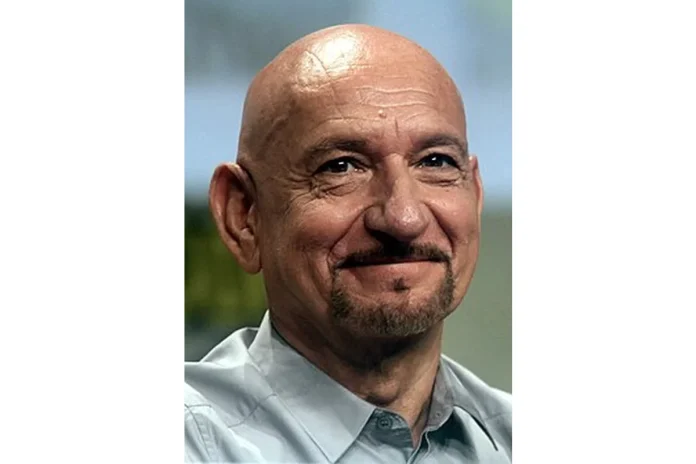
Ben Kingsley Bio
Born Krishna Pandit Bhanji on 31 December 1943 in Snainton, North Riding of Yorkshire, England, Sir Ben Kingsley is an English actor of Indian and English heritage whose chameleon-like range has made him one of cinema’s most respected performers over a career spanning seven decades. An Academy Award-winning interpreter of character, he has moved seamlessly between historical biopics, Shakespearean drama, psychological thrillers, blockbuster franchises, and voice performance, building a body of work defined by craft, intelligence, and a commitment to humane storytelling. Knighted in 2002 for services to the British film industry, Kingsley remains a prolific presence in global cinema.
Kingsley’s mother, Anna Lyna Mary, was an English actress and model, and his father, Rahimtulla Harji Bhanji, was born in Zanzibar to a family originating from the Indian city of Jamnagar, of Khoja Gujarati descent. Kingsley’s paternal grandfather, Harji Bhanji, was a successful spice trader who moved from India to the Sultanate of Zanzibar. Raised in Pendlebury, Lancashire, Kingsley grew up with this rich dual heritage and was not raised in his father’s faith, instead becoming a Quaker. He attended Manchester Grammar School, where one of his classmates was actor Robert Powell, before studying at De La Salle College in Salford, which later became home to The Ben Kingsley Theatre. While at college, he became involved in amateur dramatics in Manchester.
Changing his name to Ben Kingsley in the 1960s, he later explained that he feared a foreign name would hamper his early career opportunities in the industry. Upon graduation at age 23, he was approached by music producer Dick James with an offer to mould him into a pop star, which he declined in favour of joining the Royal Shakespeare Company in 1967. He made his professional stage debut that same year, beginning a fifteen-year period devoted almost exclusively to classical theatre that would establish him as one of the most formidable stage actors of his generation.
Early Life and Background
Kingsley was born Krishna Pandit Bhanji on 31 December 1943 in Snainton, North Riding of Yorkshire, England, the son of Anna Lyna Mary, an English actress and model, and Rahimtulla Harji Bhanji, whose family traced its roots to Jamnagar in Gujarat, India. His paternal grandfather was a spice trader who relocated from India to Zanzibar, where Kingsley’s father lived before moving to the United Kingdom at age 14. Raised in Pendlebury, Lancashire, Kingsley was not raised in his father’s Islamic faith and instead became a Quaker, an identity that shaped his personal worldview throughout his life. His mother’s side of the family included an English grandmother who worked in London’s East End garment district and a maternal grandfather believed to have been of Russian or German-Jewish descent.
Educated at Manchester Grammar School alongside future actor Robert Powell, Kingsley went on to study at De La Salle College in Salford, an institution that later established The Ben Kingsley Theatre in recognition of his contributions to the performing arts. During his college years, he became deeply involved in amateur dramatics in Manchester, performing in local productions that nurtured his ambition to pursue acting professionally. His mother’s background in the performing arts provided an early introduction to the world of theatre and film, while his multicultural upbringing in post-war England gave him a perspective that would later inform his approach to a remarkably wide range of characters across international cinema.
Shortly after graduating, Kingsley was offered the opportunity by music producer Dick James to be moulded into a pop star, but he declined and auditioned for the Royal Shakespeare Company before Trevor Nunn, gaining admission in 1967. That same year, he made his West End debut at the Aldwych Theatre in a production of As You Like It, launching a stage career that would occupy the next fifteen years of his professional life and include acclaimed performances in Much Ado About Nothing, Richard III, The Tempest, A Midsummer Night’s Dream, Hamlet, and The Merry Wives of Windsor. In 1971, he made his Broadway debut as Demetrius in A Midsummer Night’s Dream alongside Patrick Stewart, and in 1982 he played Willy Loman in a Sydney production of Death of a Salesman opposite Mel Gibson, demonstrating his ability to command major stages on both sides of the Atlantic.
Path to Actor
Kingsley’s path to a screen career was deliberate and gradual, rooted in the rigour of classical theatre. After joining the Royal Shakespeare Company in 1967, he devoted himself almost entirely to stage work, making his West End debut that year and building a reputation for intense, disciplined Shakespearean performances. He made his Broadway debut in 1971 in a revival of A Midsummer Night’s Dream alongside Patrick Stewart, Frances de la Tour, and Martin Best, and later played Mosca in Peter Hall’s acclaimed 1977 production of Ben Jonson’s Volpone for the Royal National Theatre. His stage training gave him a foundation in classical texts and character development that would distinguish his screen work for decades to come.
While maintaining a demanding stage schedule, Kingsley began his transition to film and television in the early 1970s, making his feature film debut in a supporting role in the British action thriller Fear Is the Key in 1972. He appeared as Ron Jenkins on the soap opera Coronation Street from 1966 to 1967, took on regular roles as a defence counsel in the long-running British legal programme Crown Court, and played Thidias in a 1974 Royal Shakespeare Company taped performance of Antony and Cleopatra alongside Patrick Stewart and Tim Pigott-Smith. In 1975, he starred as Dante Gabriel Rossetti in the historical drama The Love School and appeared in the TV miniseries Dickens of London, steadily building a portfolio of varied screen performances while remaining primarily identified as a stage actor.
Ben Kingsley Career
Early Career (1967–1982)
For the first fifteen years of his professional life, Kingsley was principally a stage actor with the Royal Shakespeare Company, performing in landmark productions of Shakespeare’s plays including As You Like It, Much Ado About Nothing, Richard III, The Tempest, A Midsummer Night’s Dream under Peter Brook’s direction in 1970, Hamlet, and The Merry Wives of Windsor. His West End debut at the Aldwych Theatre in 1967 announced the arrival of a major new classical talent, and his work on Broadway in 1971 and at the Royal National Theatre in 1977 solidified his reputation across English-speaking theatre. In 1981 he returned to Broadway to play the title role in Edmund Kean, further demonstrating his command of theatrical leading roles.
During this period, Kingsley also appeared in the BBC adaptation of Silas Marner as the titular character in 1985 and played multiple roles in the films Testimony, Pascali’s Island, and Without a Clue in 1988, gradually establishing himself as a presence in British film. His early film roles, including supporting parts in Betrayal, Turtle Diary, and Maurice, were well received but did not yet signal the international stardom that was about to arrive. The foundation of classical training and diverse early roles would prove essential when the breakthrough role of Mahatma Gandhi arrived, allowing Kingsley to bring a depth of theatrical experience to one of the most demanding screen portrayals of the twentieth century.
Breakthrough (1982–1998)
The turning point of Kingsley’s career came in 1982 when he was cast as Mahatma Gandhi in Richard Attenborough’s historical epic Gandhi, a performance that transformed him from respected stage actor into an internationally recognised film star. His portrayal of the anti-colonialist activist and peacemaker Mahatma Gandhi was hailed as a masterclass in screen acting, with film critic Roger Ebert writing that Kingsley made the role so completely his own that there was a genuine feeling the spirit of Gandhi was on screen. The film was both a critical and commercial success, and Kingsley won the Academy Award for Best Actor, the BAFTA Award for Best Actor in a Leading Role, and the Golden Globe Award for Best Actor in a Motion Picture Drama, launching a film career of extraordinary range and ambition.
In the years following Gandhi, Kingsley appeared in a remarkable variety of films that demonstrated his refusal to be typecast. He starred in the 1983 British drama Betrayal, an adaptation of Harold Pinter’s play alongside Jeremy Irons, and in 1987 played a lead role in the Merchant-Ivory costume drama Maurice, adapted from the E. M. Forster novel with Hugh Grant, Rupert Graves, and Denholm Elliott. He portrayed multiple roles in 1988 in Testimony, Pascali’s Island, and Without a Clue, and in 1991 earned his first Academy Award nomination for Best Supporting Actor for his portrayal of organised crime figure Meyer Lansky in Bugsy. In 1993, he delivered a quietly powerful performance as Itzhak Stern in Steven Spielberg’s Schindler’s List alongside Liam Neeson, earning a BAFTA Award nomination for Best Actor in a Supporting Role and cementing his status as one of the most reliable and distinguished supporting actors in Hollywood.
Notable Works and Milestones
In 2000, Kingsley delivered one of the most electrifying performances of his career as Don Logan, a violent psychopath, in Jonathan Glazer’s psychological black comedy crime film Sexy Beast, acting alongside Ray Winstone and Ian McShane. The role earned him his third Academy Award nomination for Best Supporting Actor, and critic Peter Bradshaw praised his performance for its perfect deployment of control, stillness, and sociopathic cunning. In 2003, he portrayed Colonel Massoud Amir Behrani in House of Sand and Fog, earning his fourth Academy Award nomination for Best Actor alongside Jennifer Connelly and Shohreh Aghdashloo, with critic Owen Gleiberman describing his performance as carrying his body like armour. These roles demonstrated that even two decades after his Oscar win for Gandhi, Kingsley could deliver career-best work in challenging contemporary material.
Ben Kingsley Award Nominations
Across his career, Ben Kingsley has received numerous nominations across film, television, and music. He has been nominated four times for the Academy Award: for Best Supporting Actor for Bugsy and Sexy Beast, and for Best Actor for House of Sand and Fog, in addition to his win for Gandhi. He has been nominated four times for the Primetime Emmy Award for his performances in Murderers Among Us: The Simon Wiesenthal Story, Joseph, Anne Frank: The Whole Story, and Mrs. Harris. He has also received two Laurence Olivier Award nominations and additional BAFTA and Golden Globe nominations across a career spanning seven decades, reflecting consistently high regard from the industry for his performances across an extraordinary range of roles.
Ben Kingsley Awards Won
Ben Kingsley’s awards recognition includes the Academy Award for Best Actor for Gandhi, the BAFTA Award for Best Actor in a Leading Role for Gandhi, the Grammy Award for Best Spoken Word or Nonmusical Recording for The Words of Gandhi, and the Golden Globe Award for Best Actor in a Motion Picture Drama for Gandhi. He was conferred Knight Bachelor in 2002 for services to the British film industry and received the Padma Shri, an Indian civilian honour, for his contributions to cinema. In 2010, he was awarded a star on the Hollywood Walk of Fame, and in 2011 he received the Saturn Award for Best Actor for his performance as Georges Méliès in Hugo. He was also honoured with the Fellowship Award at The Asian Awards in London in 2013 and received a Crystal Globe award for outstanding artistic contribution to world cinema at the Karlovy Vary International Film Festival in 2001.
| Award | Wins | Year |
|---|---|---|
| Academy Award for Best Actor | 1 | 1983 |
| BAFTA Award for Best Actor in a Leading Role | 1 | 1983 |
| Grammy Award for Best Spoken Word or Nonmusical Recording | 1 | 1984 |
Ben Kingsley Family
Kingsley was born to Anna Lyna Mary, an English actress and model who passed away in 2010, and Rahimtulla Harji Bhanji, born in Zanzibar to a Gujarati Khoja family originally from Jamnagar, India. His paternal grandfather, Harji Bhanji, was a successful spice trader who relocated from India to Zanzibar, and his father moved to the United Kingdom at age 14. Kingsley also has a half-brother named Sadrudin Bhanji, who later practised as a psychiatrist in Devon. His multicultural family background, spanning English, Gujarati, and potentially Russian-Jewish ancestry, has been a defining thread in his personal identity and artistic approach throughout his career.
Personal Life
Kingsley has been married four times. His first marriage was to actress Angela Morant from 1966 to 1976, with whom he has two children including his son Thomas Bhanji. He then married theatrical director Alison Sutcliffe in 1978, with whom he had two more children, Jasmin Bhanji and actor Ferdinand Kingsley. After their divorce in 1992, he married Alexandra Christmann in 2003, a union that ended in divorce in 2005 after Kingsley stated he had been deeply shocked by photographs of her kissing another man. On 3 September 2007, he married Brazilian actress Daniela Lavender at Eynsham Hall in North Leigh, with whom he remains married. Kingsley is a practising Quaker and has been involved in charitable work, including appearances on behalf of Dramatic Need, a charity that sends arts professionals to host workshops in underprivileged communities in Africa.