Mel Gibson Bio
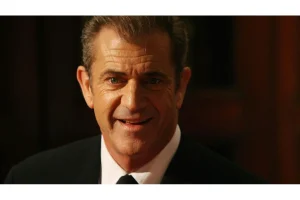
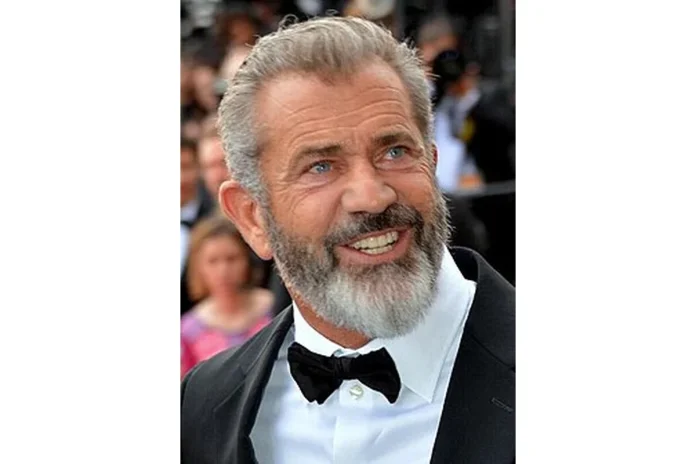
Mel Colm-Cille Gerard Gibson (born January 3, 1956) is an American actor and filmmaker whose career spans action hero roles, classical drama, and historical epics. He is best known for his breakout performance as Max Rockatansky in the post-apocalyptic Mad Max series and as Martin Riggs in the Lethal Weapon series. Born in Peekskill, New York, he moved to Sydney, Australia, at the age of 12, where he later studied acting and gained fame through Australian television and film. He became a prominent figure in Hollywood, recognized for both his acting and directorial achievements, receiving multiple accolades throughout his career.
Early Life and Background
Mel Colm-Cille Gerard Gibson was born on January 3, 1956, in Peekskill, New York, a suburb of New York City. He is of Irish American descent, the sixth of eleven children, and the second son of Hutton Gibson, a writer, and Irish-born Anne Patricia Reilly. His paternal grandmother was opera contralto Eva Mylott, who was born in Australia to Irish parents, while his paternal grandfather, John Hutton Gibson, was a millionaire tobacco businessman from the Southern United States. One of his younger brothers, Donal Gibson, is also an actor. His first name is derived from St Mel’s Cathedral, located in his mother’s hometown of Longford, Ireland.
In 1968, his father was awarded a work-related injury settlement, after which the family relocated to West Pymble, New South Wales, Australia, partly for financial reasons and to avoid the Vietnam War draft of Gibson’s eldest brother. Gibson was twelve at the time. During his high school years, he was educated by members of the Congregation of Christian Brothers at St Leo’s Catholic College in Wahroonga, New South Wales. He went on to study acting at the National Institute of Dramatic Art in Sydney, where he graduated with a Bachelor of Fine Arts in 1977.
Path to Acting
At the National Institute of Dramatic Art, Gibson and actress Judy Davis played the leads in a production of Romeo and Juliet, and he performed the role of Queen Titania in an experimental staging of A Midsummer Night’s Dream. While still a student, he made his film debut in the 1977 film Summer City, for which he was paid $400. After graduation, he joined the State Theatre Company of South Australia in Adelaide, where his theatrical credits included the role of Estragon in Waiting for Godot opposite Geoffrey Rush and the role of Biff Loman in a 1982 Sydney production of Death of a Salesman.
His early screen work included guest roles in Australian television series such as The Sullivans, Cop Shop, and the pilot episode of Punishment. Director Peter Weir cast him as one of the leads in the World War I drama Gallipoli (1981), which earned Gibson a Best Actor Award from the Australian Film Institute. The critically acclaimed film helped to further launch his career and earned him the reputation of a serious, versatile actor, gaining him the Hollywood agent Ed Limato.
Mel Gibson Career
Early Career (1976-1986)
Gibson’s screen acting career began in 1976 with a role on the Australian television series The Sullivans. He then played the title character in Mad Max (1979), earning $9,000 for the role. Shortly after, he played a mentally slow youth in the film Tim (1979). The sequel Mad Max 2 (1982), released in North America as The Road Warrior, became his first hit in America. He received further positive notices for his role in Peter Weir’s romantic thriller The Year of Living Dangerously (1982).
Following a one-year hiatus after the birth of his twin sons, Gibson took on the role of Fletcher Christian in The Bounty (1984) and earned his first million-dollar salary for Mad Max Beyond Thunderdome (1985). In 1985, after working on four films in a row, he took almost two years off at his Australian cattle station. He returned to play the role of Martin Riggs in Lethal Weapon (1987), a film which helped to cement his status as a Hollywood leading man.
Breakthrough (1987-2002)
Gibson’s portrayal of Martin Riggs in Lethal Weapon established him as a major action star, and he reprised the role in Lethal Weapon 2 (1989), Lethal Weapon 3 (1992), and Lethal Weapon 4 (1998). During the 1990s, he alternated between commercial and personal projects, including the Franco Zeffirelli film version of Hamlet (1990), Maverick (1994), and the human drama Forever Young (1992). He moved into directing with The Man Without a Face (1993), then produced, directed, and starred in Braveheart (1995), a biographical film of Scottish patriot Sir William Wallace, for which he won the Academy Award for Best Director and the Academy Award for Best Picture.
His notable acting roles during this period included Ransom (1996), Conspiracy Theory (1997), Payback (1999), What Women Want (2000), The Patriot (2000), We Were Soldiers (2002), and Signs (2002), the last of which became the highest-grossing film of his acting career. He also voiced John Smith in Disney’s Pocahontas (1995). In 1993, he founded Icon Productions with partner Bruce Davey, growing it into a production and international distribution company.
Continued Directing and Comeback (2004-Present)
Gibson directed, produced, co-wrote, and funded The Passion of the Christ (2004), a biblical drama that grossed over $611 million worldwide and became the highest-grossing R-rated film of all time at the time. He received further critical acclaim for directing the action-adventure film Apocalypto (2006), set in Mesoamerica during the early 16th century, with dialogue spoken in the Yucatec Maya language. After several legal issues and controversial statements, his popularity in Hollywood declined, affecting his career, and he starred in Edge of Darkness (2010) and Jodie Foster’s The Beaver (2011). He also played villains in Machete Kills (2013) and The Expendables 3 (2014), and appeared in Daddy’s Home 2 (2017) and Dragged Across Concrete (2018).
His directorial comeback came with Hacksaw Ridge (2016), a World War II drama based on the true story of conscientious objector Desmond T. Doss, played by Andrew Garfield. The film won two Academy Awards and received six nominations, including Best Picture and Best Director. He also directed Flight Risk (2025), a thriller starring Mark Wahlberg. In 2021, after the death of original Lethal Weapon director Richard Donner, Gibson confirmed he would direct and star in Lethal Weapon 5, staying true to Donner’s vision.
Notable Works and Milestones
Gibson’s signature works include the Mad Max series, the Lethal Weapon series, Braveheart, The Passion of the Christ, Apocalypto, and Hacksaw Ridge. He won two Academy Awards for Braveheart, two for Hacksaw Ridge, the Golden Globe Award for Best Director, and the People’s Choice Award for Favorite Dramatic Motion Picture for The Passion of the Christ. He was named the Sexiest Man Alive by People in 1985, the world’s most powerful celebrity by Forbes in 2004, and an honorary Officer of the Order of Australia in 1997. Films either starring or directed by Mel Gibson have earned over US$2.5 billion in the United States alone.
Mel Gibson Award Nominations
Throughout his career, Mel Gibson has received numerous award nominations recognizing both his acting and directorial achievements. His film Hacksaw Ridge earned six Academy Award nominations, including Best Picture, Best Director, Best Actor for Andrew Garfield, Best Sound Editing, Best Sound Mixing, and Best Film Editing. The film also received Golden Globe nominations for Best Picture, Best Director, and Best Actor. The Passion of the Christ was nominated for three Academy Awards and won the People’s Choice Award for Favorite Dramatic Motion Picture.
Mel Gibson Awards Won
Mel Gibson has won two Academy Awards for Best Director and Best Picture for Braveheart (1995), and two Academy Awards for Hacksaw Ridge (2016). He also won the Golden Globe Award for Best Director for Braveheart and Best Actor Awards from the Australian Film Institute for both Mad Max and Gallipoli. He received the Outstanding Contribution to World Cinema Award at the Irish Film and Television Awards in 2008 and was named an honorary Officer of the Order of Australia in 1997 for his service to the Australian film industry.
| Award | Wins | Year |
|---|---|---|
| Academy Award for Best Director (Braveheart) | 1 | 1996 |
| Academy Award for Best Picture (Braveheart) | 1 | 1996 |
| Academy Award for Best Director (Hacksaw Ridge) | 1 | 2017 |
| Golden Globe Award for Best Director (Braveheart) | 1 | 1996 |
| People’s Choice Award for Favorite Dramatic Motion Picture (The Passion of the Christ) | 1 | 2005 |
| Outstanding Contribution to World Cinema (Irish Film and Television Awards) | 1 | 2008 |
Mel Gibson Family
Mel Gibson was born the sixth of eleven children to Hutton Gibson, a writer, and Anne Patricia Reilly, who was Irish-born and died in 1990. His paternal grandmother was Australian-born opera contralto Eva Mylott, and his paternal grandfather was John Hutton Gibson, a millionaire tobacco businessman from the Southern United States. His younger brother Donal Gibson is also an actor. Gibson’s first name is derived from St Mel’s Cathedral in his mother’s hometown of Longford, Ireland, and his second name, Colmcille, is shared with an Irish saint.
Personal Life
Gibson holds dual Irish and American citizenship through his mother and is also an Australian permanent resident. He married dental nurse Robyn Denise Moore on June 7, 1980, in a Catholic church in Forestville, New South Wales, and they have one daughter, Hannah, and six sons, including twins Edward and Christian, William, Louis, Milo, and Thomas. After 26 years of marriage, they separated in 2006 and finalized their divorce on December 23, 2011, in what was reported as the highest settlement in Hollywood history at over $400 million.
Following his divorce, Gibson was in a relationship with Russian songwriter Oksana Grigorieva from 2007 to 2010, with whom he has a daughter, Lucia, born in 2009. He began a relationship with writer and former champion equestrian vaulter Rosalind Ross in 2014, and they had a son, Lars Gerard, born in 2017, before separating in 2025. Gibson also has a son, Christian, born in 2017, with another partner. In January 2025, his Malibu home was destroyed in the Palisades Fire, and he was named one of three special ambassadors to Hollywood by President-elect Donald Trump later that month.