
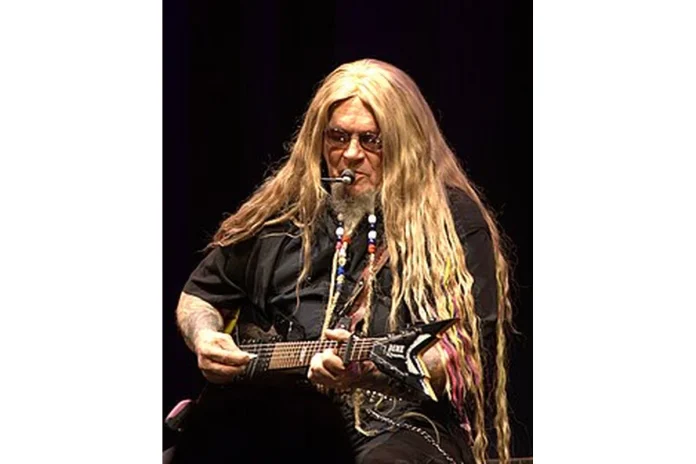
David Allan Coe Bio
David Allan Coe, born on September 6, 1939, in Akron, Ohio, is an American singer and songwriter whose work spans blues, country, and outlaw country. After spending much of his youth in reform schools and prisons, he launched a professional music career in Nashville in 1967, busking outside the Ryman Auditorium before signing with Plantation Records and later Columbia Records. Coe wrote songs that became major hits for other artists, including Tanya Tucker’s number-one single “Would You Lay With Me (In a Field of Stone)” and Johnny Paycheck’s anthem “Take This Job and Shove It”, while also building his own catalog of well-known recordings such as “You Never Even Called Me by My Name”, “Longhaired Redneck”, “The Ride”, and “Mona Lisa Lost Her Smile”. Known for a rebellious image and a string of controversial songs, he remains an active touring figure in country music.
Early Life and Background
David Allan Coe was born in Akron, Ohio, on September 6, 1939. His favorite singer as a child was Johnny Ace, an early indication of the deep connection he would develop with American roots music. After being sent to the Starr Commonwealth for Boys reform school at the age of nine, he spent much of the next two decades in correctional facilities, including a three-year stretch at the Ohio Penitentiary. It was during this difficult period that he first began writing songs.
While incarcerated, Coe came into contact with singer Screamin’ Jay Hawkins, who encouraged him to pursue songwriting seriously. He has often credited that mentorship as a turning point in his life. His early influences spanned blues, country, and early rock and roll, shaping the broad stylistic range that would later define his music. These formative years, marked by hardship and musical discovery, laid the foundation for his later entry into the Nashville music scene.
Path to Music
After finishing another prison term in 1967, David Allan Coe moved to Nashville with the goal of becoming a professional musician. He lived out of a hearse, parking it in front of the Ryman Auditorium while he performed on the street for tips. His raw talent and distinctive style soon caught the attention of Shelby Singleton, owner of the independent Plantation Records, who signed him to a recording contract.
Coe’s early performances leaned heavily on the blues, reflecting the influence of artists he had heard and studied during his years in reform school and prison. As he settled into the Nashville community, his sound gradually shifted toward country music, a transition that aligned him with the growing outlaw country movement of the 1970s. That path from street performer to recording artist marked the true beginning of his public career.
David Allan Coe Career
Early Career (1970–1975)
Early in 1970, David Allan Coe released his debut album, Penitentiary Blues, followed by a tour alongside Grand Funk Railroad. In October 1971, he signed an exclusive songwriter’s agreement with Pete and Rose Drake’s Windows Publishing Company in Nashville, where he remained until 1977. While he built a cult following through his live shows, mainstream success as a recording artist remained out of reach during this period.
Other performers, however, found chart success with songs Coe had written. Billie Jo Spears recorded “Souvenirs & California Mem’rys” in 1972, and Tanya Tucker’s 1973 single “Would You Lay With Me (In a Field of Stone)” became a number-one hit, a success that helped establish Coe as one of Nashville’s most in-demand songwriters. The exposure led to his signing with Columbia Records, and in 1975 he released Once Upon a Rhyme, which featured his own version of that signature song alongside his first top-ten country single, “You Never Even Called Me by My Name”.
Breakthrough (1975–1989)
Coe’s third album, The Mysterious Rhinestone Cowboy, marked his full commitment to country music and positioned him as a participant in the outlaw country movement. He adopted the “Mysterious Rhinestone Cowboy” stage persona, performing in a rhinestone suit and a Lone Ranger-style mask. A 1975 appearance in the documentary film Heartworn Highways introduced him to a wider audience alongside Guy Clark, Townes Van Zandt, and other songwriters of the era.
By 1977, with the outlaw country movement reaching its commercial peak, Coe released Rides Again, opening with the track “Willie, Waylon, and Me”, which aligned him with Willie Nelson and Waylon Jennings. His 1978 album Family Album featured his own recording of “Take This Job and Shove It”, the same year the song became a massive hit for Johnny Paycheck and inspired a 1981 film of the same name. In 1983, “The Ride” reached number four on the Billboard country singles chart and number one on the Cashbox Country Singles Chart, while his album Castles in the Sand peaked at number eight on the country albums chart, his highest showing in nearly a decade. The 1984 follow-up Just Divorced included “Mona Lisa Lost Her Smile”, which rose to number two on the Billboard country singles chart and number one in Canada.
Notable Works and Milestones
David Allan Coe’s signature works include “You Never Even Called Me by My Name”, “Longhaired Redneck”, “The Ride”, “Mona Lisa Lost Her Smile”, and “She Used to Love Me a Lot”, the last of which peaked at number eleven on the Billboard Hot Country Singles chart in 1984. His songs for other artists, “Would You Lay With Me (In a Field of Stone)” for Tanya Tucker and “Take This Job and Shove It” for Johnny Paycheck, are widely considered standards of the outlaw country era. He also collaborated with Pantera members Dimebag Darrell, Vinnie Paul, and Rex Brown on the 2006 country-metal album Rebel Meets Rebel, which AllMusic described as groundbreaking.
David Allan Coe Award Nominations
David Allan Coe’s uncompromising image, provocative lyrics, and outsider status within the Nashville establishment kept him largely off major award ballots throughout his career. While he earned a devoted following and produced several charting singles and albums, verifiable award nomination totals for him are not clearly established in available sources, and a detailed summary is therefore omitted.
David Allan Coe Awards Won
Although David Allan Coe produced a long string of influential recordings and wrote songs that became number-one hits for other country artists, verifiable competitive award wins for him are not clearly established in available sources. A summary of confirmed award victories is therefore omitted from this page.
David Allan Coe Family
David Allan Coe is the father of Tyler Mahan Coe, his first-born son, who is the creator of the Cocaine & Rhinestones podcast, a series that chronicles the history of country music. Coe has also noted publicly that he is the father of four children with Jody Lynn Coe, his former wife. He has spoken often about the importance of his son Tyler, including writing a message on the back of his 1986 album Son of the South in which he expressed pride in his relationship with Tyler and described him as his first-born son.
Personal Life
David Allan Coe has cultivated a rebellious public image throughout his career, marked by flashy rhinestone suits, long hair, multiple earrings, and a love of Harley-Davidson motorcycles. He is a retired member of the Louisville, Kentucky, chapter of the Outlaws Motorcycle Club. In 2015, he pleaded guilty in U.S. District Court for the Southern District of Ohio to one count of impeding the due administration of the Internal Revenue laws, and in 2016 he was sentenced to three years of probation and ordered to pay the IRS nearly one million dollars in back taxes. Despite controversies and legal setbacks, Coe has continued to tour and record, maintaining a loyal fan base within the country music community.