
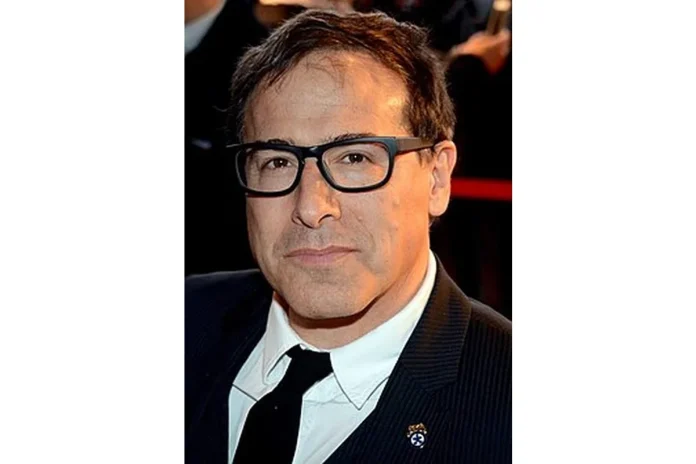
David O. Russell Bio
David Owen Russell, born on August 20, 1958, in New York City, is an American film director, screenwriter, and producer whose body of work blends offbeat humor with emotionally charged storytelling. Over a career that began in the late 1980s, he has earned two British Academy Film Awards, a Golden Globe Award, four Independent Spirit Awards, and five Academy Award nominations across categories including Best Director and Best Screenplay. Russell gained widespread recognition for The Fighter (2010), Silver Linings Playbook (2012), American Hustle (2013), Joy (2015), and Amsterdam (2022), films known for their ensemble casts and high-concept premises. In addition to his filmmaking, he has been an active advocate for mental health awareness and arts education.
Early Life and Background
David Owen Russell grew up in the suburb of Larchmont, New York, in an upper middle-class household shaped by the publishing industry. His father, Bernard Russell, served as vice president of sales at Simon & Schuster, and his mother, Maria Russell, worked as a secretary at the same company. His father came from a Russian-Jewish family, while his mother was Italian-American with roots in the Lucania region of southern Italy. Russell’s paternal grandfather, a butcher from the Upper West Side of Manhattan, lost many of his relatives in concentration camps during the Holocaust, a family history that informed his later awareness of social issues.
Russell attended Mamaroneck High School, where classmates voted him Class Rebel and where he started a student newspaper and wrote short stories. At the age of thirteen, he made his first film for a school project, using a Super 8 camera to capture people on the streets of New York City. He fell in love with cinema during his teenage years, drawing inspiration from films such as Taxi Driver, Chinatown, and Shampoo, and grew up surrounded by books in his parents’ publishing household. In 1981, he graduated from Amherst College with an A.B. degree in English and political science, having written his senior thesis on United States intervention in Chile between 1963 and 1973.
Path to Filmmaking
After graduating from Amherst, Russell traveled to Nicaragua, where he taught in a Sandinista literacy program, before returning to the United States to work a series of day jobs in Boston and Maine, including waitering, bartending, and catering. He became a community organizer in Lewiston, Maine, where he used video equipment to document substandard housing conditions in slums, an experience that produced an early documentary. He also worked as a political activist and canvasser, and did community work in Boston’s South End while beginning to write short films in his spare time.
Russell directed a documentary about Panamanian immigrants in Boston, which led to a job as a production assistant on the PBS series Smithsonian World. In 1987, he wrote, produced, and directed the short film Bingo Inferno: A Parody on American Obsessions, followed in 1989 by the short Hairway to the Stars, featuring actress Bette Davis. Both shorts were screened at the Sundance Film Festival. After making an award-winning short for a Boston television station, he received grants from the New York State Council on the Arts and the National Endowment for the Arts, funding that he redirected toward his first feature.
David O. Russell Career
Early Career (1987–2009)
David O. Russell made his feature directorial debut with Spanking the Monkey (1994), an independent dark comedy about a troubled young man and his lonely mother, produced by Dean Silvers and starring Jeremy Davies and Alberta Watson. Despite its controversial subject matter, the film received positive reviews and won him both the Independent Spirit Award for Best First Screenplay and the Audience Award at the Sundance Film Festival. He followed it with Flirting with Disaster (1996), a Miramax comedy starring Ben Stiller, Patricia Arquette, and Téa Leoni that screened in the Un Certain Regard section at the Cannes Film Festival.
In 1999, Russell directed Three Kings, a Gulf War black comedy starring George Clooney, Mark Wahlberg, Ice Cube, and Spike Jonze that grossed more than 100 million dollars worldwide and holds a 94 percent rating on Rotten Tomatoes. He followed that success with the existential comedy I Heart Huckabees (2004), starring Dustin Hoffman, Lily Tomlin, Jude Law, and Mark Wahlberg, though the film received mixed reviews and underperformed at the box office. He also co-wrote the political satire Nailed with Kristin Gore, a project delayed multiple times before being retitled Accidental Love and released on VOD in February 2015.
Breakthrough (2010–2015)
Russell returned to prominence with The Fighter (2010), a biographical sports drama about junior welterweight boxer Mickey Ward, starring Mark Wahlberg, Christian Bale, and Melissa Leo. The film grossed 125 million dollars and earned seven Academy Award nominations, including Best Picture and Best Director for Russell, his first Oscar nominations. Both Bale and Leo won Academy Awards for their supporting performances, establishing Russell as a major directorial force.
In 2012, Russell directed Silver Linings Playbook, adapted from Matthew Quick’s novel and starring Bradley Cooper, Jennifer Lawrence, and Robert De Niro in a romantic comedy-drama about a man with bipolar disorder. The film earned eight Academy Award nominations, with Lawrence winning Best Actress, and Russell receiving Best Director and Best Adapted Screenplay nominations. He won the Hollywood Director Award, a BAFTA for Adapted Screenplay, two Independent Spirit Awards, and the People’s Choice Award at the 2012 Toronto International Film Festival. In 2013, he reunited with Cooper, Lawrence, De Niro, Bale, and Amy Adams for American Hustle, a dark comedy based on the ABSCAM scandal that received ten Academy Award nominations and three Golden Globe wins.
Russell collaborated again with Lawrence on Joy (2015), a comedy-drama about entrepreneur Joy Mangano, which grossed more than 101 million dollars worldwide and won Lawrence the Golden Globe for Best Actress in a Musical or Comedy, along with an Academy Award nomination for Best Actress.
Notable Works and Milestones
Russell’s signature films include the Oscar-nominated The Fighter, Silver Linings Playbook, and American Hustle, all driven by ensemble casts tackling emotionally charged stories, and he has earned Academy Award nominations for Best Director three times, along with nominations for Best Adapted Screenplay and Best Original Screenplay.
David O. Russell Award Nominations
Over the course of his career, David O. Russell has received numerous award nominations, including five Academy Award nominations spanning Best Director, Best Picture, Best Adapted Screenplay, and Best Original Screenplay. He has also received two Directors Guild of America nominations and seven Golden Globe nominations across directing, screenplay, and motion picture categories. Additional nominations include recognition from the British Academy Film Awards, the Independent Spirit Awards, and the Satellite Awards for his work on The Fighter, Silver Linings Playbook, American Hustle, and Joy.
David O. Russell Awards Won
Russell has won two British Academy Film Awards, a Golden Globe Award, and four Independent Spirit Awards for his directing and screenwriting across multiple films. His wins also include a Satellite Award for Best Director and a Satellite Award for Best Adapted Screenplay, as well as the Hollywood Director Award at the Hollywood Film Awards and an Indie Impact Award at the Palm Springs International Film Festival.
David O. Russell Family
David O. Russell was born to Bernard Russell and Maria Russell, both of whom worked at the publishing company Simon & Schuster. His father came from a Russian-Jewish background and served as vice president of sales at the company, while his mother, an Italian-American from a Lucanian family, worked as a secretary there. Russell has two children: one with his first wife, Janet Grillo, and an adopted son with his long-time partner, costume designer Holly Davis.
Personal Life
Russell was married to Janet Grillo, a former producer at Fine Line Features, from 1992 to 2007. Since 2007, he has been in a relationship with costume designer Holly Davis. He resides in Santa Monica, California. Beyond his filmmaking, Russell is an advocate for mental illness treatment and autism research, having met with Vice President Joe Biden and Senator Debbie Stabenow in 2013 to discuss mental healthcare legislation, and he serves on the creative council of Represent.Us, a nonpartisan anti-corruption organization.