
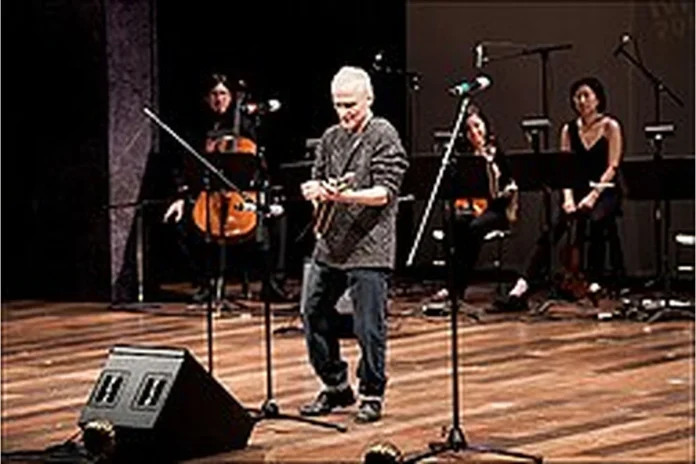
David Patrick Kelly Bio
David Patrick Kelly (born January 23, 1951) is an American actor, musician and lyricist whose distinctive presence has shaped more than four decades of film, television and stage work. He first gained widespread recognition as Luther, the menacing leader of the Rogues, in Walter Hill’s cult classic The Warriors (1979), and went on to build a varied career across mainstream Hollywood features and independent productions. Kelly has collaborated repeatedly with directors Spike Lee and David Lynch, while also maintaining a parallel life as a composer and performer on the New York music scene.
Across genres ranging from action and noir to drama and musical theatre, Kelly has remained a recognizable character actor and a respected theatre artist. His credits include 48 Hrs. (1982), Commando (1985), The Crow (1994), The Funeral (1996), Flags of Our Fathers (2006), the John Wick films (2014, 2017), and a recurring role on the television series The Blacklist (2015). Beyond screen work, he has earned an Obie Award for sustained excellence in theatre and originated a principal role in the Tony Award-winning musical Once.
Early Life and Background
David Patrick Kelly was born in Detroit, Michigan, on January 23, 1951, to Margaret Elizabeth Murphy Kelly (1915–2010) and Robert Corby Kelly Sr., an accountant. His father received a Bronze Star Medal for service during the Battle of the Bulge in World War II, an experience that shaped the family’s sense of duty and resilience. Kelly’s maternal grandfather, Daniel Murphy, was from Lisnashearshane, Duhallow, County Cork, Ireland, and his great-granduncle was Father William Corby, chaplain of the Irish Brigade at the Battle of Gettysburg who later became president of the University of Notre Dame.
On Saint Patrick’s Day in 1964, Kelly’s mother gave him a mandolin, an instrument that became the defining influence on his artistic life and one he still plays professionally. As an undergraduate, he wrote the lyrics and music for four musicals staged in Detroit, including adaptations of Aristophanes’ Lysistrata, a project based on Gulliver’s Travels, and an original mime show titled Home for Silent Clowns. He graduated cum laude with a Bachelor of Fine Arts from the University of Detroit, where he also studied with mime masters Marcel Marceau and Mira Rostova.
Path to Celebrity
Kelly’s earliest professional work unfolded on the experimental New York stage. In the mid-1970s he performed in several La MaMa Experimental Theatre Club productions, including George Birimisa’s Mr. Jello in 1974 and Wilford Leach’s C.O.R.F.A.X. (Don’t Ask) in 1975. These off-off-Broadway engagements, along with his parallel work in the downtown rock and cabaret circuit, helped him develop a hybrid skill set as both actor and musician.
In 1979, Walter Hill cast Kelly as Luther in The Warriors, a role that turned an improvised, scratchy taunt into one of cinema’s most quoted lines, “Warriors… come out to play-ee-ay!” Hill liked the collaboration so much that he wrote Kelly a second character named Luther into 48 Hrs. (1982), co-starring Nick Nolte and Eddie Murphy. Those back-to-back breaks moved Kelly from avant-garde stages into mainstream American filmmaking and established the pattern of genre-hopping that has defined his career ever since.
David Patrick Kelly Career
Early Career (1976–1985)
After years of New York theatre and cabaret, Kelly transitioned to screen work in the late 1970s. His film debut as Luther in The Warriors (1979) immediately gave him cult-icon status and led directly to a reteaming with Walter Hill on 48 Hrs. (1982), a buddy-cop hit that placed him alongside Nick Nolte and Eddie Murphy.
During this same period Kelly continued to build his stage résumé at La MaMa and other experimental venues, and he wrote music for plays produced there. His early film run also included Commando (1985), in which he played the supporting role of Sully opposite Arnold Schwarzenegger, expanding his range into action features.
Breakthrough (1990–2006)
Kelly’s breakthrough decade began with two high-profile collaborations. In 1990 he played Dropshadow in David Lynch’s Wild at Heart, which won the Palme d’Or at Cannes that year. He also joined Lynch’s television universe in Twin Peaks (1990–91) and appeared in Spike Lee’s epic Malcolm X (1992), portraying a supporting role in the biographical drama starring Denzel Washington.
The mid-1990s brought a string of widely seen genre pictures. Kelly appeared in The Crow (1994), Lee’s Crooklyn (1994), and the dual releases The Funeral and Last Man Standing (both 1996). In 2005 he was featured in the Adam Sandler sports remake The Longest Yard, and in 2006 he portrayed President Harry S. Truman in Clint Eastwood’s Flags of Our Fathers. The decade closed with sustained theatrical honors: in 1998 he received an Obie Award for sustained excellence in theatre and also played Feste in Nicholas Hytner’s Lincoln Center production of Twelfth Night.
Recent Work and Continuing Career (2014–2025)
Kelly returned to blockbuster action in John Wick (2014), reprising the role of Charlie in John Wick: Chapter 2 (2017). He joined Spike Lee again for Chi-Raq (2015) and took a recurring role on the NBC drama The Blacklist (2015). On stage, he originated the role of “Da” in the Broadway musical Once, which won the 2012 Tony Award for Best Musical, and he contributed mandolin and vocals to its Grammy-winning cast recording.
More recently, Kelly played King Sextimus the Silent in the 2024 Encores! revival of Once Upon a Mattress and appeared as Morten Kiil in Amy Herzog’s adaptation of An Enemy of the People on Broadway, directed by Sam Gold. He is also part of the cast of the concept album Warriors (2024), a Lin-Manuel Miranda and Eisa Davis project based on The Warriors, in which he cameos as a cop.
Notable Works and Milestones
Kelly’s signature screen credits include The Warriors (1979), 48 Hrs. (1982), Wild at Heart (1990), Malcolm X (1992), The Crow (1994), Flags of Our Fathers (2006), and the John Wick films (2014, 2017). His signature stage credit is the role of “Da” in the Broadway musical Once, and his signature recognition is the 1998 Obie Award for sustained excellence in theatre.
David Patrick Kelly Award Nominations
David Patrick Kelly has received a nomination for a Lucille Lortel Award for his performance as part of the cast of Nathan Louis Jackson’s When I Come To Die, which was staged at the LCT3 theater in Manhattan. That nomination, tied to a contemporary American play, recognizes his continued presence in the New York theatrical community beyond his established classics work.
David Patrick Kelly Awards Won
David Patrick Kelly has been honored with two recognized performance and career awards. He received a Connecticut Critics Circle Award for his work in Tartuffe at Hartford Stage, and in 1998 he was given an Obie Award for sustained excellence of performance in classics, new plays, and the avant-garde. These honors reflect a career built in equal measure on the American stage and on screen.
| Award | Wins | Year |
|---|---|---|
| Obie Award for Sustained Excellence in Theatre | 1 | 1998 |
| Connecticut Critics Circle Award (Tartuffe) | 1 | — |
David Patrick Kelly Family
David Patrick Kelly was born to Robert Corby Kelly Sr., an accountant and Bronze Star Medal recipient who served during the Battle of the Bulge in World War II, and Margaret Elizabeth Murphy Kelly (1915–2010). His mother’s family roots trace back to Lisnashearshane in County Cork, Ireland, through her father Daniel Murphy, and his great-granduncle Father William Corby served as chaplain of the Irish Brigade at the Battle of Gettysburg before leading the University of Notre Dame.
Kelly and theater actress and writer Juliana Francis married at St. Mark’s Church in-the-Bowery in Manhattan on August 14, 2005. The couple welcomed a daughter, Margarethe Jane Kelly, in 2008.
Personal Life
Kelly has been married to Juliana Francis since 2005, and the couple have one daughter, Margarethe Jane Kelly, born in 2008. Outside of acting and music, he has trained in the martial art seido karate and in three forms of tai chi for more than thirty-five years, earning a second-degree black belt in seido. His longstanding ties to downtown New York’s experimental theatre and cabaret scenes continue to shape his creative life and his wide-ranging work across stage and screen.