
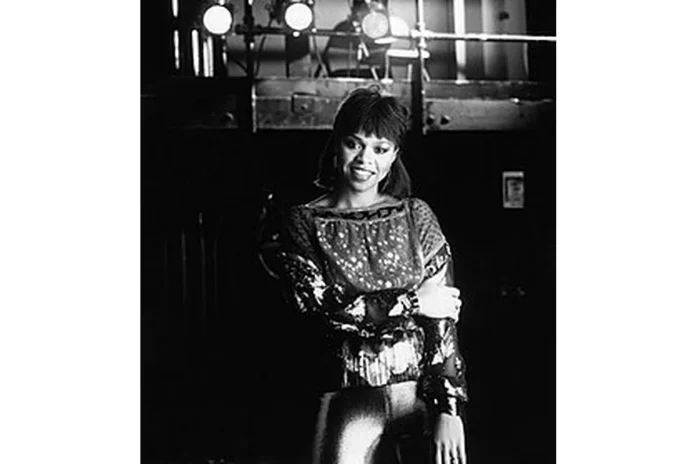
Deniece Williams Bio
June Deniece Williams (born June 3, 1950), known professionally as Deniece Williams, is an American singer celebrated for her four-octave vocal range and distinctive soprano voice. She has been described by the BBC as “one of the great soul voices,” a reputation built across more than five decades of recording and performing. Williams first rose to prominence as a backup vocalist for Stevie Wonder before launching a solo career that produced enduring hits in soul, R&B, disco, and gospel.
Her most recognizable recordings include the singles “Free,” “Silly,” “It’s Gonna Take a Miracle,” and two Billboard Hot 100 number-one songs: “Too Much, Too Little, Too Late” with Johnny Mathis and “Let’s Hear It for the Boy.” Over the course of her career, Deniece Williams has won four Grammy Awards from thirteen nominations, recorded for major labels including Columbia, ARC, MCA, Atlantic, Sparrow, and Shanachie, and earned recognition as one of the first inductees into the Women Songwriters Hall of Fame in 2021.
Early Life and Background
June Deniece Chandler was born and raised in Gary, Indiana. The Midwestern industrial city shaped her early years and remained a touchstone throughout her life, with Williams later returning to her hometown for community projects and public honors. Growing up in Gary, she was immersed in the rich musical environment of the region, and her natural vocal talent became apparent at a young age.
She attended Morgan State University in Baltimore, Maryland, with the initial intention of becoming a registered nurse and anesthetist. However, her passion for music soon eclipsed her medical studies, and she dropped out after a year and a half. In later interviews, Williams reflected candidly on that period, recalling, “You have to be a good student to be in college, and I wasn’t.” The decision to leave school for music set the trajectory for everything that followed in her professional life.
Path to Singing
While still a college student, Deniece Williams began performing part-time at a club called Casino Royal. She later recalled, “It was a lot of fun,” and the experience confirmed her love of singing. To support herself during those years, she also worked at a telephone company and as a ward clerk at the Chicago Mercy Hospital, balancing day jobs with her growing musical commitments.
She recorded for the Toddlin’ Town group of labels under her birth name, Deniece Chandler. One of those early records, “I’m Walking Away,” was released on Toddlin’s subsidiary Lock Records in the late 1960s and later became a favorite on England’s Northern Soul scene. In 1969, she had a brief spell with Patti Hamilton’s group the Lovelites, leading on “I’m Not Like the Others,” a track that was eventually released in 1999. These formative studio experiences led directly to her invitation to join Stevie Wonder’s backing group, Wonderlove, in the early 1970s.
Deniece Williams Career
Early Career (1968–1975)
Deniece Williams began her professional career in 1968, performing locally and recording for small labels around the Midwest. Her big break came when she was recruited to join Stevie Wonder’s backing vocal ensemble, Wonderlove. As part of that group, she lent her voice to some of Wonder’s most celebrated albums, including Talking Book, Fulfillingness’ First Finale, and Songs in the Key of Life. She also appeared on key recordings by Syreeta Wright, Minnie Riperton, and Roberta Flack during this period, sharpening her studio skills alongside some of the most respected artists in soul music.
In 1975, Williams left Wonderlove to sign a solo deal with Columbia Records and Kalimba Productions, a production company founded by Maurice White and Charles Stepney of Earth, Wind & Fire. That transition marked the true beginning of her solo career and laid the foundation for a string of commercially and critically successful albums throughout the late 1970s and 1980s.
Breakthrough (1975–1987)
Released in August 1976, her debut solo album This Is Niecy reached number three on the Top R&B/Hip-Hop Albums chart and number 33 on the Billboard 200, earning Gold certification in the United States and Silver certification in the United Kingdom. The album cut “Free” became a major international hit, reaching number one on the UK Singles chart, number two on the Billboard Hot R&B Songs chart, and number 25 on the Hot 100. Williams followed with the 1977 album Song Bird, produced by Maurice White after the death of Charles Stepney, and the 1978 duet album That’s What Friends Are For with Johnny Mathis.
Her 1978 duet with Johnny Mathis, “Too Much, Too Little, Too Late,” reached number one on the Billboard Hot 100, Hot Soul Songs, and Adult Contemporary charts, cementing her as a cross-over star. Subsequent solo albums, including When Love Comes Calling (1979), My Melody (1981), and Niecy (1982), continued to build her reputation. The single “Silly” became a defining R&B track, while her cover of the Royalettes’ “It’s Gonna Take a Miracle” topped the Billboard Hot Soul Songs chart and reached number 10 on the Hot 100. In 1982, Williams and Mathis also recorded “Without Us,” the theme song for the sitcom Family Ties.
The 1984 album Let’s Hear It for the Boy was her commercial high point. The title track, featured on the soundtrack of the feature film Footloose, reached number one on the Billboard Hot 100, Hot Soul Songs, and Dance Club Play charts, and was certified Platinum in the United States and Gold in both Canada and the United Kingdom. That same year, Williams also guested on Johnny Mathis’s album A Special Part of Me, and the following year she appeared on Stevie Wonder’s In Square Circle and James Taylor’s That’s Why I’m Here.
Notable Works and Milestones
Across the late 1970s and 1980s, Deniece Williams built a body of work that spanned soul, R&B, disco, pop, and gospel. Signature recordings such as “Free,” “Silly,” “It’s Gonna Take a Miracle,” “Too Much, Too Little, Too Late,” and “Let’s Hear It for the Boy” remain staples of adult contemporary and R&B radio. Her willingness to record across genres, including the gospel albums So Glad I Know (1986), Special Love (1989), and This Is My Song (1999), demonstrated an artistic range matched by few of her contemporaries.
Deniece Williams Award Nominations
Deniece Williams has received thirteen Grammy Award nominations across her career, spanning categories that include Best R&B Vocal Performance, Female, Best Soul Gospel Performance, Female, Best Gospel Vocal Performance by a Duo or Group, Choir or Chorus, and Best Pop/Contemporary Gospel Album. Her nominations reflect sustained peer recognition from the National Academy of Recording Arts and Sciences over more than four decades of recording.
Deniece Williams Awards Won
Deniece Williams has won four Grammy Awards. Her wins include the Grammy Award for Best Gospel Vocal Performance by a Duo or Group, Choir or Chorus for “They Say” with Sandi Patti, the Grammy Award for Best Soul Gospel Performance, Female for “I Surrender All,” and the Grammy Award for Best Pop/Contemporary Gospel Album for This Is My Song. In 2021, she was also honored as one of the first-ever inductees into the Women Songwriters Hall of Fame.
| Award | Wins | Year |
|---|---|---|
| Grammy Award for Best Gospel Vocal Performance by a Duo or Group, Choir or Chorus (“They Say” with Sandi Patti) | 1 | 1987 |
| Grammy Award for Best Soul Gospel Performance, Female (“I Surrender All”) | 1 | 1987 |
| Grammy Award for Best Pop/Contemporary Gospel Album (This Is My Song) | 1 | 2000 |
| Grammy Award (fourth win, category per verified sources) | 1 | 2000 |
Deniece Williams Family
Deniece Williams has four sons. With her first husband, Kendrick Williams, she had two sons, Kendrick Jr., born in 1972, and Kevin, born in 1973. With her third husband, Brad Westering, she had two more sons, Forrest, born in 1988, and Logan. She has continued to use her first husband’s surname professionally throughout her solo career.
Personal Life
Deniece Williams has been married three times. She married her middle school sweetheart, Kendrick Williams, in 1970, and they divorced in 1975. In May 1981, she married actor and minister Christipher Joy; they separated in August 1982 and divorced later that year. From 1986 until 1993, she was married to Brad Westering. After establishing her career in California, Williams remained active in gospel and secular music and in 2008 announced plans for a community program called KOP, Kids of Promise, in her hometown of Gary, Indiana. In August 2025, she returned to Gary with her four sons for the dedication of a mural in her honor entitled “Songbird,” painted by Max Sansing at the corner of 25th Avenue and Broadway.