
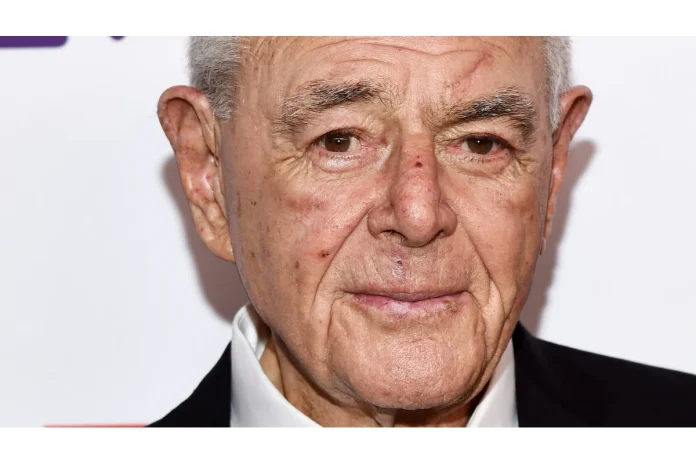
Dick Richards Bio
Richard M. Richards (born 1936) is an American film director, producer, and screenwriter whose career has taken him from the photography studios of New York to the soundstages of Hollywood. Widely regarded as an actor’s director, he is known for guiding memorable performances from stars such as Robert Mitchum, Gene Hackman, Martin Sheen, Blythe Danner, Catherine Deneuve, Alan Arkin, and Burt Reynolds. Beyond his directing credits, Richards earned a Golden Globe and an Academy Award nomination for producing the beloved comedy classic Tootsie. His body of work spans westerns, detective pictures, war dramas, and character-driven studio films, marking him as a versatile craftsman of American cinema.
Early Life and Background
Richard M. Richards was born in 1936 in Brooklyn, New York, and raised in the city that would shape his early creative voice. Growing up in New York during the post-war era placed him close to the exploding worlds of advertising, photography, and televised entertainment, fields that were rapidly redefining American popular culture. This environment encouraged his visual eye and his instinct for storytelling through images.
Before stepping behind a movie camera, Richards built a reputation as a photographer, a craft that demanded precision, patience, and a strong sense of composition. He gravitated toward the advertising industry, where directors and photographers collaborated to create short, high-impact stories for television audiences. Those early years in photography and commercials would become the foundation of his directorial style, teaching him how to shape a narrative in a short span of time and how to work closely with performers.
Path to Filmmaking
During the 1960s advertising revolution, Richards rose to prominence as a world-renowned photographer and commercial director. His clients included major American brands such as Coca-Cola, Volkswagen, Polaroid, General Motors, Hertz, and Pepsi, and his celebrated advertising work earned every major industry award. He received the Cannes Lion for best worldwide commercial, along with multiple Clio Awards and New York Art Director Awards. Critic Pauline Kael described Richards as a photographer who became a whiz at TV commercials before directing movies, capturing the arc of his transition from image-maker to filmmaker.
After years of success in the New York commercial world, Richards moved to Hollywood to direct his first feature film, The Culpepper Cattle Co. (1972). The western was praised for its historical accuracy and period atmosphere, and it won Richards the Writers Guild of America Screen Writer’s Annual Story Award. The production also gave associate producer Jerry Bruckheimer his first film credit, beginning a partnership that would carry through several later projects.
Dick Richards Career
Early Career (1972–1975)
The Culpepper Cattle Co. (1972) announced Richards as a careful period filmmaker with a strong feel for character and landscape. Following its success, Universal Pictures producers Richard D. Zanuck and David Brown hired Richards to direct Jaws (1975). Richards was eventually removed from the project after creative disagreements, and Steven Spielberg took over, but the engagement showed the industry’s confidence in Richards’s directorial instincts.
He quickly rebounded with Rafferty and the Gold Dust Twins (1975), a road comedy starring Alan Arkin, Mackenzie Phillips, and Harry Dean Stanton. Pauline Kael called the picture a funny, velvety sleeper that sneaks up on its audience, and the film helped establish Richards as a director comfortable with both humor and tenderness.
Breakthrough (1975–1986)
In the same prolific year, Richards directed Robert Mitchum and Charlotte Rampling in the Raymond Chandler adaptation Farewell, My Lovely (1975). Roger Ebert wrote that the movie never steps wrong and called it a totally assured piece of work, while Sylvia Miles earned a Best Supporting Actress nomination for her performance. A young Sylvester Stallone also appeared in a pre-Rocky role, adding to the film’s place in cinema history.
Richards continued to demonstrate range with the British war drama March or Die (1977), starring Gene Hackman, Catherine Deneuve, and Terence Hill, followed by the horror film Death Valley (1982) and the family drama Man, Woman and Child (1983), an adaptation of Erich Segal’s novel starring Martin Sheen and Blythe Danner. He closed this chapter with Heat (1986), which starred Burt Reynolds.
Alongside his directing work, Richards optioned, developed, and produced Tootsie (1982) with Sydney Pollack. The comedy was nominated for ten Academy Awards, including Best Picture, and earned Richards and Pollack the Golden Globe for Best Motion Picture – Comedy. Roger Ebert awarded the film four stars, and in 1998 the Library of Congress selected Tootsie for preservation in the National Film Registry for its cultural significance.
Notable Works and Milestones
Among Richards’s signature works are The Culpepper Cattle Co., Farewell, My Lovely, March or Die, and Tootsie, each reflecting his ability to draw grounded performances from major stars. His Golden Globe win and Academy Award nomination for Tootsie stand as the most decorated achievements of his career, while his body of genre-spanning features remains a steady mark of his craft.
Dick Richards Award Nominations
Richards received verified career nominations at the highest levels of the film industry, primarily in recognition of his producing work on the comedy classic Tootsie (1982). His most prominent nomination came from the Academy Awards in 1983, when Tootsie was nominated for Best Picture, a category that honored Richards as a producer alongside Sydney Pollack. Earlier, the Writers Guild of America also recognized his storytelling by giving him the Screen Writer’s Annual Story Award for The Culpepper Cattle Co. (1972), marking an early milestone in his transition from advertising to features.
Dick Richards Awards Won
Richards has been honored with major awards across both the advertising and film industries, beginning with the Cannes Lion for best worldwide commercial and multiple Clio Awards and New York Art Director Awards earned during his commercial career. In 1983, he and Sydney Pollack won the Golden Globe for Best Motion Picture – Comedy for their work producing Tootsie (1982). He also received the Writers Guild of America Screen Writer’s Annual Story Award for his debut feature The Culpepper Cattle Co. (1972), confirming his arrival as a feature filmmaker.
Dick Richards Family
Richards has been married to his wife, Hilke Richards, since 1963, making theirs one of the long-standing partnerships in his personal life. Together they have four children, and the family has remained a steady presence alongside his decades-long career in film.
Personal Life
Outside of his work in Hollywood, Richards is known for his close friendships with several actors he has directed, including a particularly close bond with Wilford Brimley, with whom he collaborated on Death Valley (1982). Brimley credited Richards as a best friend and partner in later commercial work that raised awareness of diabetes. Richards continues to be recognized for the collaborative spirit and loyalty that have defined both his professional collaborations and his family life.