
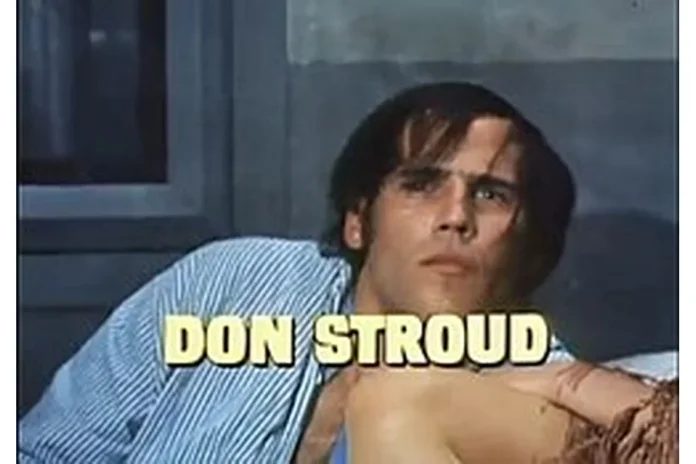
Don Stroud Bio
Donald Lee Stroud (born September 1, 1943) is an American actor, musician, and surfer who has built one of the most prolific character careers in Hollywood. Over the course of more than five decades, he has appeared in more than 100 films and hundreds of television episodes, often cast as a villain, tough guy, or action figure. Standing 6 feet 2 inches tall, he brought an easy physical authority to roles that ranged from street-level crime stories to period war films and horror thrillers. He is also a lifelong surfer and musician whose off-screen passions have shaped his public identity.
Born and raised in Honolulu, Hawaii, Stroud is the son of vaudeville performer Clarence Stroud and singer Ann McCormack, and he grew up close to the ocean that became his first stage. After moving to Los Angeles in the 1960s, he transitioned from lifeguard and club work to acting with the help of actor Sidney Poitier, who introduced him to agent Dick Clayton. He made his film debut in 1967 and has continued to work steadily in Hollywood ever since.
Early Life and Background
Don Stroud was born in Honolulu, in what was then the Territory of Hawaii, and was raised there by his mother, singer Ann McCormack, and his stepfather, Paul Livermore. His father, Clarence Stroud, was a vaudeville performer who worked as part of a duo called The Stroud Twins. Growing up in this entertainment family gave Stroud early exposure to stage life, even though the Hawaiian surf culture soon became the more powerful influence on his day-to-day life.
Stroud began surfing at the age of 3 and was soon teaching the sport to others while he was still in high school. In 1960, at the age of 17, he won the Mākaha Junior Championship and placed fourth overall in the prestigious Duke Kahanamoku International competition. The same teenage years brought another discipline: at 16, he earned a black belt in the Hawaiian martial art of Kajukenbo, a training ground that would later serve him well in Hollywood fight scenes.
While working as a lifeguard at the Kahala Hilton beach, Stroud was hired to double for actor Troy Donahue during surfing sequences filmed at Waikiki for the television series Hawaiian Eye. Donahue was impressed and encouraged the young Hawaiian to move to Los Angeles to pursue acting while also serving as his fight double and bodyguard. Stroud took the advice, leaving the islands for the mainland and the start of a new life.
Path to Celebrity
Once in Los Angeles, Stroud supported himself with odd jobs, including parking cars and managing the club at the famous Whisky A Go-Go in Hollywood. It was at the club that he met Sidney Poitier, a regular at the venue, who took an interest in the young Hawaiian and offered practical advice on how to break into acting. Poitier connected Stroud with agent Dick Clayton, who also represented stars such as James Dean, Michael Douglas, Al Pacino, and Burt Reynolds.
With representation in place, Stroud moved quickly from background work to credited parts. His size, athletic background, and martial arts training made him a natural fit for tough characters, and he soon began booking roles in both film and television. By the end of the 1960s, he had signed a five-film contract with Universal Pictures, a remarkable achievement for a surfer-turned-actor with no formal dramatic training.
Don Stroud Career
Early Career (1967-1969)
Don Stroud made his Hollywood film debut in 1967 with a role as Norman in the Curtis Harrington psychological thriller Games, released the same year he also appeared in the western comedy The Ballad of Josie opposite Doris Day. The following year, he signed a five-film contract with Universal Pictures and landed a role in the police drama Madigan (1968), starring Richard Widmark.
That same year, Stroud appeared opposite Clint Eastwood in the urban western Coogan’s Bluff (1968), beginning a working relationship with Eastwood that would stretch into the next decade. These early assignments established a clear pattern in his career: he was cast as a credible physical threat, often on the wrong side of the law, and he used his Kajukenbo training to make fight scenes feel authentic.
Breakthrough (1970-1979)
The 1970s pushed Stroud into higher-profile projects across several genres. He reteamed with Clint Eastwood for the western Joe Kidd (1972) and co-starred in two Roger Corman productions: Bloody Mama (1970), directed by Roger Corman and starring Shelley Winters, and the World War I aviation film Von Richthofen and Brown (1971), in which he played pilot Roy Brown opposite John Phillip Law as the Red Baron. For the latter, Corman sent Stroud to Lynn Garrison’s Irish aviation facility, where Garrison taught him the basics of flying so that he could handle takeoffs and landings on camera.
Stroud delivered one of his most memorable leading performances in Murph the Surf (1975), starring as real-life jewel thief Jack Murphy alongside Robert Conrad. The two actors had earlier built a strong on-screen rivalry, and they would clash again in the martial arts film Sudden Death (1977). He moved into horror with Death Weekend (1976), also known as The House By the Lake, and The Killer Inside Me (1976), and he played a supporting role as Father Bolen in the cult horror hit The Amityville Horror (1979). His musical side came through in The Buddy Holly Story (1978), in which he co-starred as Buddy Holly’s drummer, playing live in front of a crowd of young fans while the soundtrack was recorded directly to multi-track tape.
Notable Works and Milestones
Beyond his 1970s work, Stroud is widely recognized for playing the villain in the James Bond film Licence to Kill (1989), giving him one of the most high-profile roles of his career. He also earned a recurring role as Captain Pat Chambers in Mickey Spillane’s Mike Hammer and The New Mike Hammer with Stacy Keach, appeared as The Great Kahuna in Gidget’s Summer Reunion (1985) and the series The New Gidget (1986), and joined the casts of Nash Bridges (1996-2001) and Pensacola: Wings of Gold (1996-2000). In 2011, he made a brief appearance in the new Hawaii Five-0 series, returning to the islands that had launched his career.
Don Stroud Award Nominations
Publicly verifiable information about formal award nominations for Don Stroud is limited, and a clear summary of nomination counts cannot be supported with the available sources. This section is therefore included as a brief note rather than a detailed list.
Don Stroud Awards Won
Publicly verifiable information about major award wins for Don Stroud is also limited in the available sources, and a confirmed list of trophy counts cannot be presented with confidence. This section is included as a brief note rather than a detailed table.
Don Stroud Family
Don Stroud is the son of vaudeville actor Clarence Stroud, who performed as part of a duo known as The Stroud Twins, and singer Ann McCormack. After his parents separated, he was raised in Honolulu by his mother and his stepfather, Paul Livermore. He has spoken in interviews about the influence of both parents on his early interest in performance, music, and travel.
Personal Life
Stroud’s life outside of acting has been marked by a number of dramatic incidents that have become part of his public story. On September 16, 1970, while filming low-level sequences in a two-seat SV.4C Stampe biplane over Lake Weston, a duck struck the propeller arc and hit the pilot, Lynn Garrison, in the face, knocking him unconscious. The aircraft hit power lines and plunged inverted into Ireland’s Liffey River, and Stroud rescued the unconscious pilot, treading water until rescue crews reached them nearly an hour later. Stroud emerged unhurt, but Garrison required 60 stitches to close a head wound.
Sometime in 1989 or 1990, on a street in Greenwich Village in New York City, Stroud attempted to help a man who was being mugged. During the confrontation, Stroud was stabbed several times, suffered partial paralysis in the face, and lost the use of one eye, while the original mugging victim fled the scene. Despite these events, Stroud has continued to act, surf, and perform music, maintaining close ties to Hawaii and the surfing community that first shaped his life.