
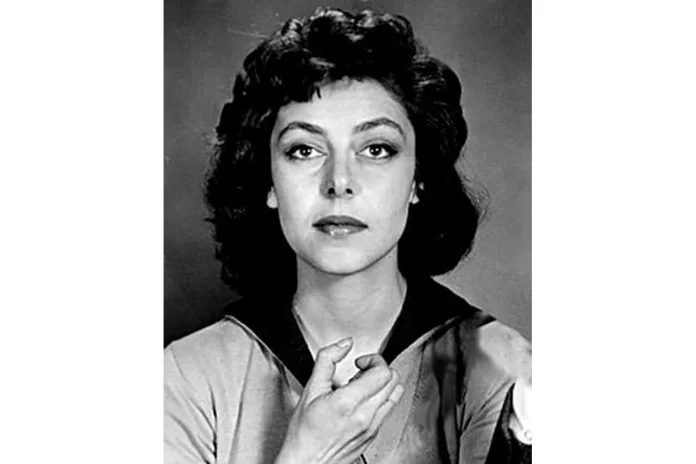
Elaine May Bio
Elaine Iva May, born Elaine Iva Berlin on April 21, 1932, in Philadelphia, Pennsylvania, is an American actress, comedian, writer, and film director whose career has reshaped modern American comedy across stage, film, and television. She first rose to prominence in the 1950s through the improvisational theater group the Compass Players and later as one half of the celebrated comedy duo Nichols and May with Mike Nichols. May went on to become a pioneering female writer-director in Hollywood and a writer of major studio screenplays, and she returned to the stage in her eighties to win a Tony Award. Her influence stretches from live improv in Chicago to Oscar-nominated screenplays and an Honorary Academy Award.
Early Life and Background
Elaine Iva Berlin was born on April 21, 1932, in Philadelphia, Pennsylvania, the daughter of Jewish parents Jack Berlin, a theater director and actor, and Ida Berlin, an actress. Because her father ran a traveling Yiddish theater company, she was on the road from a very young age and made her stage debut at three, often playing a young boy named Benny. The troupe’s constant touring meant that by the time she was ten, she had attended more than fifty schools, sometimes staying only a few weeks at each.
May said she disliked school and spent much of her free time reading fairy tales and mythology. Her father died when she was eleven, after which she and her mother settled in Los Angeles, where she later enrolled at Hollywood High School. She dropped out of high school at fourteen and, two years later, married engineer and toy inventor Marvin May, with whom she had a daughter, Jeannie Berlin, who later became an actress and screenwriter.
Path to Stardom in Comedy
After her first marriage, May studied acting and worked a series of odd jobs in California. When she learned that California colleges required a high school diploma, she discovered that the University of Chicago accepted students without one. With seven dollars in her pocket, she hitchhiked to Chicago, where she began auditing classes and was soon drawn into the campus theater scene.
In 1955, May became a founding member of the Compass Players, an off-campus improvisational theater group led by Paul Sills and David Shepherd. There she met Mike Nichols, and the two began developing improvised comedy sketches together. Their chemistry was so striking that in 1957 they left the group to form their own act, Nichols and May, performing in New York clubs and on Broadway before going on to influence a generation of American comedians.
Elaine May Career
Early Career (1955–1961)
As a member of the Compass Players, May quickly became a central figure, known for her piercing intelligence and her willingness to challenge convention. She often played sophisticated professional characters rather than the traditional 1950s housewife roles, helping to break stereotypes about women in comedy. Her work at the Compass set the stage for the duo’s later success.
After forming Nichols and May in 1957, the pair became a sensation in New York, playing to sold-out crowds in Greenwich Village clubs and on Broadway. Their 1961 Broadway debut recording, An Evening with Mike Nichols and Elaine May, won a Grammy for Best Comedy Album, and the duo received four Grammy nominations in total. They performed alongside contemporaries such as Joan Rivers and Woody Allen, who would later call their work a defining moment in modern comedy.
Breakthrough (1962–1987)
Following the duo’s split in 1961, May turned to writing for the stage and to film acting, appearing in Enter Laughing and Luv, both released in 1967. Her one-act play Adaptation became a critical success in 1969, and she directed it off-Broadway. In 1971, she made her film writing and directing debut with A New Leaf, a black comedy starring Walter Matthau and May herself as an awkward botanist-heiress. The film marked her as the first female director with a Hollywood deal since Ida Lupino.
May quickly followed with The Heartbreak Kid in 1972, directing a screenplay by Neil Simon and casting her daughter Jeannie Berlin in a memorable role. In 1976, she wrote and directed the gangster film Mikey and Nicky with Peter Falk and John Cassavetes, a film later reappraised as a masterwork. She received an Academy Award nomination for Best Adapted Screenplay for Warren Beatty’s Heaven Can Wait in 1978, and later wrote the adventure comedy Ishtar in 1987, starring Beatty and Dustin Hoffman.
Later Career and Screenwriting Triumphs (1990–2019)
In the 1990s, May reunited with Mike Nichols to write The Birdcage in 1996, a major box office hit adapted from the French farce La Cage aux Folles. Their collaboration continued with Primary Colors in 1998, which earned May her second Academy Award nomination for Best Adapted Screenplay and a BAFTA Award for Best Adapted Screenplay. She also contributed to the screenplay of Tootsie in 1982 and the drama Dangerous Minds in 1995.
On stage, May won the 2019 Tony Award for Best Actress in a Play for her performance in the Broadway revival of Kenneth Lonergan’s The Waverly Gallery, becoming the second-oldest performer to win a Tony for acting. She had earlier returned to acting in Woody Allen’s Small Time Crooks in 2000, winning the National Society of Film Critics Award for Best Supporting Actress, and in his Amazon series Crisis in Six Scenes in 2016. In 2022, she received an Honorary Academy Award for her bold, uncompromising approach to filmmaking.
Notable Works and Milestones
May’s directorial work on A New Leaf, The Heartbreak Kid, Mikey and Nicky, and Ishtar established her as a singular voice in American cinema, while her screenplays for Heaven Can Wait, The Birdcage, and Primary Colors demonstrated her range as an adapter. In 2019, her film A New Leaf was selected by the Library of Congress for preservation in the National Film Registry. In 2022, she was honored with the National Medal of Arts distinction, the Laurel Award for Screenwriting Achievement, and an Honorary Academy Award.
Elaine May Award Nominations
Elaine May has received multiple major nominations across film and theater. She earned two Academy Award nominations for Best Adapted Screenplay, for Heaven Can Wait in 1978 and Primary Colors in 1998. She received a Golden Globe nomination for Best Actress in a Motion Picture – Comedy or Musical for A New Leaf in 1971, and her Broadway revival of The Waverly Gallery brought a Tony Award nomination for Best Revival of a Play in 2019.
Elaine May Awards Won
May’s honors span comedy, screenwriting, theater, and lifetime achievement. She won a Grammy for Best Comedy Album with Nichols and May, a BAFTA Award for Best Adapted Screenplay for Primary Colors, and a Tony Award for Best Actress in a Play for The Waverly Gallery. She also won the National Society of Film Critics Award for Best Supporting Actress for Small Time Crooks, the Drama Desk Award and Outer Critics Circle Award for Outstanding Actress in a Play, and the Laurel Award for Screen Writing Achievement in 2016. She was further honored with the National Medal of Arts in 2013 and an Honorary Academy Award in 2022.
| Award | Wins | Year |
|---|---|---|
| Grammy Award for Best Comedy Album (Nichols and May) | 1 | 1962 |
| BAFTA Award for Best Adapted Screenplay (Primary Colors) | 1 | 1998 |
| National Society of Film Critics Award for Best Supporting Actress (Small Time Crooks) | 1 | 2000 |
| National Medal of Arts | 1 | 2013 |
| Laurel Award for Screen Writing Achievement | 1 | 2016 |
| Tony Award for Best Actress in a Play (The Waverly Gallery) | 1 | 2019 |
| Honorary Academy Award | 1 | 2022 |
Elaine May Family
May was born to Jack Berlin, a Yiddish theater director and actor, and Ida Berlin, an actress. Her father ran a traveling Yiddish theater company, and May performed with him on stage from a very young age. She has one daughter, actress and screenwriter Jeannie Berlin, from her first marriage to Marvin May. May’s family ties to the Yiddish stage shaped her comic sensibility and her lifelong love of performance.
Personal Life
May was married three times. She married engineer Marvin May in 1948, divorcing in 1960, then lyricist Sheldon Harnick in 1962, divorcing a year later. In 1964, she married her psychoanalyst, David L. Rubinfine, and they remained married until his death in 1982. From 1999 until his death in 2019, May’s long-time companion was director Stanley Donen, who reportedly proposed marriage many times. She is known for her fiercely private nature and her devotion to family and craft.