
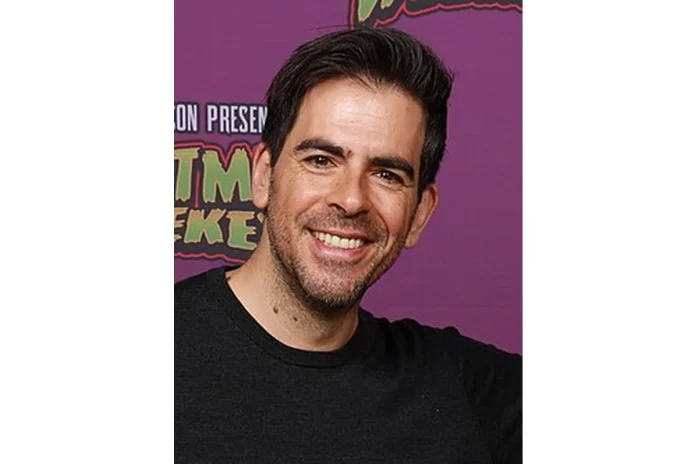
Eli Roth Bio
Eli Raphael Roth (born April 18, 1972) is an American filmmaker and actor whose work has helped shape mainstream horror cinema over the past two decades. He first drew international attention by directing Cabin Fever (2002) and Hostel (2005), two low-budget horror films that became major commercial successes and established him as a leading voice in the so-called Splat Pack of contemporary horror directors. Over time, he has expanded his range to include thrillers, fantasy, action, and science fiction projects, while continuing to act on screen.
Beyond his directing career, Eli Raphael Roth is also a screenwriter, producer, and actor. He is widely recognized for portraying the fearsome Donny “The Bear Jew” Donowitz in Quentin Tarantino’s Inglourious Basterds (2009), a performance that earned ensemble recognition from major film awards groups. His filmography balances gritty independent horror with larger studio productions such as The House with a Clock in Its Walls (2018), Death Wish (2018), and Borderlands (2024).
Early Life and Background
Eli Raphael Roth was born on April 18, 1972, in Newton, Massachusetts. He grew up the middle of three sons. His father, Sheldon Roth, is a psychiatrist and psychoanalyst who has served as a clinical professor at Harvard Medical School, and his mother, Cora Roth, is a painter. He has an older brother, Adam, born in 1970, and a younger brother, Gabriel, born in 1974. The family was raised Jewish, with roots tracing to Jewish emigrants from Austria, Hungary, Russia, and Poland, and in addition to English, Eli Raphael Roth speaks French, Italian, and basic Russian.
Roth’s interest in filmmaking began at the age of eight, after he watched Ridley Scott’s Alien (1979). Together with his brothers Adam and Gabriel, he produced more than one hundred short films before finishing high school at Newton South High School. He later enrolled at New York University’s Tisch School of the Arts, where he studied film and continued developing his directing skills. To support his projects during college, Roth worked as an online operator for Penthouse Magazine and as a production assistant on feature films, including Howard Stern’s Private Parts.
Path to Director
While attending NYU, Eli Raphael Roth wrote and directed a student film titled Restaurant Dogs, an homage to Quentin Tarantino’s Reservoir Dogs. The film was nominated for a Student Academy Award in 1995 and won its division (Division III), marking his first major industry recognition. During this period, Roth also interned with producer Frederick Zollo, a connection that introduced him to director David Lynch and composer Angelo Badalamenti, whose music later featured in his debut feature.
After graduating from NYU, Roth moved to Los Angeles in 1999 and began writing, directing, and producing short-form animation projects, including the animated series Chowdaheads for Mandalay Sports Entertainment and a series of stop-motion shorts called The Rotten Fruit. These projects, while never widely broadcast, sharpened his production skills and allowed him to meet collaborators who would later contribute to his feature work. The scripts for his first feature, Cabin Fever, were largely written during 1996 while he worked on Private Parts, drawing from a real skin infection he contracted while riding ponies in Iceland in 1991.
Eli Roth Career
Early Career (1991-2001)
Eli Raphael Roth’s earliest professional work began during his time at NYU, where his short film Restaurant Dogs earned a Student Academy Award. Following graduation, he pursued a combination of writing, animation work, and assistant jobs in the entertainment industry, all while continuing to develop the script that would become Cabin Fever. His persistence in writing during long nights at Silvercup Studios in Queens while working for Howard Stern helped lay the foundation for his feature directing career.
By 2001, Roth had assembled financing from private investors to produce Cabin Fever, which he co-wrote with college roommate Randy Pearlstein. The film was sold to Lionsgate at the 2002 Toronto International Film Festival for $3.5 million, the biggest sale of that year’s festival. Released in 2003, Cabin Fever earned $22 million at the U.S. box office and $35 million worldwide, making it Lionsgate’s highest-grossing film of the year and earning Roth early praise, including a glowing review from Quentin Tarantino, who called it “the best new American film” in a 2004 Premiere Magazine interview.
Breakthrough (2002-2009)
Following the success of Cabin Fever, Roth directed Hostel (2005), which opened at number one at the box office in January 2006 with a $20 million opening weekend. Made for just over $4 million, Hostel ultimately grossed $80 million worldwide in theaters and more than $180 million on DVD. The film’s violence prompted New York magazine critic David Edelstein in early 2006 to credit Roth with creating the horror subgenre “torture porn,” a label that became closely associated with the filmmaker. Hostel was later named the Best Horror Film of 2007 by Empire Magazine readers.
In 2007, Roth directed and narrated the Thanksgiving trailer segment for Grindhouse and appeared in Quentin Tarantino’s Death Proof segment of the same film. That same year, he released Hostel: Part II, which despite a leaked workprint earning $35 million worldwide in theaters and $50 million on DVD and pay television. Roth and co-writer Jeff Rendell won a 2007 Spike TV Scream Award for best “screamplay” for their work on Grindhouse, sharing the honor with Tarantino, Robert Rodriguez, Rob Zombie, and Edgar Wright.
Roth’s profile as an actor rose sharply in 2009 when he starred as Donny “The Bear Jew” Donowitz in Quentin Tarantino’s Inglourious Basterds. The performance earned him a Critics’ Choice Movie Award and a Screen Actors Guild Award as part of the ensemble cast. The role cemented his reputation as both a director and a memorable on-screen presence in mainstream Hollywood productions.
Notable Works and Milestones
Eli Raphael Roth’s signature works include Cabin Fever (2002), Hostel (2005), Hostel: Part II (2007), The Green Inferno (2013), Knock Knock (2015), The House with a Clock in Its Walls (2018), Death Wish (2018), and Borderlands (2024). His breakthrough projects, Cabin Fever and Hostel, established his commercial reputation, while his acting role in Inglourious Basterds brought him mainstream awards recognition. These milestones together mark him as one of the most recognizable horror filmmakers of his generation.
Eli Roth Award Nominations
Eli Raphael Roth has received multiple award nominations throughout his career in recognition of his directing, writing, and acting work. His breakthrough horror films earned nods from genre awards bodies, including six Spike TV Scream Award nominations for Hostel: Part II in categories such as best horror film and best director. As part of the ensemble cast of Inglourious Basterds, he shared recognition from major industry awards groups, including a Screen Actors Guild Award nomination for Outstanding Performance by a Cast in a Motion Picture. He has also been nominated for other honors tied to his producing work in horror, including projects developed through his company Arcade.
Eli Roth Awards Won
Eli Raphael Roth has won several awards recognizing his contributions as a director, writer, and producer in horror film and television. His early short film Restaurant Dogs won a Student Academy Award in 1995, and his work on the Grindhouse Thanksgiving trailer earned him and co-writer Jeff Rendell a 2007 Spike TV Scream Award for best “screamplay.” He received a Stanley Film Festival Visionary Award in 2013 for his contributions to horror, and he won a Telly Award in the Public Service Category for a PETA PSA linking violence against animals with violence against people. His acting role in Inglourious Basterds also brought him a Critics’ Choice Movie Award and a Screen Actors Guild Award as part of the ensemble cast.
| Award | Wins | Year |
|---|---|---|
| Student Academy Award (Division III) | 1 | 1995 |
| Spike TV Scream Award (Best Screamplay) – Grindhouse | 1 | 2007 |
| Stanley Film Festival Visionary Award | 1 | 2013 |
| Telly Award (Public Service) – PETA PSA | 1 | N/A |
Eli Roth Family
Eli Raphael Roth was born into an accomplished family in Newton, Massachusetts. His father, Sheldon Roth, is a psychiatrist and psychoanalyst who has served as a clinical professor at Harvard Medical School, and his mother, Cora Roth, is a painter. He has two brothers: an older brother, Adam, born in 1970, and a younger brother, Gabriel, born in 1974. The brothers collaborated on more than one hundred short films while growing up, an experience that helped shape Roth’s early interest in filmmaking.
Personal Life
Eli Raphael Roth married Chilean actress and model Lorenza Izzo in November 2014 on the beach in Zapallar, Chile. The couple announced their separation in July 2018, and their divorce was finalized in August 2019. In a 2023 interview with Men’s Health, Roth revealed that he had remarried. He has spoken publicly about his lifelong passion for sharks, including advocacy against shark fishing, and he has invested in and launched entertainment ventures such as the horror-focused digital company Crypt TV and the fan-owned entertainment company The Horror Section.