
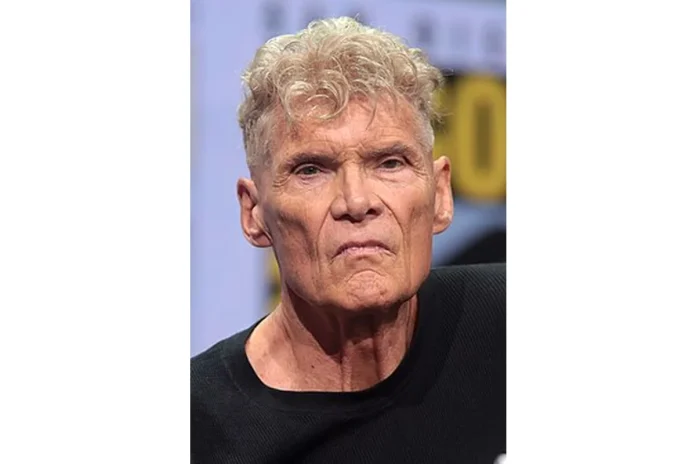
Everett McGill Bio
Charles Everett McGill III (born October 21, 1945) is an American retired actor recognized for his rugged screen presence in major genre productions of the 1980s and 1990s. He first drew wide attention as the caveman Naoh in Quest for Fire (1981) and went on to build a varied filmography across science fiction, horror, war, and thriller projects. McGill is also widely remembered for his television work, most notably as Big Ed Hurley on Twin Peaks (1990–1991), a role he reprised decades later in the 2017 revival.
Across a career that spanned more than four decades, McGill collaborated repeatedly with acclaimed filmmakers, including director David Lynch, and appeared alongside leading stars of the era. After stepping away from acting in 1999, he returned selectively to the screen for a final, high-profile role before retiring again.
Early Life and Background
Charles Everett McGill III was born on October 21, 1945, in Miami Beach, Florida, in the United States. He grew up across state lines and completed his secondary education at Rosedale High School in Kansas City, Kansas, graduating in 1963. McGill continued his studies at the University of Missouri-Kansas City, where he completed his degree in 1967.
His early years in the Midwest, moving between Florida and Kansas, gave McGill a broad regional grounding before he turned to the performing arts. The transition from college to professional acting followed soon after his university graduation, setting the stage for his entry into stage and screen work in the early 1970s.
Path to Acting
McGill began his professional acting career in 1972, the same year listed as the start of his active years in the industry. He honed his craft through stage and small-screen opportunities, including a stint on the long-running soap opera The Guiding Light, where he played Chad Richards in 1975 and 1976. The role offered early visibility and allowed him to develop the screen presence that would later define his film work.
His early feature appearances included work alongside Robert Redford in Brubaker, a film that placed him in a major Hollywood production. These initial credits helped McGill build a reputation for playing disciplined, often intimidating military or authority-figure characters, a pattern that informed many of his later casting choices.
Everett McGill Career
Early Career (1972–1980)
During the first phase of his career, McGill worked steadily in television and supporting film roles, building a foundation of professional experience. His tenure on The Guiding Light in the mid-1970s provided one of his earliest sustained on-screen appearances, and his work in Brubaker introduced him to feature-film audiences.
These early projects allowed McGill to develop the gravitas and physical presence that would soon be cast in more prominent genre roles. By the end of the decade, he was positioned to take on the breakthrough performance that would define his public profile.
Breakthrough (1981–1989)
McGill’s breakthrough arrived with Quest for Fire (1981), director Jean-Jacques Annaud’s prehistoric adventure, in which he played the lead caveman Naoh. The physically demanding role established him as a distinctive screen presence and brought international attention to his work.
He followed that success with a string of high-profile genre films, including David Lynch’s adaptation of Frank Herbert’s Dune (1984), in which he portrayed the Fremen leader Stilgar. The same year, McGill was cast in Silver Bullet (1985), a Stephen King adaptation that highlighted his capacity for intense, brooding characters. In 1986, he appeared in the Clint Eastwood war film Heartbreak Ridge and in the Korean War drama Field of Honor. He also took the title role in Monte Hellman’s 1988 film Iguana and joined the James Bond franchise with Licence to Kill (1989).
Notable Works and Milestones
McGill’s signature work came through his collaborations with director David Lynch, beginning with Dune (1984) and continuing with Twin Peaks (1990–1991), where his portrayal of Big Ed Hurley became one of television’s most quietly memorable character studies. His 2017 return to the role for the Twin Peaks revival closed a circle on that long-running creative partnership.
Everett McGill Award Nominations
Publicly verified information on individual award nominations for Charles Everett McGill III is limited, and specific nomination tallies are not consistently documented across the available sources. Where reliable records exist, his recognition has come primarily through the cultural impact of his genre and television roles rather than formal award listings.
Everett McGill Awards Won
Verified records of formal career awards for Charles Everett McGill III are not clearly established within the available sources. His standing in film and television history rests on the lasting visibility of his performances in projects such as Quest for Fire, Dune, Twin Peaks, and Licence to Kill, rather than on trophy counts.
Everett McGill Family
Publicly verified details about McGill’s immediate family, including parents, siblings, or extended relatives, are not consistently documented within the available sources. He has been identified by his full given name, Charles Everett McGill III, indicating a family naming tradition carried across generations.
Personal Life
McGill has kept much of his personal life out of the public eye, and verified details about long-term partners or children are not available in the provided sources. His residence history after retirement and his selective return to acting for the 2017 Twin Peaks revival suggest a deliberate preference for privacy away from Hollywood’s spotlight.