
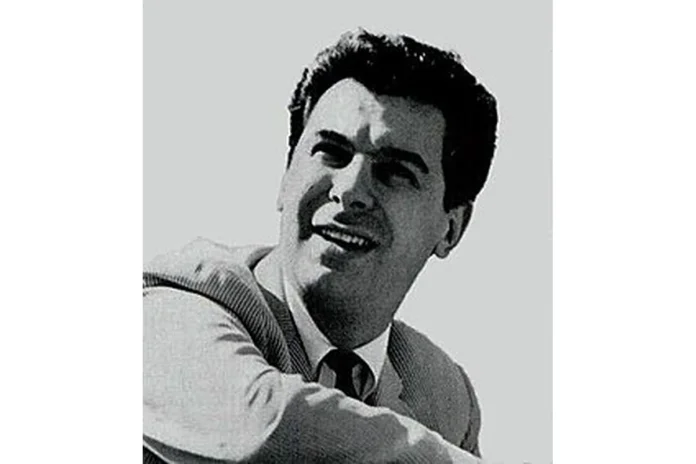
Freddy Cannon Bio
Frederick Anthony Picariello, Jr., better known by his stage name Freddy Cannon, is an American rock and roll singer born on December 4, 1936 in Revere, Massachusetts. Raised in nearby Lynn, he developed an early love for rhythm and blues, learned to play guitar as a youth, and emerged in the late 1950s with energetic, drum-driven recordings and a trademark shout that earned him the lasting nickname Freddy “Boom Boom” Cannon. Over a career that began in 1956 and continues to the present, he has placed twenty-two songs on the Billboard Hot 100, scored major international hits, and become a familiar presence on American Bandstand.
Early Life and Background
Freddy Cannon was born Frederick Anthony Picariello, Jr. on December 4, 1936 in Revere, Massachusetts, and was raised in the neighboring city of Lynn. His father worked as a truck driver and also played trumpet and sang in local bands, giving the household a steady musical influence. As a child, Freddy grew up listening to the rhythm and blues of Big Joe Turner, Buddy Johnson, and other artists on the radio, and he taught himself to play guitar. He attended Lynn Vocation High School, completing his formal education in his hometown before stepping into the working world.
At a young age, Cannon joined the National Guard, took a job driving a truck, married, and became a father, balancing ordinary responsibilities with his growing interest in music. He drew inspiration from rock and roll pioneers such as Chuck Berry, Bo Diddley, and Little Richard, listening closely to their records and absorbing their energy. These formative years in greater Boston gave him both the discipline of everyday work and the rhythmic sensibility that would later define his stage presence.
Path to Music
Cannon made his recording debut in 1958, singing and playing rhythm guitar on a single called “Cha-Cha-Do” by the Spindrifts, which became a local hit in the Boston area. He had earlier played lead guitar on a session for the R&B vocal group the G-Clefs, whose record “Ka-Ding Dong” reached No. 24 on the Billboard Hot 100 in 1956. He formed his own group, Freddy Karmon and the Hurricanes, which grew increasingly popular across the Greater Boston region and helped him develop a strained, hard-driving singing style.
He became a regular on the local television dance show Boston Ballroom, and in 1958 he signed a management contract with Boston disc jockey Jack McDermott. With lyrics written by his mother, Cannon prepared a new song he called “Rock and Roll Baby,” and McDermott brought the demo to the writing and production team of Bob Crewe and Frank Slay. Crewe and Slay rearranged the song, rewrote the lyrics, and produced a recording in return for two-thirds of the composing credits. The result, retitled “Tallahassee Lassie,” would launch his national career.
Freddy Cannon Career
Early Career (1956–1959)
The first recording of “Tallahassee Lassie,” featuring a guitar solo by session musician Kenny Paulson, was rejected by several record companies before being heard by television presenter Dick Clark, who co-owned Swan Records in Philadelphia. Clark suggested re-editing the track and overdubbing it with a pounding bass drum, hand claps, and Cannon’s cries of “whoo!,” touches that would become trademarks of his sound. The single was released by Swan Records, where company president Bernie Binnick suggested the stage name “Freddy Cannon.” In 1959, “Tallahassee Lassie” peaked at No. 6 on the Billboard Hot 100, reached No. 13 on the R&B singles chart, and climbed to No. 17 in the United Kingdom, selling over one million copies and earning a gold disc from the RIAA.
Cannon remained on the Swan label with producer Frank Slay for the next five years and became widely known as Freddy “Boom Boom” Cannon for the thumping power of his recordings. Crewe brought in The Four Seasons to provide instrumental backing until the group broke through on their own. Through Dick Clark’s American Bandstand, Cannon made a record 110 appearances on the program, building a national audience and a string of follow-up hits.
Breakthrough (1960–1965)
His follow-up single “Okefenokee,” credited to Freddie Cannon, reached No. 43 on the charts, but the next release, “Way Down Yonder in New Orleans,” a rocked-up version of a 1922 song, became a gold record that reached No. 3 on the pop charts in both the United States and the United Kingdom, where it was the biggest of his hits, and it also sold over one million copies. In March 1960, his album The Explosive Freddy Cannon became the first album by a rock and roll singer to top the UK Albums Chart. For the next two years, he continued placing songs on the U.S. charts with versions of old standards such as “Chattanoogie Shoe Shine Boy” and “Muskrat Ramble,” and with “Twistin’ All Night Long,” recorded with Danny and the Juniors and featuring Frankie Valli and the Four Seasons on backing vocals.
In May 1962, Cannon released “Palisades Park,” written by future television host Chuck Barris and produced by Slay with overdubbed rollercoaster sound effects. The single reached No. 3 on the Hot 100, No. 15 on the R&B chart, and No. 20 in the United Kingdom, and it sold over one million copies to earn gold disc status. In 1963, he signed with Warner Bros. Records, where he scored his last two U.S. top twenty hits: “Abigail Beecher” (No. 16) in 1964 and “Action” (No. 13) in 1965, the latter from Dick Clark’s television show Where the Action Is and recorded with top Los Angeles session musicians including Leon Russell, James Burton, Glen Campbell, and David Gates. “Action” earned Cannon a fourth gold disc.
Notable Works and Milestones
Cannon’s signature recordings include “Tallahassee Lassie,” “Way Down Yonder in New Orleans,” and “Palisades Park,” each of which sold over one million copies and earned gold disc status from the RIAA. His album The Explosive Freddy Cannon made history in March 1960 as the first rock and roll album to top the UK Albums Chart, and his 110 appearances on American Bandstand remain a testament to his popularity with television audiences.
Freddy Cannon Family
Freddy Cannon grew up in a working-class household in Lynn, Massachusetts, where his father worked as a truck driver while also playing trumpet and singing in local bands. His mother contributed lyrics to the song that would become “Tallahassee Lassie,” helping to launch his recording career.
Personal Life
At a young age, Cannon joined the National Guard, married, and became a father, balancing family life with his musical ambitions. He later settled in Tarzana, California, where he continues to reside.