
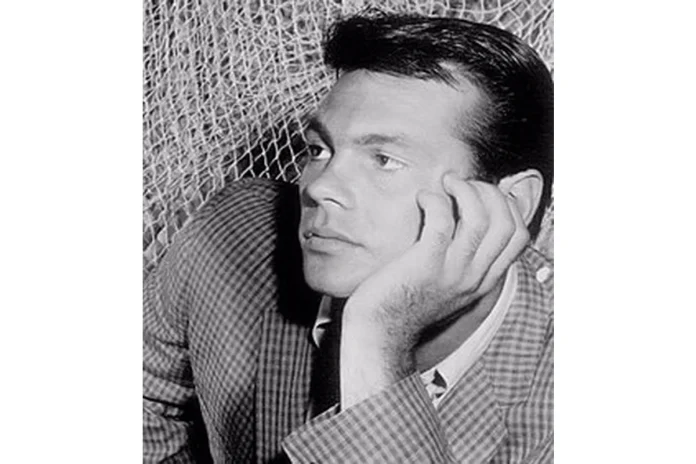
Gary Lockwood Bio
Gary Lockwood, born John Gary Yurosek on February 21, 1937, in Van Nuys, California, is an American actor with a career spanning more than six decades in film and television. He is best remembered for playing astronaut Dr. Frank Poole in Stanley Kubrick’s landmark science fiction film 2001: A Space Odyssey (1968) and for his portrayal of the dangerously empowered Lieutenant Commander Gary Mitchell in the second Star Trek pilot episode, Where No Man Has Gone Before (1966). Lockwood has built a versatile résumé that includes leading roles in feature films, starring television series, and a long list of guest appearances across the medium.
Beyond his science fiction credentials, Lockwood became a familiar face on American television through the NBC military drama The Lieutenant (1963–1964) and through appearances on popular Westerns and crime shows. His work also extended into the late 1960s art cinema, when he starred as the lead in Model Shop (1969), the only American film directed by French New Wave filmmaker Jacques Demy. He continues to be regarded as a distinctive character actor of his generation.
Early Life and Background
Gary Lockwood was born John Gary Yurosek in Van Nuys, California, a neighborhood in the San Fernando Valley region of Los Angeles. He is of partial Polish descent and grew up in a family with notable creative and entrepreneurial ties. His uncle, Mike Yurosek, is credited with creating the modern baby-cut carrot, an innovation that became a staple of American grocery produce. Lockwood has cited this family connection as part of the ordinary, working California upbringing that shaped his early years.
Before entering show business, Lockwood was an athlete. He attended the University of California, Los Angeles, where he earned a letter in football in 1956 as a one-year letterman under legendary UCLA head coach Red Sanders. Official UCLA Athletics records list him under his birth name, Gary Yurosek, reflecting the period before he adopted his professional stage name. His college experience gave him discipline and physical confidence that he would later bring to stunt work and physically demanding roles.
The transition from athletics to acting came at the close of the 1950s, when Lockwood began working in Hollywood as a film stuntman and as a stand-in for actor Anthony Perkins. These early jobs placed him on soundstages and locations where he could observe professional performers, directors, and crew at work, and they laid the groundwork for his eventual move into credited screen roles.
Path to Acting
Lockwood’s first on-screen appearance was an uncredited bit part in the 1959 western Warlock, starring Richard Widmark and Anthony Quinn. That same year, he also appeared as an uncredited police officer in the Perry Mason episode The Case of the Romantic Rogue. These small openings soon led to more substantial work. In 1961, he made his film debut opposite Tuesday Weld and Elvis Presley in Wild in the Country, and he took a supporting role in Elia Kazan’s critically praised drama Splendor in the Grass, sharing the screen with Natalie Wood and Warren Beatty.
Television offered Lockwood some of his earliest opportunities to carry a story. He played Eric Jason on the ABC adventure series Follow the Sun (1961–1962), which followed magazine writers based in Honolulu, and he appeared in the short-lived ABC drama Bus Stop (1961–1962). He also took his first lead role in the 1961 fantasy adventure The Magic Sword, written and directed by Bert I. Gordon, and he returned to Perry Mason in 1962 for the lead role in The Case of the Playboy Pugilist. In 1963, he reunited with Elvis Presley for the musical comedy It Happened at the World's Fair, confirming his rising profile as a dependable young leading man.
Lockwood also appeared alongside the young Jeff Bridges in a celebrated episode of The Lloyd Bridges Show, and he continued to balance film work with guest roles on episodic television. These varied assignments gave him exposure across genres, from westerns and war dramas to light romance and fantasy, and prepared him for the major commitments that would soon follow.
Gary Lockwood Career
Early Career (1959–1962)
During his first years in Hollywood, Gary Lockwood established himself as a hardworking supporting player in both film and television. His uncredited screen debut in Warlock in 1959 was followed quickly by credited appearances in Splendor in the Grass (1961), Wild in the Country (1961), and The Magic Sword (1961). He also booked recurring guest spots on Perry Mason and held series regular roles on the short-lived ABC programs Follow the Sun and Bus Stop, both of which aired during the 1961–1962 television season.
Although none of these early projects brought major awards attention, they allowed Lockwood to build relationships with producers, directors, and fellow actors who would shape his later career. By the end of 1962, he had already appeared in feature films with Elvis Presley and Elia Kazan, two filmmakers known for their demanding standards, and he had proven that he could anchor a weekly television role.
Breakthrough (1963–1969)
Lockwood’s breakthrough arrived in 1963, when he was cast as Second Lieutenant William T. Rice, nicknamed Bill Rice, in the NBC military drama The Lieutenant (1963–1964). The series, produced by Gene Roddenberry and Norman Felton, focused on the peacetime United States Marine Corps and paired Lockwood with Robert Vaughn as Captain Raymond Rambridge. Although The Lieutenant was cancelled after 29 episodes due in part to tough scheduling against Jackie Gleason’s American Scene Magazine, it drew moderately strong reviews and remains one of the defining military dramas of the era.
His association with The Lieutenant and its producers opened the door to one of the most iconic science fiction roles of the 1960s. Lockwood was cast as Lieutenant Commander Gary Mitchell in the second Star Trek pilot, Where No Man Has Gone Before (1965), opposite Sally Kellerman. The episode introduced a storyline in which Mitchell develops dangerous psionic powers, and it helped establish the tone and casting direction that would carry Star Trek into series production. He later reprised the role in OTOY’s short film 765874 – Unification (2024), which used digital technology to recreate his 1966 appearance.
The role that would define Lockwood’s career came in 1968, when Stanley Kubrick cast him as Dr. Frank Poole, the doomed astronaut of the Discovery One, in 2001: A Space Odyssey. Working alongside Keir Dullea and under Kubrick’s famously meticulous direction, Lockwood contributed to one of the most influential science fiction films ever made. He balanced this achievement with starring roles in the crime drama They Came to Rob Las Vegas (1968), the Elke Sommer co-starring vehicle, and the comedy Stand Up and Be Counted (1972) opposite Jacqueline Bisset. He also led Jacques Demy’s Model Shop (1969), a key entry in the French New Wave director’s American filmography.
Notable Works and Milestones
Gary Lockwood’s signature works include his performances as Dr. Frank Poole in 2001: A Space Odyssey (1968), as Lieutenant Commander Gary Mitchell in the Star Trek pilot Where No Man Has Gone Before (1966), and as Lieutenant Bill Rice in The Lieutenant (1963–1964). His leading role in Model Shop (1969) stands as a notable milestone in the cross-pollination of French and American cinema. Over the course of his career, he has accumulated roughly 40 theatrical features and made-for-TV movies and around 80 television guest appearances, including recurring turns on Gunsmoke, 12 O’Clock High, and Barnaby Jones.
Gary Lockwood Award Nominations
Across a career that has included major studio features and long-running television guest work, Gary Lockwood’s most widely cited recognition has come from genre audiences and science fiction critics rather than from major awards bodies. No specific award nominations are verified in the source materials reviewed for this profile.
Gary Lockwood Awards Won
Verified records do not list formal award wins for Gary Lockwood, although his performances in landmark projects such as 2001: A Space Odyssey and Model Shop are widely regarded as signature achievements of 1960s American cinema. No awards table is included because total wins could not be confirmed with certainty.
Gary Lockwood Family
Gary Lockwood is of partial Polish descent and maintains a family connection to the American produce industry through his uncle, Mike Yurosek, who is credited with developing the modern baby-cut carrot. He has been married twice and is the father of a daughter, Samantha DuBarry-Lockwood, born in 1982.
Personal Life
Lockwood married actress Stefanie Powers in 1966, and the couple divorced in 1972. During their marriage, they appeared together in an episode of the anthology series Love, American Style, and Lockwood later guest-starred with Powers in the 1983 Hart to Hart episode Emily by Hart, by which time the two had ended their marriage. In 1982, he married actress and businesswoman Denise DuBarry, with whom he has a daughter, Samantha DuBarry-Lockwood. Lockwood has generally kept his personal life out of the spotlight while continuing to take on acting work into the 2020s.