
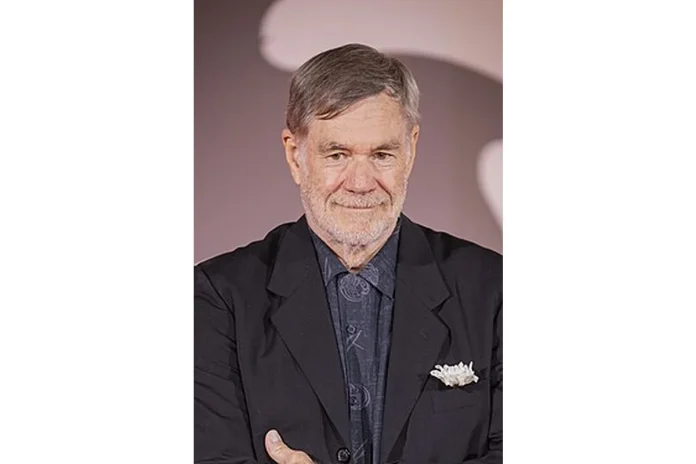
Gus Van Sant Bio
Gus Green Van Sant Jr. (born July 24, 1952) is an American filmmaker, photographer, painter, and musician. He is widely regarded as a defining voice in American independent cinema and as one of the most prominent auteurs of the New Queer Cinema movement. Over four decades, he has built a filmography that examines marginalized subcultures, particularly those within gay culture, while also moving between arthouse productions and major studio projects. His work has earned recognition from the Cannes Film Festival, the Academy Awards, and the Independent Spirit Awards, among other institutions.
Known for both the risk-taking of his independent features and the commercial reach of his mainstream films, Van Sant has collaborated with actors such as Matt Damon, Sean Penn, Nicole Kidman, Robin Williams, and River Phoenix. He has also published a novel, released two musical albums, and produced photography books, reflecting the broad range of his creative interests beyond directing.
Early Life and Background
Gus Green Van Sant Jr. was born on July 24, 1952, in Louisville, Kentucky, United States, to Betty (née Seay) and Gus Green Van Sant Sr., a clothing manufacturer and traveling salesman. His father rose quickly into middle-class prosperity, holding executive marketing positions that included serving as president of the White Stag Manufacturing Company’s apparel operation. Because of his father’s job, the family moved frequently throughout his childhood.
Van Sant’s paternal family is of partial Dutch origin, with the surname derived from the Dutch name “Van Zandt.” The earliest Van Zandt arrived in the New Netherland area in the early seventeenth century, around what is now New York City. As a young person, Van Sant attended Darien High School in Darien Connecticut, and later The Catlin Gabel School in Portland, Oregon. One constant during these years was his interest in visual arts, especially painting and Super-8 filmmaking, and he began making semi-autobiographical short films while still in school that cost between thirty and fifty dollars to produce.
His artistic leanings took him to the Rhode Island School of Design in 1970, where he initially studied painting. It was at RISD that his exposure to various avant-garde directors inspired him to switch his major to cinema. This decision would set the foundation for a career dedicated to filmmaking and visual storytelling.
Path to Director
After spending time in Europe, Van Sant moved to Los Angeles in 1976. He secured a job as a production assistant to filmmaker Ken Shapiro, with whom he developed a few ideas that did not come to fruition. In 1981, Van Sant made Alice in Hollywood, a film about a naïve young actress who goes to Hollywood and abandons her ideals, but it was never released. During this period, he began to spend time observing the more down-and-out sections of Hollywood Boulevard, becoming fascinated by the existence of this marginalized slice of the Los Angeles population.
Two years later, Van Sant went to New York to work at an advertising agency. He saved twenty thousand dollars during his tenure there, which enabled him to finance the majority of his feature-length directorial debut, Mala Noche, a 1985 black-and-white film adapted from Portland street writer Walt Curtis’ semi-autobiographical novella about a doomed love between a gay liquor store clerk and a Mexican immigrant. The film earned him almost overnight acclaim on the festival circuit, with the Los Angeles Times naming it the year’s best independent film. The success of Mala Noche attracted interest from Hollywood, though his early pitches to Universal were turned down.
Gus Van Sant Career
Early Career (1982–1989)
Van Sant began his professional filmmaking career in 1982, initially directing television commercials in the Pacific Northwest. The success of Mala Noche (1985) led to brief courtship from Universal, but when the studio declined his project ideas, he returned to Portland, Oregon, to develop them independently. This decision marked a defining turn toward a personal, region-based mode of independent filmmaking.
His next feature, Drugstore Cowboy (1989), followed four drug addicts robbing pharmacies to support their habit. The film met with great critical success, helped revive the career of lead actor Matt Dillon, and reinforced Van Sant’s interest in characters living on society’s outer fringes. The film also set the stage for his broader emergence as a major voice in American independent cinema.
Breakthrough (1990–2003)
The success of Drugstore Cowboy gave Van Sant the standing to make My Own Private Idaho (1991), a film he had originally pitched and that was repeatedly turned down because studios deemed the script “too risky.” Centering on two male hustlers played by River Phoenix and Keanu Reeves, the film examined unrequited love, alienation, and the concept of family. It won Van Sant the Independent Spirit Award for Best Screenplay, an award he had also won for Drugstore Cowboy, and it helped Reeves gain the critical respect that had previously eluded him.
His 1995 film To Die For, a black comedy adapted from Joyce Maynard’s novel and starring Nicole Kidman, Matt Dillon, and Joaquin Phoenix, was his first film for a major studio, Columbia. The same year, he served as executive producer on Larry Clark’s Kids, a fitting assignment given Clark’s photographs of drug users had served as reference points for Drugstore Cowboy. In 1997, Van Sant gained mainstream recognition with Good Will Hunting, written by Matt Damon and Ben Affleck. The film was nominated for nine Academy Awards, including Best Director, and won two: Best Original Screenplay for Damon and Affleck, and Best Supporting Actor for Robin Williams. Van Sant also received a Best Original Screenplay nomination for his work on the film. The filmmaker returned to the international stage in 2003 when he won both the Palme d’Or and the Best Director award at the Cannes Film Festival for Elephant, a fictional film based on the 1999 Columbine High School massacre. The win made him one of only two filmmakers, the other being Joel Coen, to win both the Palme d’Or and Best Director at Cannes in the same year.
Notable Works and Milestones
Van Sant’s signature works include Drugstore Cowboy, My Own Private Idaho, Good Will Hunting, and Milk, each of which helped define a phase of his career. His Cannes triumph for Elephant, his Academy Award nominations for Good Will Hunting and Milk, and his consistent presence in independent cinema together mark him as one of the most influential American directors of his generation.
Gus Van Sant Award Nominations
Over the course of his career, Gus Van Sant has received multiple Academy Award nominations across categories including Best Director, Best Original Screenplay, and Best Picture. His nominations reflect his ability to move between major studio productions and intimate independent projects while maintaining a singular directorial voice. He was nominated for Best Director and Best Original Screenplay for Good Will Hunting (1997) and for Best Picture for Milk (2008), films that also brought wider recognition to their casts and writers.
Gus Van Sant Awards Won
Van Sant has won major prizes at the Cannes Film Festival and at the Independent Spirit Awards. In 2003, he won both the Palme d’Or and the Best Director award at Cannes for Elephant, a rare double honor shared with only one other filmmaker. He also won Independent Spirit Awards for his screenplays for Drugstore Cowboy and My Own Private Idaho.
| Award | Wins | Year |
|---|---|---|
| Palme d’Or (Cannes Film Festival) | 1 | 2003 |
| Best Director (Cannes Film Festival) | 1 | 2003 |
| Independent Spirit Award for Best Screenplay | 2 | 1990, 1992 |
Gus Van Sant Family
Van Sant was born to Betty (née Seay) and Gus Green Van Sant Sr., a clothing manufacturer and traveling salesman. His father held executive marketing positions, including serving as president of the apparel operation of the White Stag Manufacturing Company. The family moved frequently during his childhood because of his father’s work.
Personal Life
Van Sant is gay and has been open about his sexuality throughout his career. He lives in the Los Feliz neighborhood of Los Angeles, California. He has also pursued a wide range of creative work outside of film, including photography, painting, music, and writing.