
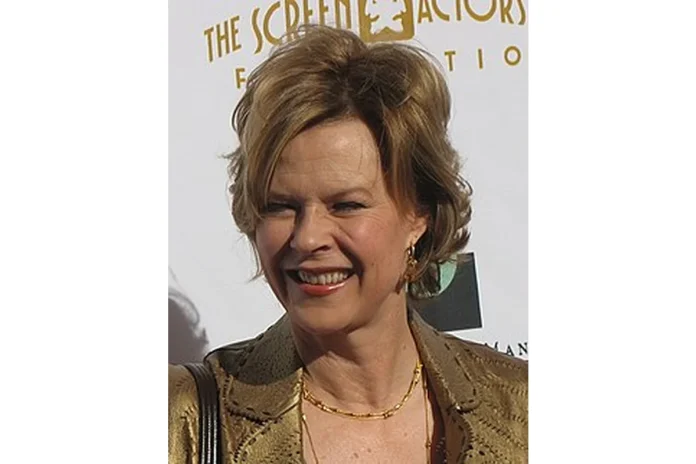
JoBeth Williams Bio
Margaret JoBeth Williams (born December 6, 1948) is an American actress and filmmaker whose career has spanned more than four decades across film, television, and stage. She first captured widespread attention with supporting roles in landmark pictures of the late 1970s and 1980s, including Kramer vs. Kramer, Stir Crazy, Poltergeist, and The Big Chill, establishing her as a familiar and respected presence in American screen acting. Beyond performing, Williams has built a second career behind the camera, writing and directing, and she served as president of the Screen Actors Guild Foundation.
Williams is a three-time Primetime Emmy Award nominee, recognized for the television movie Adam, the miniseries Baby M, and a guest appearance on the sitcom Frasier. She is also an Academy Award nominee as a filmmaker, having directed the live-action short On Hope, and she earned the Best Actress Award from the Kansas City Film Critics Circle for American Dreamer. She is married to television and film director John Pasquin.
Early Life and Background
Margaret JoBeth Williams was born on December 6, 1948, in Houston, Texas. She is the daughter of Frances Faye Adams Williams, a dietitian, and Fredric Roger Williams, an opera singer who also worked as a manager of a wire and cable company. Raised in a household where music and the arts were part of daily life, she grew up surrounded by the kind of creative influences that often shape performers from a young age.
Williams spent her childhood in the South Park neighborhood of Houston, where she attended Jones High School and graduated in 1966. The cultural energy of Houston, combined with a family background that included professional music, helped spark her early interest in performance. After high school, she went on to attend Pembroke College at Brown University, where she continued developing the foundations of her craft.
Path to Acting
Williams’s first notable television work came on the Boston-produced, first-run syndicated children’s series Jabberwocky, which debuted in 1972. She joined the cast in its second season, replacing the original hostess Joanne Sopko, and her character was named JoBeth, the nickname that would soon become her professional calling card. The series ran until 1978, giving her several years of on-camera experience and steady work in front of a live audience.
While continuing on Jabberwocky, Williams also built a foundation in daytime television, playing recurring roles on the soap operas Somerset, as Carrie Wheeler, and Guiding Light, as Brandy Shelloe. These early serial roles sharpened her instincts for scripted drama and gave her the kind of rigorous production schedule that has long been a training ground for American actors. By the late 1970s, she was ready to make the leap to feature films, and her career was about to change in a major way.
JoBeth Williams Career
Early Career (1979–1984)
Williams made her feature-film debut in 1979 with a memorable supporting role in Kramer vs. Kramer, appearing as a girlfriend of Dustin Hoffman’s character in a sequence that has remained a small but iconic piece of the film. She quickly followed that breakthrough with a turn in the hit comedy Stir Crazy (1980) alongside Gene Wilder and Richard Pryor, and she appeared in The Dogs of War (1980) with Christopher Walken and Tom Berenger. These early roles positioned her as a versatile supporting player in both comedies and dramas.
Her first starring role in a horror classic arrived in 1982 with Poltergeist, directed by Tobe Hooper and produced by Steven Spielberg, in which she played suburban housewife Diane Freeling. The performance remains one of her most widely recognized. In 1983, she was part of the ensemble comedy-drama The Big Chill and starred in the television film The Day After, a powerful depiction of nuclear aftermath that earned significant critical attention. That same year, her work in the TV movie Adam, in which she portrayed real-life figure Revé Walsh, brought her first Primetime Emmy Award nomination.
Breakthrough (1982–1994)
The success of Poltergeist led to a sequel, Poltergeist II: The Other Side (1986), in which Williams reprised her role as Diane Freeling. During the mid-1980s, she continued to take on varied and ambitious projects, including Teachers (1984) with Nick Nolte, Desert Bloom (1986) with Jon Voight, Memories of Me (1988) with Billy Crystal, and Switch (1991) with Ellen Barkin. Her starring role opposite Tom Conti in American Dreamer (1984) earned her the 1985 Best Actress Award from the Kansas City Film Critics Circle, an important critical honor that cemented her reputation for thoughtful, character-driven work.
Television remained a major part of her career. She earned a second Primetime Emmy Award nomination for portraying Mary Beth Whitehead in the 1988 miniseries Baby M, and a third nomination for her guest-starring role on Frasier in 1994. She also starred in the Vietnam POW drama Welcome Home (1989) with Kris Kristofferson, in the John Hughes-written comedy Dutch (1991) with Ed O’Neill, and in the family comedy Stop! Or My Mom Will Shoot (1992) with Sylvester Stallone. In 1994, she joined the ensemble Western Wyatt Earp with Kevin Costner, playing Bessie Earp, a role that reunited her with Big Chill director Lawrence Kasdan.
Notable Works and Milestones
Williams is best known for her roles in Poltergeist, Poltergeist II: The Other Side, The Big Chill, American Dreamer, and The Day After, with each project demonstrating her range across horror, ensemble drama, social-issue television, and character comedy. Her signature work remains Poltergeist, in which her portrayal of Diane Freeling became a defining performance in 1980s genre cinema. Her milestone moment as a filmmaker came with On Hope, a 1994 live-action short she directed that received an Academy Award nomination for Best Live Action Short Film.
JoBeth Williams Award Nominations
JoBeth Williams has received three Primetime Emmy Award nominations across her career, an unusually consistent level of recognition for a performer who moved fluidly between film, television movies, and guest roles. Her first nomination came in 1983 for Outstanding Lead Actress in a Miniseries or a Movie for the television film Adam, in which she portrayed Revé Walsh. A second nomination followed in 1988 in the same category for her work in the miniseries Baby M, in which she played Mary Beth Whitehead. Her third Emmy nomination arrived for Outstanding Guest Actress in a Comedy Series for her guest appearance on Frasier. She was also nominated for an Academy Award for Best Live Action Short Film as a director for On Hope.
JoBeth Williams Awards Won
JoBeth Williams won the Best Actress Award from the Kansas City Film Critics Circle in 1985 for her starring role opposite Tom Conti in the comedy American Dreamer. The award recognized her work in a film that depended heavily on her ability to carry a lead performance, and it remains one of the clearest early critical endorsements of her abilities. In addition to her competitive honors, Williams has held major institutional roles within the entertainment industry, including serving as president of the Screen Actors Guild Foundation and later as president emerita of the same organization.
JoBeth Williams Family
JoBeth Williams is the daughter of Frances Faye Adams Williams, a dietitian, and Fredric Roger Williams, an opera singer who also managed a wire and cable company. Her upbringing in Houston, Texas, included time in the South Park neighborhood and studies at Jones High School, from which she graduated in 1966. She went on to attend Pembroke College at Brown University, where she continued her education before turning her full attention to acting.
Personal Life
JoBeth Williams married television and film director John Pasquin on March 13, 1982. The couple has two sons, Will and Nick, and Williams is also stepmother to Pasquin’s daughter, Sarah. She and her family have built their life in the United States, balancing her ongoing work as a performer and filmmaker with her responsibilities as a parent and as a long-serving leader of the Screen Actors Guild Foundation.