
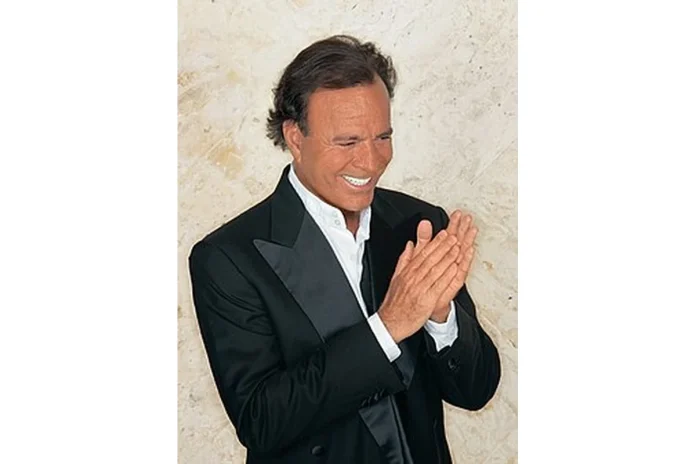
Julio Iglesias Bio
Julio José Iglesias de la Cueva, known professionally as Julio Iglesias, is a Spanish singer and songwriter recognized as the most commercially successful Spanish artist in the world and one of the best-selling recording artists in music history. Born in Madrid on 23 September 1943, he has sold more than 300 million records in 14 languages and has performed for audiences in more than 5,000 concerts across six continents. Over a career that began in 1966, he has charted hits across Europe and the Americas, collaborated with leading international artists, and earned a place in the Latin Songwriters Hall of Fame.
Beyond music, Iglesias pursued a brief professional football career as a goalkeeper before a serious automobile accident in 1963 redirected his life toward singing. He later returned to academia and earned a law degree from Complutense University of Madrid. Today he resides in Punta Cana in the Dominican Republic, where he has built a second career as a business investor in tourism and hospitality.
Early Life and Background
Julio Iglesias was born in Madrid, Spain, on 23 September 1943, to Julio Iglesias Sr., a medical doctor from Ourense who became one of the youngest gynecologists in the country, and María del Rosario de la Cueva y Perignat. His paternal grandparents, Manuela Puga Noguerol and Ulpiano Iglesias Sarria, were of Galician ancestry, while his maternal grandmother, Dolores de Perignat y Ruiz de Benavides, was a native of Guayama, Puerto Rico. The surname Iglesias translates as churches in Spanish, and Iglesias has said that his maternal family name, de la Cueva, was historically used by Jewish people in hiding.
As a young man, he alternated playing professional football with studying law at the CEU San Pablo University in Madrid. He played as a goalkeeper for Real Madrid Castilla in the Spanish Segunda División during the early 1960s. In 1963, a serious automobile accident damaged his lower spine and left him unable to walk for two years, ending his promising athletic career. While recovering in the hospital, a nurse named Eladio Magdaleno gave him a guitar to help restore the dexterity of his hands, and through practicing the instrument he discovered his musical talent.
Path to Music
After his long rehabilitation, Iglesias studied English for three months at the Bell Educational Trust’s Language School in Cambridge, England, before returning to Spain. In 1968, he won the Benidorm Song Festival with the song La vida sigue igual, which led to his first studio album, Yo Canto, released on the Spanish branch of Columbia Records. That album spent 15 weeks on the Spanish charts and peaked at number three.
The following year, Iglesias represented Spain at the Eurovision Song Contest 1970 with the song Gwendolyne, finishing in fourth place and gaining valuable international exposure. He soon followed with Un canto a Galicia, a tribute to his father’s homeland that sold one million copies in Germany, and with Se mi lasci non vale, a 1975 recording in Italian that launched his success in Italy. These early achievements set the foundation for a career that would carry him from European stages to global arenas.
Julio Iglesias Career
Early Career (1966–1978)
Julio Iglesias launched his recording career in the late 1960s, building a strong fan base across Spain, France, Italy, Germany, and Latin America. He recorded in multiple languages, including Spanish, Italian, French, and Galician, with albums such as A flor de piel, El amor, and Soy charting throughout Europe. By the mid-1970s, he had become one of the most popular romantic balladeers on the continent and a familiar figure on television variety shows and music festivals.
He also married Isabel Preysler, a Filipina television host, on 29 January 1971, beginning one of the most photographed celebrity relationships of the decade. The couple had three children, Chábeli, Julio Jr., and Enrique, and the family appeared regularly on the covers of newspapers and magazines. The marriage ended in divorce in 1979, and a Catholic annulment followed in 1980.
Breakthrough (1979–1989)
In 1979, Iglesias moved to Miami and signed with CBS International, expanding his reach into the English-speaking market. His 1981 album De niña a mujer produced a cover of Begin the Beguine that reached number one in the United Kingdom, while the compilation Julio appeared in 1983. In 1984, he released 1100 Bel Air Place, the album that made him a household name in the United States, selling more than three million copies there and featuring the number one country hit To All the Girls I’ve Loved Before with Willie Nelson.
The same album also paired him with Diana Ross on All of You, a top twenty pop single, and with The Beach Boys on a cover of The Air That I Breathe. He won a Grammy Award for Best Latin Pop Album at the 1988 ceremony for Un hombre solo, recorded a 1988 duet with Stevie Wonder called My Love, and made a cameo as Sophia Petrillo’s Valentine’s Day date on The Golden Girls in 1989. A star on the Hollywood Walk of Fame was added in his name in 1985.
Notable Works and Milestones
Julio Iglesias’s signature recordings include 1100 Bel Air Place (1984), the duet To All the Girls I’ve Loved Before (1984) with Willie Nelson, and the Grammy-winning album Un hombre solo (1987). He has recorded in 14 languages, sold more than 300 million records worldwide, and performed for over 60 million people in more than 5,000 concerts on six continents. In 2013, he was inducted into the Latin Songwriters Hall of Fame alongside Armando Manzanero and José Feliciano.
Julio Iglesias Award Nominations
Over a career spanning more than five decades, Julio Iglesias has received nominations from major music institutions including the Grammy Awards, Latin Grammy Awards, Billboard Music Awards, American Music Awards, Lo Nuestro Awards, and World Music Awards. He has been a consistent presence on Latin pop and adult contemporary charts, earning recognition across categories such as Best Latin Pop Album and Best Male Latin Artist.
Julio Iglesias Awards Won
Julio Iglesias has collected a wide range of honors across international music and the arts. His wins include a Grammy Award, a Latin Grammy, a World Music Award, a Billboard Music Award, an American Music Award, a Lo Nuestro Award, and induction into the Latin Songwriters Hall of Fame. He has also received the Gold Medal for Merit in Fine Arts of Spain, the Legion of Honour of France, and a star on the Hollywood Walk of Fame. In 2013, he was honored in Beijing as the most popular international artist in China and received a Guinness World Record for the best-selling male Latin artist.
Julio Iglesias Family
Julio Iglesias is the father of eight children. With his first wife, Isabel Preysler, he had Chábeli Iglesias (born 1971), Julio Iglesias Jr. (born 1973), and Enrique Iglesias (born 1975), the last of whom became an internationally successful singer-songwriter, actor, and record producer. With his wife, Dutch model Miranda Rijnsburger, he has five children: Miguel Alejandro Iglesias (born 1997), Rodrigo Iglesias (born 1999), twins Cristina and Victoria Iglesias (born 2001), and Guillermo Iglesias (born 2007). His father, Julio Iglesias Sr., died of a heart attack on 19 December 2005 at the age of 90.
Personal Life
Julio Iglesias married Filipina television host Isabel Preysler in 1971; the couple divorced in 1979 and obtained a Catholic annulment in 1980. After the divorce, he began a long relationship with Dutch model Miranda Rijnsburger, 22 years his junior, and the two married on 26 August 2010 in a small church in Marbella, Spain. The family has lived primarily in the Dominican Republic, where Iglesias became a Dominican citizen in 2005 and has invested in hotels and the Punta Cana International Airport. He has collaborated musically with several of his children, and his son Enrique has gone on to become one of the best-selling Latin artists of his generation.