
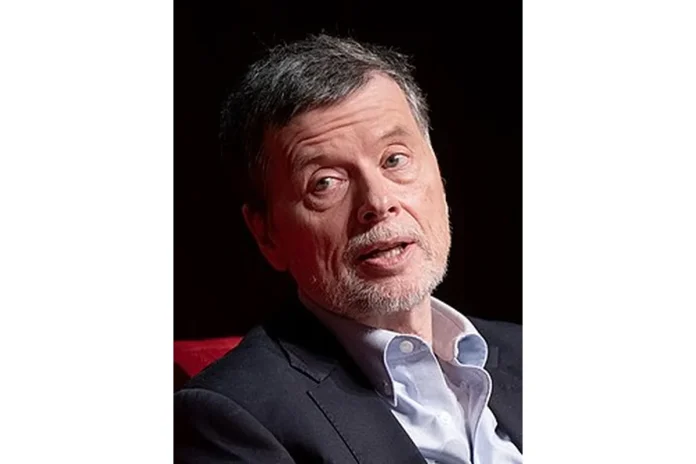
Kenneth Lauren Burns Bio
Kenneth Lauren Burns (born July 29, 1953) is an American filmmaker best known for his documentary films and television series that chronicle the history and culture of the United States. Working primarily with PBS, WETA-TV, and the National Endowment for the Humanities, he has built a distinctive style that pairs archival still images with carefully paced voiceover narration by notable performers. Co-founder of the production company Florentine Films, he continues to shape American documentary television from his long-time home in Walpole, New Hampshire.
Across more than four decades, Kenneth Lauren Burns has created series on subjects ranging from the Civil War and baseball to jazz, the national parks, the Roosevelts, the Vietnam War, and country music. His projects are frequently co-written with historian Geoffrey C. Ward and co-directed with longtime collaborator Lynn Novick. His films have earned two Academy Award nominations, multiple Grammy Awards, and fifteen Emmy Awards, establishing him as one of the most honored documentarians of his generation.
Early Life and Background
Kenneth Lauren Burns was born on July 29, 1953, in Brooklyn, New York, to Lyla Smith (née Tupper) Burns, a biotechnician, and Robert Kyle Burns Jr., a graduate student in cultural anthropology at Columbia University. His younger brother, Ric Burns, also became a documentary filmmaker. Because of his father’s academic career, the family moved several times during his childhood, including stays in Saint-Véran, France; Newark, Delaware; and Ann Arbor, Michigan, where his father later taught at the University of Michigan.
When Burns was three years old, his mother was diagnosed with breast cancer, and she died when he was eleven. He has spoken often about how this loss shaped his professional mission, once recalling a story of neighbors in Newark who collected money for his family and noting that he has spent his career trying to resurrect small, meaningful moments within the larger sweep of American history. A well-read child, he immersed himself in the family encyclopedia and preferred history to fiction.
At seventeen, Burns received an 8 mm film camera for his birthday and shot his first documentary about a factory in Ann Arbor. He graduated from Pioneer High School in Ann Arbor in 1971. Although he was offered reduced tuition at the University of Michigan, he chose instead to attend Hampshire College in Amherst, Massachusetts, where students are evaluated through narrative assessments rather than letter grades and design their own academic concentrations. He studied under photographers Jerome Liebling and Elaine Mayes and earned his Bachelor of Arts degree in film studies and design in 1975.
Path to Documentary Filmmaking
After college, Kenneth Lauren Burns worked as a cinematographer for the BBC and Italian television while developing his own projects. In 1976, he co-founded the production company Florentine Films in Walpole, New Hampshire, alongside Elaine Mayes and college classmate Roger Sherman. Fellow Hampshire College student Buddy Squires joined the company a year later, and attorney-turned-filmmaker Lawrence "Larry" Hott became the fourth principal. The company's name was taken from Mayes's hometown of Florence, Massachusetts.
Burns's first feature documentary, Brooklyn Bridge (1981), adapted David McCullough's book about the bridge's construction and earned an Academy Award nomination for Best Documentary Feature. He followed it with The Shakers: Hands to Work, Hearts to God (1984) and The Statue of Liberty (1985), which received a second Oscar nomination. These early works established the technique of panning and zooming across still photographs later known as the "Ken Burns effect."
Kenneth Lauren Burns Career
Early Career (1975-1989)
In the years after founding Florentine Films, Kenneth Lauren Burns built his reputation with short documentaries before moving to feature-length work. Brooklyn Bridge (1981) brought him to national attention and led to assignments across public television. His Statue of Liberty (1985) earned a second Academy Award nomination and continued his collaboration with author David McCullough.
During this period Burns also produced art and media documentaries, including Thomas Hart Benton (1988) and Empire of the Air: The Men Who Made Radio (1991), refining the blend of archival imagery, period music, and dramatic narration that would define his later series.
Breakthrough (1990-2009)
The eleven-hour series The Civil War (1990) transformed Burns into a household name and is widely regarded as his signature achievement. Broadcast on PBS and narrated by David McCullough and Sam Waterston, the series won more than forty major awards, including two Emmy Awards, two Grammy Awards, a Peabody Award, a duPont-Columbia Award, and the Lincoln Prize. Its haunting fiddle theme, "Ashokan Farewell," became inseparable from the project.
Burns followed The Civil War with Baseball (1994), Jazz (2001), and The National Parks: America's Best Idea (2009), each sprawling, deeply researched, and co-written with Geoffrey C. Ward. He also completed The War (2007), a fifteen-hour World War II documentary, and updated Baseball with the two-part 10th Inning (2010), reinforcing his standing as the leading producer of American historical documentary television.
Notable Works and Milestones
Beyond his landmark series, Burns co-directed The Central Park Five (2012) with his daughter Sarah Burns and produced Cancer: The Emperor of All Maladies (2015) and The Gene: An Intimate History (2020). His longtime partnership with co-director Lynn Novick produced The Vietnam War (2017), an eleven-part series that drew on both American and Vietnamese archival sources and earned critical praise for its balance and depth.
Kenneth Lauren Burns Award Nominations
Kenneth Lauren Burns has earned two Academy Award nominations for Best Documentary Feature: for Brooklyn Bridge in 1981 and for The Statue of Liberty in 1985. His work has also received nominations across major industry bodies, including the Producers Guild of America and the Television Academy, recognizing both his directorial work and his broader contributions to documentary storytelling.
Kenneth Lauren Burns Awards Won
Burns has received fifteen Emmy Awards and two Grammy Awards across his career. In 1991 he was awarded the National Humanities Medal, then called the Charles Frankel Prize. He received a Lifetime Achievement Award from the Academy of Television Arts and Sciences in 2008, delivered the Jefferson Lecture in 2016, and was honored with the Critics Choice Documentary Awards IMPACT Award in 2025. He has also received honorary degrees from Brown University, the University of Pennsylvania, and Washington University in St. Louis, among others.
| Award | Wins | Year |
|---|---|---|
| Academy Award Nominations (Best Documentary Feature) | 2 | 1981, 1985 |
| Emmy Awards | 15 | Across career |
| Grammy Awards | 2 | Across career |
| National Humanities Medal | 1 | 1991 |
| Television Academy Lifetime Achievement Award | 1 | 2008 |
| Critics Choice Documentary Awards IMPACT Award | 1 | 2025 |
Kenneth Lauren Burns Family
Kenneth Lauren Burns's younger brother, Ric Burns, is also a documentary filmmaker. Their father, Robert Kyle Burns Jr., was a cultural anthropologist who taught at the University of Michigan, and their mother, Lyla Smith Burns, worked as a biotechnician before her early death from breast cancer. Through his mother's family line, Burns is a descendant of Johannes de Peyster Sr. and is a distant relative of Scottish poet Robert Burns.
Personal Life
In 1982, Burns married Amy Stechler, and the couple had two daughters, Sarah and Lilly Burns, before divorcing in 1993. He married Julie Deborah Brown, founder of the nonprofit Room to Grow, on October 18, 2003, and together they have two daughters. Burns has lived in Walpole, New Hampshire since 1979 and is an avid quilt collector, having exhibited pieces from his personal collection at the International Quilt Museum at the University of Nebraska-Lincoln in 2018.