
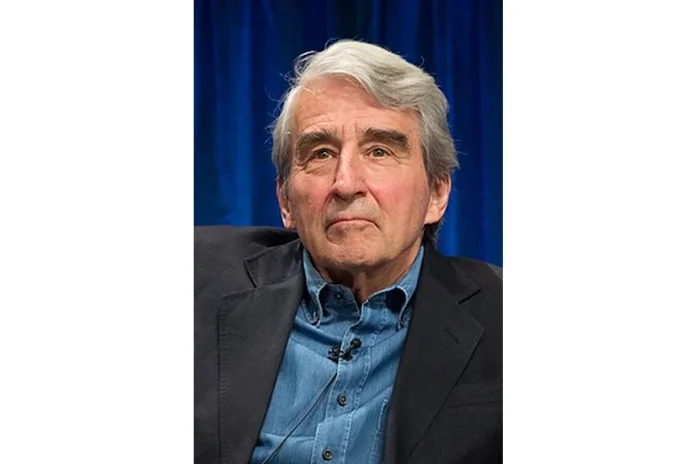
Sam Waterston Bio
Samuel Atkinson Waterston, known professionally as Sam Waterston, is an American actor and producer whose career has spanned more than six decades across theater, film, and television. Born on November 15, 1940, in Cambridge, Massachusetts, he has earned a reputation as one of the most quietly charismatic performers of his generation, known for understated performances in dramas, period pieces, and prestige television.
Waterston first reached international attention for his role as Sydney Schanberg in the 1984 drama The Killing Fields, which earned him an Academy Award nomination for Best Actor. He is perhaps best known for his long-running portrayal of Executive Assistant District Attorney Jack McCoy on the NBC series Law & Order, a role he played across 16 seasons between 1994 and 2010 and reprised from 2022 until his final episode in 2024. He was honored with a star on the Hollywood Walk of Fame in 2010 and inducted into the American Theatre Hall of Fame in 2012.
Early Life and Background
Samuel Atkinson Waterston was born in Cambridge, Massachusetts, the third of four children. His father, George Chychele Waterston, was a semanticist and language teacher who had emigrated from Scotland through England, while his mother, Alice Tucker Waterston, was a landscape painter of English ancestry and a descendant of Mayflower passengers. He grew up alongside his siblings Roberta, George, and Ellen in a household shaped by language, art, and intellectual curiosity.
Waterston attended the Groton School, a prestigious preparatory boarding school in Massachusetts, graduating in the class of 1958. He then earned a Bachelor of Arts degree from Yale College in 1962, completing a rigorous liberal arts education that would later inform his wide-ranging work on stage and screen.
During his college years, Waterston studied in Paris at the Sorbonne and trained at the American Actors Workshop, an experience that deepened his classical training and exposed him to European theatrical traditions. These formative years helped shape the disciplined approach to acting that has defined his career.
Path to Acting
Waterston began his professional acting career on the New York City stage, debuting on Broadway in 1962 as Jonathan in the Arthur Kopit play Oh Dad, Poor Dad, Mamma’s Hung You in the Closet and I’m Feelin’ So Sad at the Morosco Theatre. The following year, he made his debut at the Delacorte Theatre in a Central Park production of William Shakespeare’s As You Like It, playing Silvius and establishing himself as a skilled classical actor.
Throughout the late 1960s and early 1970s, Waterston built his reputation with strong supporting roles in film and a series of acclaimed stage appearances. He worked at the Public Theatre in productions including Indians (1969), The Trial of Catonsville Nine (1970), A Doll’s House (1975), Hamlet (1975), and Measure for Measure (1977). His performance as Benedick in a 1972 Public Theatre staging of Much Ado About Nothing earned him a Drama Desk Award for Outstanding Performance.
He made his film debut in the 1965 drama The Plastic Dome of Norma Jean and went on to appear in films including Fitzwilly (1967) opposite Dick Van Dyke, Generation (1969), the Merchant Ivory drama Savages (1972), and the romantic drama Three (1969) with Charlotte Rampling. These early projects laid the groundwork for a steady ascent into leading roles across stage and screen.
Sam Waterston Career
Early Career (1963-1973)
Waterston’s early career was anchored by a string of stage roles in New York, including Broadway appearances in First One Asleep, Whistle (1966) and Halfway Up the Tree (1967). In October 1969, he starred in Arthur Kopit’s Indians at the Brooks Atkinson Theatre alongside Stacy Keach, Tom Aldredge, Kevin Conway, Charles Durning, and Raul Julia, in a production that ran for 96 performances and 16 previews.
During this period he also appeared in supporting film roles, including the British romantic drama Three and the comedy film Generation, while continuing to develop his stagecraft at the Public Theatre. His performances in classical Shakespeare productions during these years cemented his standing in the New York theater community.
Breakthrough (1974-1993)
Waterston achieved a major breakthrough in 1974 with his portrayal of Nick Carraway in the feature film version of The Great Gatsby, acting alongside Robert Redford, Mia Farrow, and Bruce Dern. The performance earned him two Golden Globe nominations, including one for Best Supporting Actor and one for New Star of the Year, marking his emergence as a leading man in Hollywood.
In 1984, he earned his highest critical praise to date for playing American journalist Sydney Schanberg in Roland Joffe’s British drama The Killing Fields, opposite Haing S. Ngor and John Malkovich. The role brought him an Academy Award nomination for Best Actor, establishing him as a dramatic performer of international stature.
Waterston also developed a long-running creative partnership with director Woody Allen, appearing in Interiors (1978), Hannah and Her Sisters (1986), September (1987), and Crimes and Misdemeanors (1989). He portrayed theoretical physicist J. Robert Oppenheimer in the 1980 BBC miniseries Oppenheimer, a performance that earned nominations for both a BAFTA Award and a Golden Globe Award.
On television, he played a district attorney in the drama series I’ll Fly Away from 1991 to 1993, winning the Golden Globe Award for Best Actor in a Television Series Drama in 1994. In 1993, he portrayed Abraham Lincoln onstage in Abe Lincoln in Illinois, earning Tony Award, Drama Desk Award, and Outer Critics Circle Award nominations.
Notable Works and Milestones
Waterston’s signature works include his role as Sydney Schanberg in The Killing Fields (1984), Nick Carraway in The Great Gatsby (1974), and Abraham Lincoln in multiple stage and screen productions, including the 1988 miniseries Lincoln, the 1993 Broadway revival of Abe Lincoln in Illinois, and the 1990 Ken Burns documentary The Civil War. His career-defining moment came with the role of Jack McCoy on Law & Order, a part that turned him into a household name and earned him a Screen Actors Guild Award for Outstanding Performance by a Male Actor in a Drama Series in 1999.
Sam Waterston Award Nominations
Sam Waterston has received multiple award nominations across film, television, and stage. He earned an Academy Award nomination for Best Actor for The Killing Fields in 1984 and a Golden Globe nomination for Best Actor in a Motion Picture Drama for the same film in 1985. He received a Tony Award nomination for Best Actor in a Play for the 1993 Broadway revival of Abe Lincoln in Illinois, and he has accumulated multiple Primetime Emmy Award nominations and Screen Actors Guild Award nominations for his work on Law & Order.
Sam Waterston Awards Won
Sam Waterston has earned recognition from across the entertainment industry, including winning the Golden Globe Award for Best Actor in a Television Series Drama in 1994 for his role in I’ll Fly Away. He received the Screen Actors Guild Award for Outstanding Performance by a Male Actor in a Drama Series in 1999 for Law & Order. He was honored with the 2,397th star on the Hollywood Walk of Fame on January 7, 2010, and was inducted into the American Theatre Hall of Fame in 2012.
| Award | Wins | Year |
|---|---|---|
| Golden Globe Award for Best Actor in a Television Series Drama | 1 | 1994 |
| Screen Actors Guild Award for Outstanding Performance by a Male Actor in a Drama Series | 1 | 1999 |
| Hollywood Walk of Fame Star | 1 | 2010 |
| American Theatre Hall of Fame Induction | 1 | 2012 |
| The Lincoln Forum Richard Nelson Current Award of Achievement | 1 | 2003 |
Sam Waterston Family
Waterston was born to George Chychele Waterston, a semanticist and language teacher, and Alice Tucker Waterston, a landscape painter of English ancestry. He grew up with three siblings: Roberta, George, and Ellen Waterston. His paternal side traces to Scotland, while his maternal heritage links to passengers on the Mayflower.
He has four children, including actor James Waterston and actress Katherine Waterston, both of whom have followed him into the entertainment industry.
Personal Life
Waterston married his first wife, Barbara Johns, in 1964, and the couple had one son, James Waterston, before divorcing in 1975. He married former model Lynn Louisa Woodruff in 1976, and they have three children together, including Katherine Waterston. Waterston is a practicing Episcopalian and has been active in humanitarian and environmental causes, including serving as a board member of Oceana.