
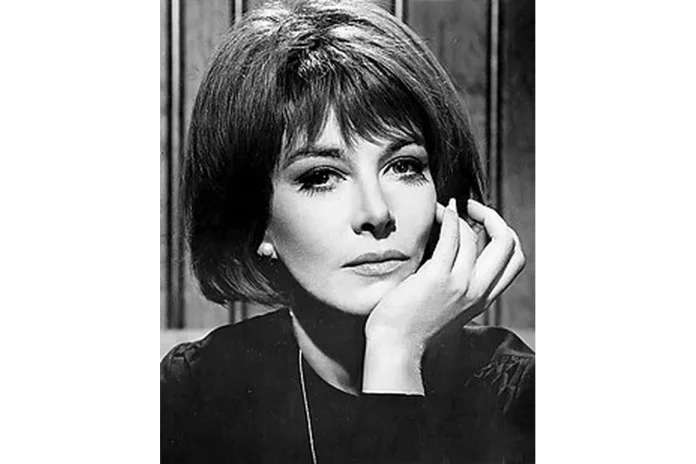
Lee Grant Bio
Lee Grant (born Lyova Haskell Rosenthal) is an American actress and director whose career has stretched across more than eight decades of stage, film, and television work. She first gained attention as a child performer at the Metropolitan Opera before moving to Broadway and then to Hollywood, where she earned an early Academy Award nomination and a Cannes Film Festival prize. After a lengthy period on the Hollywood blacklist, she rebuilt her acting career in the 1960s and later became a respected documentary filmmaker, winning both a Directors Guild of America Award and an Academy Award.
Grant remains one of the few performers of her generation still active in the industry, recognized for both her on-screen performances and her work behind the camera. Her filmography balances acclaimed dramas with a long list of social-issue documentaries, and she is the only Academy Award-winning actor to have also directed an Academy Award-winning documentary.
Early Life and Background
Lee Grant was born Lyova Haskell Rosenthal in Manhattan, New York City, the only child of Abraham W. Rosenthal, a realtor and educator, and Witia Haskell Rosenthal, a child care worker. Her father was born in New York City to Polish Jewish immigrants, while her mother was a Russian Jewish immigrant who had fled Odessa with her sister to escape the pogroms. The family lived in the Hamilton Heights neighborhood of Manhattan, near 148th Street and Riverside.
Her exact year of birth has been disputed, with records ranging from 1925 to 1931; however, census data, travel manifests, and testimony suggest she was born in 1925 or 1926. Grant made her stage debut in 1931 at the Metropolitan Opera in the production L’Oracolo, and as a teenager joined the American Ballet under George Balanchine. She later attended several New York City schools, including the Juilliard School of Music, The High School of Music & Art, and George Washington High School, before winning a scholarship to the Neighborhood Playhouse School of the Theatre, where she studied under Sanford Meisner and later trained with Uta Hagen at the HB Studio and at the Actors Studio.
Path to Acting
Grant’s professional stage debut came in 1944 as an understudy in Oklahoma!, followed by her Broadway acting debut in 1948 with Joy to the World. She built her reputation as a dramatic method actress on and off Broadway, earning strong notices for her first major role as a shoplifter in Detective Story in 1949. The success of that play led to her film debut two years later in the 1951 adaptation of Detective Story, directed by William Wyler and starring Kirk Douglas. The performance brought her a Best Supporting Actress nomination at the Academy Awards and the Best Actress Award at the Cannes Film Festival.
Her rising film career was cut short when she was blacklisted for twelve years after refusing to testify before the House Un-American Activities Committee. During the blacklist years, she worked as an acting teacher and took occasional small stage, film, and television roles under pseudonyms. Once her name was cleared in the mid-1960s, she resumed her career in television and film, determined to rebuild the momentum she had lost.
Lee Grant Career
Early Career (1931–1951)
Grant began her career in 1931 as a child performer at the Metropolitan Opera, taking her first ballet steps in a stage production at the age of just seven. By her early teens she had been accepted into George Balanchine’s American Ballet, and by the mid-1940s she was appearing in major Broadway productions. Her big break came with the role of the Shoplifter in Detective Story, first on stage in 1949 and then on screen in 1951, a performance that earned her both an Oscar nomination and the Cannes Best Actress prize.
Her early film work was brief but distinguished, as the blacklist soon forced her out of major productions. She continued to act where she could, appearing in the soap opera Search for Tomorrow in 1953, the film dramas Storm Fear (1955) and Middle of the Night (1959), and the Broadway production of Two for the Seesaw, where she took over the female lead from Anne Bancroft in 1959.
Breakthrough (1965–1976)
Grant’s first major post-blacklist success came with the 1965–1966 television series Peyton Place, in which she played Stella Chernak and won the Primetime Emmy Award for Outstanding Performance by an Actress in a Supporting Role in a Drama Series in 1966. She followed this with strong supporting performances in major films, including In the Heat of the Night (1967), Valley of the Dolls (1967), and The Landlord (1970), the last of which earned her another Academy Award nomination for Best Supporting Actress.
In the early 1970s, she starred in the Columbo pilot episode “Ransom for a Dead Man” opposite Peter Falk and won a Primetime Emmy for her performance in the television film The Neon Ceiling. She reunited with Falk on Broadway in Neil Simon’s The Prisoner of Second Avenue, then earned her highest-profile screen win for playing Warren Beatty’s older lover in Shampoo (1975), which brought her the Academy Award for Best Supporting Actress. Her third Oscar nomination of the decade came for Voyage of the Damned (1976).
Notable Works and Milestones
Among Grant’s most recognized works are Detective Story, Peyton Place, In the Heat of the Night, Valley of the Dolls, The Landlord, Shampoo, and Voyage of the Damned. Her career-defining moments include her Cannes-winning film debut, her Emmy-winning return to television, her Oscar victory for Shampoo, and her later transition into documentary directing, highlighted by Down and Out in America, which tied for the Academy Award for Best Documentary Feature in 1986.
Lee Grant Award Nominations
Lee Grant has received a number of high-profile award nominations across her long career. She earned an Academy Award nomination for Best Supporting Actress for Detective Story (1951), followed by additional Oscar nominations for The Landlord (1970), Shampoo (1975), and Voyage of the Damned (1976), winning the award for Shampoo. Her television work brought her further nominations, including a Primetime Emmy nomination for Outstanding Lead Actress in a Miniseries or Movie for “Ransom for a Dead Man,” and a later Primetime Emmy nomination for the television film Citizen Cohn (1992).
Lee Grant Awards Won
Lee Grant has won an Academy Award, two Primetime Emmy Awards, and a Directors Guild of America Award, along with earlier festival recognition at Cannes. Her directing work brought her the Academy Award for Best Documentary Feature for Down and Out in America (1986) and the Directors Guild of America Award for Outstanding Directorial Achievement for Nobody’s Child (1986). She also received the Women in Film Crystal Award in 1988 in recognition of her contributions to the entertainment industry.
| Award | Wins | Year |
|---|---|---|
| Academy Award for Best Supporting Actress (Shampoo) | 1 | 1976 |
| Academy Award for Best Documentary Feature (Down and Out in America) | 1 | 1987 |
| Primetime Emmy Award for Outstanding Supporting Actress in a Drama Series (Peyton Place) | 1 | 1966 |
| Directors Guild of America Award for Outstanding Directorial Achievement (Nobody’s Child) | 1 | 1987 |
Lee Grant Family
Lee Grant was married to Arnold Manoff, a writer whose naming before the House Un-American Activities Committee contributed to her placement on the Hollywood blacklist. Their daughter, Dinah Manoff, became an actress known for her work in television and on Broadway, and has occasionally collaborated with her mother, including co-starring on Empty Nest and directing a stage production of The Gin Game in 2013 that Grant headlined.
Personal Life
Grant experienced the Hollywood blacklist at the height of her early promise, a period she later described as having taken twelve of her prime working years. She has spoken publicly about the lasting emotional impact of that era, noting that even decades later the memory could leave her frozen and unable to speak. After rebuilding her career in the 1960s, she continued to act and direct into the twenty-first century, with a small screen appearance in Killian & the Comeback Kids in 2020 marking her return after a fourteen-year hiatus from acting.