
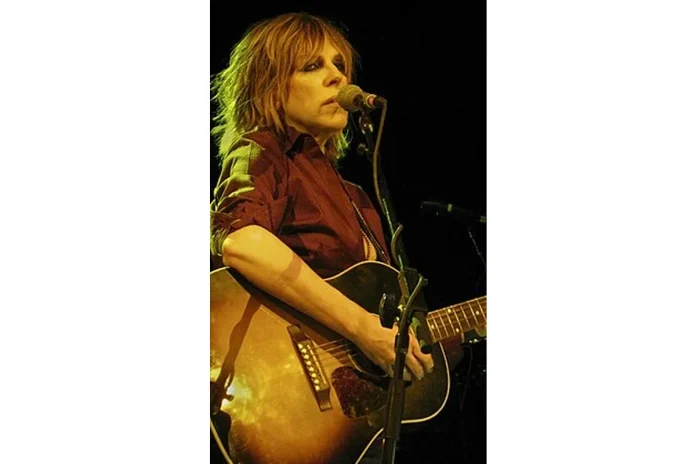
Lucinda Williams Bio
Lucinda Gayl Williams (born January 26, 1953) is an American singer-songwriter and guitarist celebrated for a distinctive sound that blends country, blues, rock, folk, and Americana. Born in Lake Charles, Louisiana, she began recording in the late 1970s and built a reputation through critical praise before reaching wider audiences with her 1988 self-titled album. Her 1998 record Car Wheels on a Gravel Road marked her commercial breakthrough, and over the following decades she became one of the most respected songwriters of her generation.
Williams has released more than a dozen studio albums and earned three Grammy Awards from seventeen nominations, as well as two Americana Awards from eleven nominations. She has been honored with an honorary doctorate from Berklee College of Music and inducted into the Austin City Limits Hall of Fame, and was once named “America’s best songwriter” by Time magazine. She lives in Nashville, Tennessee, where she continues to write, record, and tour.
Early Life and Background
Lucinda Williams was born in Lake Charles, Louisiana, the daughter of poet and literature professor Miller Williams and amateur pianist Lucille Fern Day. Her parents divorced in the mid-1960s, and her father gained custody of her and her younger siblings, Robert Miller and Karyn Elizabeth. Like her father, Williams has spina bifida, a condition that has shaped parts of her life and songwriting perspective.
Because her father held visiting professorships in Mexico and several American cities, including Baton Rouge, New Orleans, Jackson, Mississippi, and Utah, the family moved frequently before settling in Fayetteville, Arkansas, where he joined the University of Arkansas faculty. Williams began writing poetry at the age of six, showed an early affinity for music, and started playing guitar when she was twelve. She made her first live performance at seventeen in Mexico City, appearing as part of a duo with banjo player Clark Jones.
Path to Music
By her early twenties, Williams was performing in clubs in Austin and Houston, Texas, developing a blend of folk, rock, and country that set her apart from her peers. In 1978, she moved to Jackson, Mississippi, to record her first album for Folkways Records. The resulting record, Ramblin’ on My Mind, was released in 1979 and showcased her gift for interpreting traditional country and blues material from artists such as Robert Johnson, Memphis Minnie, and the Carter Family.
Her second album, Happy Woman Blues, followed in 1980 and consisted largely of her own songwriting. Critics noted a more rock-oriented edge on the record, and Williams continued to refine her craft through constant club work. During the 1980s, she moved to Los Angeles, California, where she built a devoted following and a strong critical reputation while fronting both rock and acoustic configurations. She ultimately settled in Nashville, Tennessee, the city that would remain her base for the rest of her career.
Lucinda Williams Career
Early Career (1978-1987)
Williams’ first two albums arrived in quick succession. Ramblin’ on My Mind (1979) gathered country and blues covers recorded for Folkways, while Happy Woman Blues (1980) introduced her own material. The records earned significant critical praise but little mainstream radio play, and Williams supported them with steady touring in Texas and later California, where she also briefly married Long Ryders drummer Greg Sowders.
During this period, Williams built a network of collaborators and admirers within the singer-songwriter community. Her reputation as a precise, deliberate writer grew steadily, even as commercial success remained elusive. By the end of the 1980s, she was ready to record the album that would introduce her voice to a national audience.
Breakthrough (1988-1999)
In 1988, Williams released her third album, the self-titled Lucinda Williams, on Rough Trade Records, produced with Gurf Morlix and Dusty Wakeman. The record earned widespread critical acclaim and was voted the sixteenth best album of the year in The Village Voice’s Pazz & Jop poll, later being called “an Americana classic” by The Guardian. It included “Changed the Locks”, which drew praise from Tom Petty, and “Passionate Kisses”, which Mary Chapin Carpenter later turned into a major country hit and which won Williams the Grammy Award for Best Country Song in 1994.
Her fourth album, Sweet Old World (1992), deepened her reputation for emotionally charged songwriting, and the title track was later covered by Emmylou Harris on her landmark album Wrecking Ball (1995). Williams’ long-awaited fifth album, Car Wheels on a Gravel Road, arrived in 1998 and became her commercial breakthrough. The record topped the Pazz & Jop poll, was certified Gold by the RIAA, earned a Grammy Award for Best Contemporary Folk Album, and produced the Grammy-nominated single “Can’t Let Go”.
Notable Works and Milestones
Among Williams’ most celebrated works are Lucinda Williams (1988), Sweet Old World (1992), and Car Wheels on a Gravel Road (1998), the last of which appeared on Rolling Stone’s 500 Greatest Albums of All Time list. The signature songs “Passionate Kisses”, “Changed the Locks”, “Can’t Let Go”, and “Lake Charles” have cemented her reputation as a songwriter whose work travels widely across genres and generations.
Lucinda Williams Award Nominations
Williams has received seventeen Grammy Award nominations spanning country, folk, pop, rock, and Americana categories, with notable nods for Best Contemporary Folk Album, Best Female Rock Vocal Performance, Best Female Pop Vocal Performance, Best Solo Rock Vocal Performance, Best Rock Song, and Best American Roots Song. She has also received eleven nominations from the Americana Music Association, including multiple Album of the Year and Song of the Year recognitions.
Lucinda Williams Awards Won
Williams has won three Grammy Awards: Best Country Song in 1994 for “Passionate Kisses”, Best Contemporary Folk Album in 1999 for Car Wheels on a Gravel Road, and Best Female Rock Vocal Performance in 2002 for “Get Right With God”. She has received two Americana Awards, including Album of the Year in 2015 for Down Where the Spirit Meets the Bone, along with an honorary Americana distinction. She also received an Honorary Doctorate of Music from Berklee College of Music in 2017, the BMI Troubadour Award in 2022, and induction into the Austin City Limits Hall of Fame in 2021.
| Award | Wins | Year |
|---|---|---|
| Grammy Award for Best Country Song (for “Passionate Kisses”) | 1 | 1994 |
| Grammy Award for Best Contemporary Folk Album (for Car Wheels on a Gravel Road) | 1 | 1999 |
| Grammy Award for Best Female Rock Vocal Performance (for “Get Right With God”) | 1 | 2002 |
| Americana Music Award for Album of the Year (for Down Where the Spirit Meets the Bone) | 1 | 2015 |
| Berklee College of Music Honorary Doctorate of Music | 1 | 2017 |
| BMI Troubadour Award | 1 | 2022 |
| Austin City Limits Hall of Fame Induction | 1 | 2021 |
Lucinda Williams Family
Williams was raised in a literary household as the daughter of poet Miller Williams and pianist Lucille Fern Day. Her father, a respected literature professor, settled at the University of Arkansas in Fayetteville and remained a central presence in her life, including presiding over her 2009 marriage ceremony. Williams has a younger brother, Robert Miller, and a younger sister, Karyn Elizabeth.
Personal Life
Williams married Long Ryders drummer Greg Sowders in 1986, with the couple divorcing within eighteen months. In September 2009, she married Tom Overby, a former Best Buy music executive who also manages her career, in an on-stage ceremony at the Minneapolis nightclub First Avenue, officiated by her father. The couple continue to collaborate, including co-writing the Grammy-nominated song “Man Without a Soul”. In November 2020, Williams suffered a stroke at her Nashville home; she recovered after five weeks of care and returned to touring in 2021.