
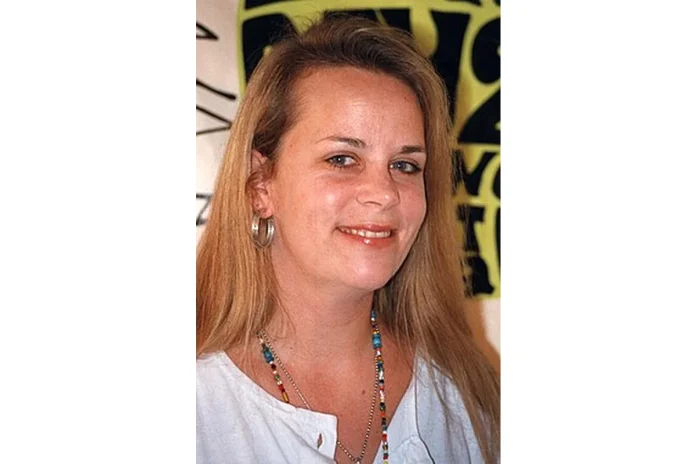
Mary Chapin Carpenter Bio
Mary Chapin Carpenter (born February 21, 1958) is an American country and folk singer-songwriter whose career began in the late 1980s. After years performing in Washington, D.C. clubs she signed with Columbia Records in 1987 and broke through with State of the Heart (1989), Shooting Straight in the Dark (1990) and the multi-platinum Come On Come On (1992). Stones in the Road (1994) earned her a Grammy for Best Country Album, and she has won five Grammy Awards overall. Known for literate songwriting that blends contemporary country with folk and often features feminist themes, Carpenter has recorded for Columbia, Zoë, and her own Lambent Light label, and remains active as a recording artist and touring performer.
Early Life and Background
Mary Chapin Carpenter was born on February 21, 1958, in Princeton, New Jersey. Her father, Chapin Carpenter Jr., was an executive for Life magazine, and her mother, Mary Bowie Robertson, was a folk music singer and guitarist. When she was 12 years old, the family moved to Tokyo, Japan, and lived there for about two years, as her father worked to begin an Asian edition of Life magazine. As a child, Carpenter learned to play her mother’s ukulele and classical guitar and also began writing songs, later citing her seventh-grade science teacher, a guitarist, as another early inspiration.
After her family moved to Washington, D.C., in 1974, Carpenter began playing folk venues in the area. She attended Brown University, from which she graduated with a degree in American civilization. She began performing cover songs at local folk clubs, and by 1981 she had added original material to her sets. She befriended the songwriter, instrumentalist, and record producer John Jennings, and the two began collaborating on a demo cassette of her songs that she sold at concerts.
Path to Singing
Carpenter’s entry into the music industry was a gradual build through the Washington, D.C. folk scene. She sold self-produced demo cassettes at her shows and slowly built a following, sharing bills with established acts and refining her sound. When Jennings originally planned to sign her to an independent label, the owner of a Washington nightclub submitted her demos to a Columbia Records Nashville representative. This led to her signing with Columbia in 1987, just two days before she was scheduled to sign with the other label, launching her professional recording career.
Her debut album, Hometown Girl, did not produce any charting singles, but it drew word-of-mouth attention in folk circles. That response led to a performance slot at the Philadelphia Folk Festival and an opening-act role for Emmylou Harris, both of which expanded her audience and set the stage for her commercial breakthrough.
Mary Chapin Carpenter Career
Early Career (1987–1991)
Carpenter’s first Columbia album, Hometown Girl, was released in 1987. The label hyphenated her first name as “Mary-Chapin” to indicate a compound given name, a styling that continued on her albums until 1994. Of the ten songs on the album, she wrote or co-wrote eight, with Jennings playing several instruments and guest musicians including Mark O’Connor on fiddle and Tony Rice on acoustic guitar. While the record did not produce any charting singles, it brought her bookings at major folk festivals and an opening-act role for Emmylou Harris.
She charted for the first time in early 1989 with “How Do,” which reached number 19 on the Billboard Hot Country Songs charts and served as the lead single to her second Columbia album, State of the Heart. The album produced her first top-ten hit, “Never Had It So Good,” co-written with Jennings. She won Top New Female Vocalist from the Academy of Country Music in 1989, and her 1990 follow-up album, Shooting Straight in the Dark, featured the breakout single “Down at the Twist and Shout,” which peaked at number two in 1991.
Breakthrough (1992–1995)
Come On Come On, Carpenter’s fourth Columbia album, became her most commercially successful release. A decade after its 1992 release, it was certified quadruple platinum by the RIAA for shipments of four million copies in the United States. The album spawned seven singles, including “I Feel Lucky,” a cover of Lucinda Williams’ “Passionate Kisses” (which became her first entry on both the Billboard Hot 100 and the Adult Contemporary charts), “He Thinks He’LL Keep Her,” and “I Take My Chances.” The album featured musical collaborators such as Shawn Colvin, the Indigo Girls, Rosanne Cash, and former Sly and the Family Stone member Andy Newmark.
Carpenter’s 1994 follow-up, Stones in the Road, became her only album to reach number one on the Billboard Top Country Albums charts and was certified double platinum for American sales of two million copies. The lead single “Shut Up and Kiss Me” became her only number one on Hot Country Songs, while “Tender When I Want to Be” peaked at number six. Stones in the Road won the Grammy Award for Best Country Album at the 37th Annual Grammy Awards, and “Shut Up and Kiss Me” won Best Female Country Vocal Performance, completing four consecutive years of wins in that category.
Notable Works and Milestones
Carpenter’s signature work, Come On Come On, stands as her commercial high point, certified quadruple platinum and supported by seven charting singles. Stones in the Road, her only number-one country album, earned her first Grammy for Best Country Album, while “Shut Up and Kiss Me” remains her only number-one country single.
Mary Chapin Carpenter Award Nominations
Mary Chapin Carpenter has received 18 Grammy Award nominations across her career, spanning categories such as Best Female Country Vocal Performance, Best Country Song, Best Country Album, Best Country Collaboration with Vocals, Best Contemporary Folk Album, Record of the Year, and Best Folk Album. Her 1994 nomination for Record of the Year for “He Thinks He’LL Keep Her” marked her first nod outside the country categories, while her work on One Night Lonely earned a Best Folk Album nomination. She has also received nominations from the Academy of Country Music and the Country Music Association.
Mary Chapin Carpenter Awards Won
Carpenter has won five Grammy Awards, three Academy of Country Music awards, and two Country Music Association awards. Her Grammy wins include four consecutive Best Female Country Vocal Performance awards between 1992 and 1995, and the Best Country Album prize for Stones in the Road. Her Academy of Country Music honors include Top New Female Vocalist in 1989 and Top Female Vocalist in 1992, while the Country Music Association named her Female Vocalist of the Year in both 1992 and 1993.
| Award | Wins | Year |
|---|---|---|
| Grammy Award for Best Female Country Vocal Performance (Down at the Twist and Shout) | 1 | 1992 |
| Grammy Award for Best Female Country Vocal Performance (I Feel Lucky) | 1 | 1993 |
| Grammy Award for Best Female Country Vocal Performance (Passionate Kisses) | 1 | 1994 |
| Grammy Award for Best Country Album (Stones in the Road) | 1 | 1995 |
| Grammy Award for Best Female Country Vocal Performance (Shut Up and Kiss Me) | 1 | 1995 |
| Academy of Country Music Top New Female Vocalist | 1 | 1989 |
| Academy of Country Music Top Female Vocalist | 1 | 1992 |
| Country Music Association Female Vocalist of the Year | 2 | 1992, 1993 |
Mary Chapin Carpenter Family
Carpenter is the daughter of Chapin Carpenter Jr., a Life magazine executive, and Mary Bowie Robertson, a folk music singer and guitarist. Her mother’s musical influence shaped Carpenter’s early interest in songwriting, as she learned to play her mother’s ukulele and classical guitar as a child. The family lived in Princeton, New Jersey, before relocating to Tokyo, Japan, and later settling in Washington, D.C.
Personal Life
Carpenter was unmarried for most of her recording career and was once described in a 1994 Entertainment Weekly profile as a “spokes-singer for the thirtysomething single woman.” On June 1, 2002, she married Timmy Smith, a general contractor then working in Batesville, Virginia, with actress Sissy Spacek and singer Dave Matthews in attendance. By 2007, the couple lived on a farm outside Charlottesville, Virginia. The couple divorced shortly before the release of Ashes and Roses (2012), and Carpenter continued to live on the farm. The track “What to Keep and What to Throw Away” on that album was inspired by her divorce from Smith.