
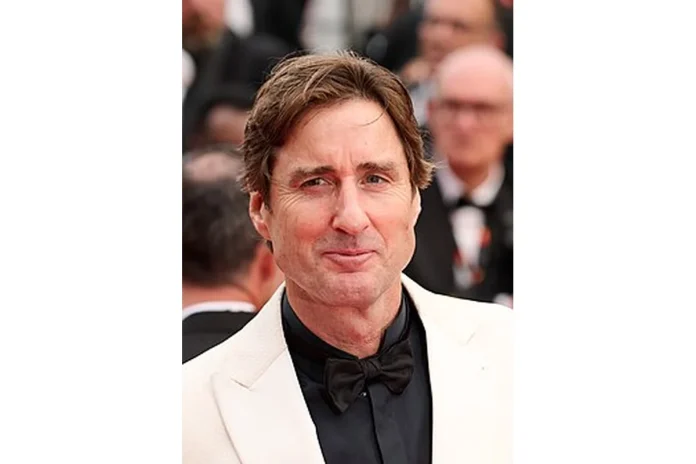
Luke Wilson Bio
Luke Cunningham Wilson (born September 21, 1971) is an American actor and producer whose career spans independent film, mainstream comedy, and television drama. He is widely recognized for his collaborations with filmmaker Wes Anderson, including Bottle Rocket (1996), Rushmore (1998), and The Royal Tenenbaums (2001). Wilson is also a member of the Frat Pack, a loose collective of comic actors who defined a wave of early-2000s Hollywood comedies.
Beyond acting, Wilson has stepped behind the camera to co-direct and produce, expanding his role within the industry. He has worked alongside his brothers Owen Wilson and Andrew Wilson on a range of projects, blending family collaboration with professional discipline. His body of work reflects a balance between quirky character pieces and broad commercial comedies.
Early Life and Background
Luke Cunningham Wilson was born on September 21, 1971, in Dallas, Texas. He is the youngest of three sons born to Robert Andrew Wilson, an advertising and television executive, and Laura Cunningham Wilson, a photographer. The family, originally from Massachusetts, is of Irish Catholic descent, and the Dallas home nurtured an early appreciation for storytelling and visual media.
All three Wilson brothers attended St. Mark’s School of Texas, a prestigious preparatory school in Dallas. According to his brother Owen, Luke was elected class president during his first year at the school, suggesting an early comfort with leadership and public presence. The brothers later moved to Los Angeles to pursue creative careers, with Luke enrolling at Occidental College to study acting.
It was at Occidental College that Wilson became seriously interested in acting, joining campus productions and immersing himself in the craft. His time at the college proved formative, giving him both the training and the network that would shape his early professional steps. The combination of family support, strong education, and a willingness to relocate ultimately set the stage for his entry into Hollywood.
Path to Acting
Luke Cunningham Wilson’s path to acting began in the early 1990s, when he joined his brothers Owen and Andrew in Los Angeles. His first professional credit came with the short film Bottle Rocket in 1994, co-written by Owen Wilson and directed by Wes Anderson. The short caught industry attention and was remade as a feature-length film in 1996, marking Wilson’s feature debut.
After moving to Hollywood, Wilson quickly accumulated supporting roles in major studio productions. He was cast opposite Calista Flockhart in Telling Lies in America and made a brief cameo in the film-within-a-film segment of Scream 2, both released in 1997. These early appearances helped him build a résumé and connect with directors who would shape his career, including Anderson, whose continued trust in Wilson led to his casting in Rushmore in 1998.
Wilson’s profile continued to rise through a series of romantic and comedic roles in the late 1990s, including Best Men and Home Fries, the latter co-starring Drew Barrymore. By the turn of the millennium, he had established himself as a dependable screen presence capable of moving between indie sensibilities and studio-driven projects, laying the foundation for his breakout years in the 2000s.
Luke Wilson Career
Early Career (1994-1999)
Wilson launched his career with the lead role in the short film Bottle Rocket in 1994, a project that introduced him to Wes Anderson and his brother Owen Wilson. The short was reworked into a feature film in 1996, giving Wilson a credited starring role in a film that has since become a cult favorite. The collaboration with Anderson would prove to be one of the defining relationships of his career.
Throughout the late 1990s, Wilson took on a mix of small but memorable parts, including a cameo in Scream 2 and a supporting turn in Telling Lies in America. He also filmed back-to-back romantic comedies in 1998, Best Men and Home Fries, both of which paired him with notable leading actors and helped him hone his on-screen timing. By the end of the decade, he had earned a place among the rising indie actors of his generation.
Breakthrough (2000-2010)
The early 2000s marked Wilson’s most prolific and commercially visible period. He appeared in My Dog Skip (2000) opposite Frankie Muniz, Charlie’s Angels (2000) with Cameron Diaz, Drew Barrymore, and Lucy Liu, and the hit comedy Legally Blonde (2001) opposite Reese Witherspoon. He reunited with Wes Anderson for The Royal Tenenbaums (2001), a film that brought him significant critical attention and cemented his reputation for offbeat, character-driven work.
Wilson also became a fixture of mainstream comedy through films such as Old School (2003), Charlie’s Angels: Full Throttle (2003), Legally Blonde 2: Red, White and Blonde (2003), and Anchorman: The Legend of Ron Burgundy (2004). These roles, alongside similar projects featuring Vince Vaughn, Owen Wilson, and Will Ferrell, led to his association with the Frat Pack. On television, he played Casey Kelso on That ’70s Show from 2002 to 2005, expanding his audience.
Wilson continued to diversify in the late 2000s with parts in My Super Ex-Girlfriend (2006), Idiocracy (2006), Vacancy (2007), You Kill Me (2007), 3:10 to Yuma (2007), and Blades of Glory (2007). He co-directed and starred in The Wendell Baker Story (2005), signaling his interest in working behind the camera. By 2010, he had appeared in Death at a Funeral and Middle Men, demonstrating range across genres.
Notable Works and Milestones
Wilson’s signature work remains his trilogy of collaborations with Wes Anderson, beginning with Bottle Rocket in 1996 and continuing with Rushmore in 1998 and The Royal Tenenbaums in 2001. These films defined his early career and remain touchstones of late-1990s and early-2000s American independent cinema. His contributions to mainstream comedies like Old School and Anchorman helped shape the comedic landscape of the era, while his role in the HBO series Enlightened (2011-2013) and the DC series Stargirl (2020-2022) showcased his dramatic range.
Luke Wilson Award Nominations
Luke Cunningham Wilson’s career has been characterized more by consistent work and cult following than by major industry award recognition. While he has earned praise from critics and audiences for his work with Wes Anderson and his Frat Pack comedies, verified nominations across his decades-long career are limited, and detailed nomination records are not consistently documented in available sources.
Luke Wilson Awards Won
Across his film and television career, Luke Cunningham Wilson has built a reputation as a reliable and versatile performer, though major verified award wins are not prominently documented in available sources. His legacy is defined more by the cultural impact of his films and his long-standing creative partnerships than by formal award recognition.
Luke Wilson Family
Luke Cunningham Wilson was born into a creative and accomplished family. His father, Robert Andrew Wilson, worked as an advertising and television executive, while his mother, Laura Cunningham Wilson, pursued a career as a photographer. The Wilson household encouraged artistic exploration, and all three sons, Andrew, Owen, and Luke, eventually moved into the entertainment industry.
The Wilson brothers have frequently collaborated professionally, sharing screen time in projects such as Bottle Rocket and The Royal Tenenbaums, and supporting one another’s independent work. The brothers attended St. Mark’s School of Texas together, and the family, originally from Massachusetts, has Irish Catholic roots. This close-knit family dynamic has remained a defining feature of Luke Wilson’s personal and professional life.
Personal Life
Luke Cunningham Wilson was formerly in a relationship with actress Drew Barrymore, his co-star in the 1998 film Home Fries. In a 2019 interview, Wilson publicly reflected on his long-stated desire to start a family, noting that he had expressed interest in doing so since 1996. He has largely kept his personal relationships and family plans out of the spotlight, focusing public attention on his work as an actor, producer, and director.