
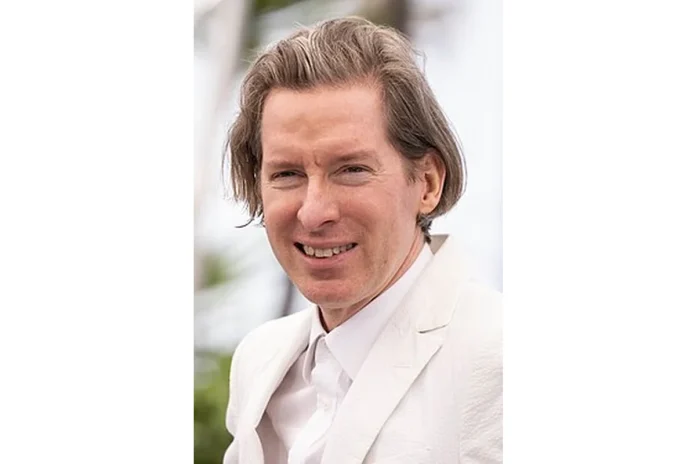
Wes Anderson Bio
Wesley Wales Anderson, known professionally as Wes Anderson, is an American filmmaker whose career has shaped the landscape of contemporary cinema. Born on May 1, 1969, in Houston, Texas, Anderson has earned recognition for his distinctive visual and narrative style, blending eccentricity with deeply emotional storytelling. Often described as an auteur, he is celebrated for exploring themes of grief, loss of innocence, and dysfunctional families across his body of work.
Anderson is the filmmaker behind celebrated films such as Bottle Rocket, Rushmore, The Royal Tenenbaums, Moonrise Kingdom, and The Grand Budapest Hotel. His reputation as a meticulous director and storyteller has earned him an Academy Award, a BAFTA Award, and nominations for four Golden Globe Awards, cementing his standing as one of the most influential directors of his generation.
Early Life and Background
Wesley Wales Anderson was born on May 1, 1969, in Houston, Texas, to Melver Leonard Anderson, who worked in advertising and public relations, and Texas Anne Anderson, a realtor and archaeologist. His parents divorced when he was eight years old. He is the second of three brothers; his older brother is a physician, and his younger brother, Eric Chase Anderson, is a writer and artist whose paintings and designs have appeared in several of Wes Anderson’s films, including The Royal Tenenbaums. Anderson is of English, Swedish, and Norwegian ancestry.
Anderson graduated from St. John’s School in Houston in 1987, a location he later used as a prominent setting in his film Rushmore. As a child, he made silent films on his father’s Super 8 camera, starring his brothers and friends, although his first ambition was to be a writer. Anderson worked part-time as a cinema projectionist at Hogg Memorial Auditorium while attending the University of Texas at Austin, where he met his future collaborator Owen Wilson in 1989. In 1991, he graduated with a Bachelor of Arts with a major in philosophy.
Path to Directing
Anderson’s path to professional filmmaking began in Austin, Texas, where he and his friend Owen Wilson created a short film called Bottle Rocket. The short caught the attention of filmmaker James L. Brooks, who helped Anderson and Wilson develop it into a feature-length film. This collaboration launched Anderson’s professional career and established the creative partnership that would shape his early work.
Throughout the 1990s, Anderson often collaborated with the brothers Luke Wilson and Owen Wilson, who became central figures in his productions. He founded his production company, American Empirical Pictures, which has since supported the creation of many of his distinctive films. His early festival and theatrical work laid the groundwork for his reputation as a director with a singular voice in American cinema.
Wes Anderson Career
Early Career (1996–2000)
Anderson’s first feature film, Bottle Rocket (1996), was based on a short film of the same name that he made with Luke and Owen Wilson. The crime caper followed a group of young Texans aspiring to achieve major heists. The film was well reviewed but performed poorly at the box office, though it attracted the admiration of established filmmakers, including Martin Scorsese, who praised both Bottle Rocket and Anderson’s follow-up film in 2000.
His next film, Rushmore (1998), was a quirky comedy about a high school student’s crush on an elementary school teacher, starring Jason Schwartzman, Bill Murray, and Olivia Williams. The film was a critical and financial success and helped launch Bill Murray’s second act as a respected actor in independent cinema. At the 1999 Independent Spirit Awards, Anderson won the Best Director award, and Murray won Best Supporting Male. In 2016, Rushmore was selected for preservation in the United States National Film Registry by the Library of Congress.
Breakthrough (2001–2009)
Anderson’s breakthrough came with The Royal Tenenbaums (2001), a comedy-drama focusing on a successful, artistic New York City family and its ostracized patriarch, played by Gene Hackman. The film also starred Anjelica Huston as the ex-wife, with Ben Stiller, Luke Wilson, and Gwyneth Paltrow as the children. It was Anderson’s greatest financial success until Moonrise Kingdom, earning more than $50 million in domestic box-office receipts, and it was nominated for an Academy Award.
Anderson’s next feature was The Life Aquatic with Steve Zissou (2004), about a Jacques Cousteau-esque documentary filmmaker played by Bill Murray. The film also starred Owen Wilson, Cate Blanchett, Willem Dafoe, Jeff Goldblum, Anjelica Huston, and Michael Gambon. His 2007 film, The Darjeeling Limited, was about three emotionally distant brothers traveling together on a train in India, reflecting the more dramatic tone of The Royal Tenenbaums. In 2009, Anderson released Fantastic Mr. Fox, a stop-motion-animated film adaptation based on the Roald Dahl book, which earned a nomination for the Academy Award for Best Animated Feature.
Later Career (2010–2023)
In 2012, Anderson released Moonrise Kingdom, a coming-of-age comedy set in a fictional New England town that debuted at the Cannes Film Festival. The film earned him another Academy Award nomination for his screenplay and was a financial success, earning $68.3 million at the box office against a budget of $16 million. In 2014, Anderson released The Grand Budapest Hotel, starring Ralph Fiennes, Tony Revolori, and several of his recurring collaborators. The film earned nine Oscar nominations and four wins, including Best Production Design and Best Costume Design, and won the BAFTA Award for Best Original Screenplay.
Anderson returned to stop-motion animation with Isle of Dogs (2018), which received Academy Award nominations for Best Animated Feature and Best Original Score and earned him the Silver Bear for Best Director at the Berlin International Film Festival. In 2021, he released The French Dispatch, followed by Asteroid City in 2023, both premiering at major international festivals. Anderson then directed an adaptation of Roald Dahl’s short story collection, The Wonderful Story of Henry Sugar and Six More, for Netflix. The 41-minute short film, The Wonderful Story of Henry Sugar, premiered at the 2023 Venice Film Festival and won the Academy Award for Best Live Action Short Film, earning Wes Anderson his first Oscar win.
Notable Works and Milestones
Anderson’s signature works include Bottle Rocket, Rushmore, The Royal Tenenbaums, The Life Aquatic with Steve Zissou, The Darjeeling Limited, Fantastic Mr. Fox, Moonrise Kingdom, The Grand Budapest Hotel, Isle of Dogs, The French Dispatch, Asteroid City, The Wonderful Story of Henry Sugar, and The Phoenician Scheme. His films have earned him an Academy Award, a BAFTA Award, a Silver Bear for Best Director, and nominations for four Golden Globe Awards. Three of his films appeared in BBC Culture’s 2016 poll of the greatest films since 2000.
Wes Anderson Award Nominations
Across his career, Wes Anderson has received numerous award nominations recognizing his contributions as a director and screenwriter. He has received nominations for four Golden Globe Awards, three Academy Award nominations for Best Original Screenplay for The Royal Tenenbaums, Moonrise Kingdom, and The Grand Budapest Hotel, and nominations for Best Director and Best Picture for The Grand Budapest Hotel. His films have also received Academy Award nominations for Best Animated Feature for Fantastic Mr. Fox and Isle of Dogs, as well as nominations for Best Live Action Short Film.
Wes Anderson Awards Won
Wes Anderson has earned recognition with several major awards throughout his career. He won the Academy Award for Best Live Action Short Film for The Wonderful Story of Henry Sugar in 2024. He received the BAFTA Award for Best Original Screenplay for The Grand Budapest Hotel in 2015. Anderson also won the Silver Bear for Best Director at the Berlin International Film Festival for Isle of Dogs, and the Independent Spirit Award for Best Director for Rushmore.
Wes Anderson Family
Wes Anderson was born into a family that shaped his artistic sensibilities. His father, Melver Leonard Anderson, worked in advertising and public relations, while his mother, Texas Anne Anderson, worked as a realtor and archaeologist. His parents divorced when he was eight years old. Anderson has two brothers: an older brother who is a physician, and a younger brother, Eric Chase Anderson, a writer and artist whose paintings and designs have appeared in several of Wes Anderson’s films.
Personal Life
Wes Anderson is in a romantic relationship with Lebanese writer, costume designer, and voice actress Juman Malouf, the daughter of novelist Hanan al-Shaykh. The couple welcomed a daughter, Freya, in 2016, with Bill Murray serving as godfather to the child. After spending most of his adult life in New York City, Anderson moved to France and has maintained an apartment in Paris’s 14th arrondissement since 2005. He frequently visits his family in Houston, Texas.