
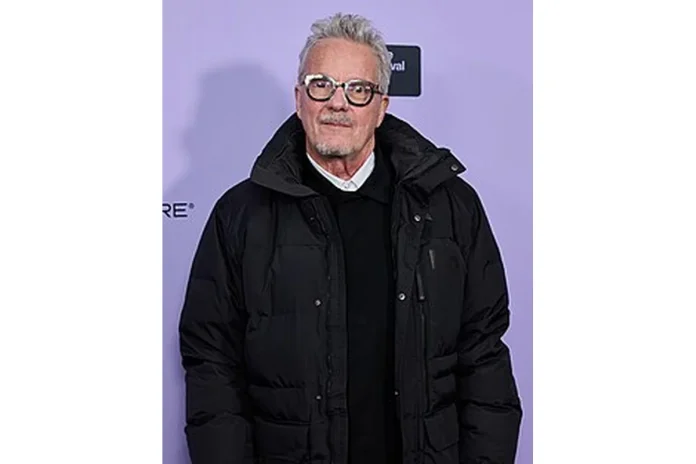
Mark Mothersbaugh Bio
Mark Allen Mothersbaugh (born May 18, 1950) is an American musician, songwriter, composer, multi-instrumentalist, record producer and visual artist. He first rose to prominence in the late 1970s as co-founder, lead vocalist and keyboardist of the new wave band Devo, whose 1980 single “Whip It” became a Top 20 hit in the United States and helped the group build a lasting cult following. Beyond Devo, Mothersbaugh has built a parallel career composing scores for television, film and video games through his production company Mutato Muzika. He has also released four solo studio albums and exhibited his visual art in galleries and museums across the United States.
Early Life and Background
Mark Allen Mothersbaugh was born on May 18, 1950, in Akron, Ohio, to Robert Mothersbaugh Sr. and Mary Margaret Mothersbaugh, known as “Mig.” He grew up in a musical household alongside two younger brothers, Bob and Jim, both of whom became musicians, as well as two sisters, Amy and Susan. The family lived in the Akron area, and Mothersbaugh graduated from Woodridge High School in Peninsula, Ohio.
From an early age, Mothersbaugh gravitated toward both music and visual art, sketching constantly and playing in school bands. His father later appeared in early Devo films and fan events in the persona of General Boy, while his brothers contributed to the group’s recordings, with Jim appearing only on several early demos. This blend of music, performance and visual humor in the family environment laid the groundwork for Mothersbaugh’s later interdisciplinary career.
At the age of seven, Mothersbaugh began wearing glasses to correct severe myopia and astigmatism. The thick lenses he relied on throughout his childhood would later become part of his iconic image, and he eventually designed his own distinctive eyewear in collaboration with manufacturers.
Path to Celebrity
Mothersbaugh enrolled at Kent State University as an art student, where he met Gerald Casale and Bob Lewis, the future co-founders of Devo. The 1970 Kent State shootings, in which Ohio National Guardsmen killed several students on campus, profoundly affected the group and shaped the concept of “devolution,” the philosophical idea that humanity was moving backward rather than forward. Intrigued by this concept, Mothersbaugh joined Casale and Lewis in exploring it through music, performance and visual art.
In 1973, the trio formally began performing together as Devo, blending new wave, punk, post-punk and electronic rock into a theatrical stage show. Mothersbaugh served as one of the band’s primary composers, contributing songs such as “Jocko Homo” and writing much of the material that would define the group’s signature sound. The band’s early performances at college venues and small clubs helped them attract a national following before their Warner Bros. debut.
Mark Mothersbaugh Career
Early Career (1973–1979)
Devo spent the mid-1970s refining its act through self-produced films, performances and independent releases before signing with Warner Bros. Records. The band released its major-label debut, “Q: Are We Not Men? A: We Are Devo!,” in 1978, followed by “Duty Now for the Future” in 1979. These records introduced audiences to Mothersbaugh’s angular keyboard work and his distinctive, almost robotic vocal style, establishing the group’s identity in the broader new wave scene.
During this period, Mothersbaugh also began branching into soundtrack work and side projects. His early compositional efforts laid the foundation for what would later become Mutato Muzika, his commercial music production company. These formative years gave him the experience and contacts that would allow him to transition smoothly between performing artist and professional composer.
Breakthrough (1980–1990)
Devo’s commercial breakthrough arrived in 1980 with the release of the album “Freedom of Choice” and its lead single “Whip It,” which peaked at No. 14 on the Billboard Hot 100. The song’s catchy hook and irreverent music video made Devo a household name and turned Mothersbaugh into a recognizable pop figure. The band continued to record and tour through the decade, releasing “New Traditionalists” (1981), “Oh, No! It’s Devo” (1982), “Shout” (1984) and “Total Devo” (1988).
In 1989, Mothersbaugh established Mutato Muzika, a commercial music production studio that hired Ryan Moore, Bob Casale and his brother Bob Mothersbaugh. Through this company, he began scoring television shows and films, building a second career as a sought-after composer for hire. His ability to merge catchy synth-pop melodies with emotional storytelling quickly attracted major clients in both Hollywood and the television industry.
Notable Works and Milestones
Beyond Devo, Mothersbaugh became known for composing music for the animated series Rugrats across its 13-year run and for three related theatrical films. He also wrote scores for several Wes Anderson features, including “Bottle Rocket” (1996), “Rushmore” (1998), “The Royal Tenenbaums” (2001) and “The Life Aquatic with Steve Zissou” (2004), as well as major studio releases such as “The Lego Movie” (2014) and “Thor: Ragnarok” (2017). His television work also includes “Pee-wee’s Playhouse,” “Beakman’s World,” “Clifford the Big Red Dog,” “Rugrats,” and the “Super Mario World” TV series, along with scores for video games such as “The Sims 2” and “Ratchet & Clank: Rift Apart.”
Mark Mothersbaugh Award Nominations
Specific nomination tallies for Mark Mothersbaugh outside of his verified wins are not fully documented in the available sources, so a detailed breakdown of nominations is not provided here. His body of work across film, television and video games has nonetheless been widely recognized by industry organizations throughout his career.
Mark Mothersbaugh Awards Won
Mark Mothersbaugh has received several honors recognizing his contributions to music, film and visual art. He was awarded the BMI Richard Kirk Award at the 2004 BMI Film and TV Awards for his contributions to film and television music. In 2008, Kent State University presented him with an honorary doctorate of humane letters. He was also awarded the key to the city of Akron on May 28, 2016, during a ceremony at the Akron-Summit County Public Library.
| Award | Wins | Year |
|---|---|---|
| BMI Richard Kirk Award | 1 | 2004 |
| Honorary Doctorate of Humane Letters, Kent State University | 1 | 2008 |
| Key to the City of Akron | 1 | 2016 |
Mark Mothersbaugh Family
Mark Mothersbaugh is the son of Robert Mothersbaugh Sr. and Mary Margaret “Mig” Mothersbaugh. He has two younger brothers, Bob Mothersbaugh and Jim Mothersbaugh, both musicians who have worked with Devo, as well as two sisters, Amy and Susan. His nephew, Silas Hite, is also connected to the family’s creative circle.
Mothersbaugh married actress Nancye Ferguson, and the two later divorced. He is currently married to Anita Greenspan, who co-runs the film music managing company Greenspan Kohan Management with Neil Kohan. Together, Mothersbaugh and Greenspan have two daughters adopted from China.
Personal Life
Mothersbaugh has been married twice, first to Nancye Ferguson and later to Anita Greenspan. With Greenspan, he adopted two daughters from China after learning about the local practice of female children being abandoned because of their gender. In a 2016 interview, Mothersbaugh discussed living with attention deficit disorder and how it has shaped his creative process.
In May 2020, Mothersbaugh contracted COVID-19 and spent 18 days on a ventilator in the intensive care unit at Cedars-Sinai Medical Center. He later described near-death experiences and lasting neuropathic pain, as well as the loss of most vision in his right eye during his hospitalization. He is also a collector of song poems and unusual vintage musical devices, and he owns Raymond Scott’s Electronium.