
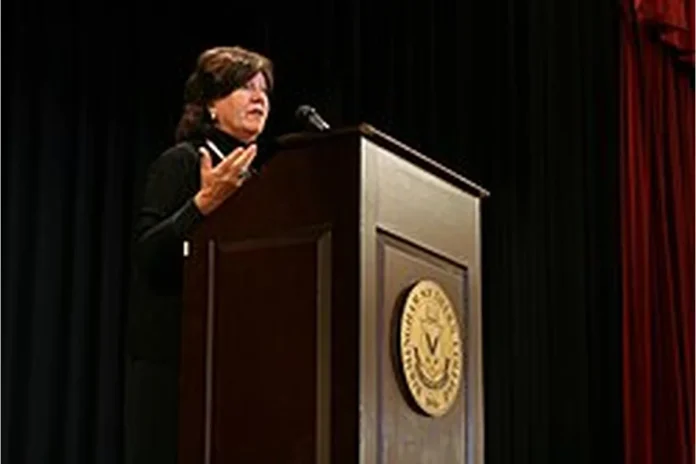
Mary Badham Bio
Mary Badham, born on October 7, 1952, in Birmingham, Alabama, is an American actress best known for her portrayal of Jean Louise “Scout” Finch in the classic film To Kill a Mockingbird (1962). At the age of ten, she earned a nomination for the Academy Award for Best Supporting Actress, making her the youngest performer ever recognized in that category at the time. Although she had no prior film experience, her natural performance earned her lasting recognition and a permanent place in American cinema history. Badham later stepped away from acting and built a career as an art restorer, while occasionally returning to public life for special projects.
Early Life and Background
Mary Badham was born on October 7, 1952, in Birmingham, Alabama, in the United States. She grew up in a family that would later become closely connected to the entertainment industry, as her older brother, John Badham, would go on to become a well-known film and television director. Her family background provided her with an early awareness of storytelling and performance, even though she did not initially plan to pursue a career in film. As a young girl, Badham was described as a spirited and curious child, qualities that would later help her bring the character of Scout Finch to life on screen.
Badham’s early years were spent in the American South during the late 1950s, a period marked by significant social change. She attended school in the region and was known locally as a bright and active student. Her upbringing in a culturally rich environment, combined with her family’s eventual involvement in the arts, helped shape her understanding of the world and prepared her for the unexpected opportunity that would soon come her way. Although she had never acted in a film before, her natural confidence and regional accent made her an ideal candidate for the role she was about to receive.
Path to Acting
Mary Badham’s entry into the film industry was unconventional and unplanned. She had no prior film acting experience when she was cast as Scout Finch in To Kill a Mockingbird, the 1962 adaptation of Harper Lee’s Pulitzer Prize-winning novel. The casting process, led by legendary producer Alan J. Pakula and director Robert Mulligan, sought a young girl who could authentically represent the spirited, tomboyish Scout. Badham’s natural charm and Southern roots impressed the filmmakers, and she was ultimately chosen for the role. The film went on to become a critical and commercial success, winning three Academy Awards and earning Badham her own nomination.
Her performance in the film made an immediate impact on audiences and critics alike. She formed a deep bond with actor Gregory Peck, who played her father, Atticus Finch, in the film. The two remained close friends for the rest of Peck’s life, and Badham continued to call him “Atticus” until his death in 2003. After the success of To Kill a Mockingbird, Badham appeared in a few more projects, including an episode of the original Twilight Zone series titled “The Bewitchin’ Pool” and the films This Property Is Condemned and Let’s Kill Uncle. She eventually stepped away from the entertainment industry, choosing to focus on her education and personal life.
Mary Badham Career
Early Career (1962-1966)
Mary Badham’s acting career began in 1962 with her iconic role as Scout Finch in To Kill a Mockingbird. The film was a massive critical success and remains one of the most beloved American movies of all time. Her performance earned her an Academy Award nomination for Best Supporting Actress, making her, at age ten, the youngest nominee in that category at the time. Following this success, she took on a small role in the final episode of the original Twilight Zone, “The Bewitchin’ Pool,” in 1964, where she played Sport Sharewood. She also appeared in the 1966 films This Property Is Condemned and Let’s Kill Uncle, but by the end of the decade, she had largely retired from acting to focus on her personal life and education.
During this early period, Badham was recognized not only for her talent but also for her natural screen presence. Despite being a newcomer with no formal training, she held her own alongside seasoned actors like Gregory Peck. Her ability to convey emotion and authenticity at such a young age set her apart from many other child performers of the era. The awards attention she received validated her performance and cemented her status as a notable young talent in Hollywood, even as she chose to step away from the spotlight in the years that followed.
Breakthrough (1962)
Mary Badham’s breakthrough came with her very first film role. Cast as Scout Finch in To Kill a Mockingbird, she delivered a performance that would define her career and earn her a place in film history. The film, directed by Robert Mulligan and produced by Alan J. Pakula, won three Academy Awards, including Best Actor for Gregory Peck, Best Adapted Screenplay, and Best Art Direction. Although Badham did not win the Oscar, her nomination was a remarkable achievement for a ten-year-old with no prior experience.
The impact of this single role has endured for decades. To Kill a Mockingbird is widely taught in schools across the United States, and Badham’s portrayal of Scout remains the definitive interpretation of the character. She later became a strong advocate for the book’s messages of tolerance and compassion, traveling the world to share her experiences from the set and to discuss the novel’s lasting importance. Her association with the film has remained a defining part of her public identity, even as she pursued other careers and interests outside of acting.
Notable Works and Milestones
Mary Badham’s most significant work remains her role as Scout Finch in To Kill a Mockingbird, a performance that continues to be celebrated more than sixty years after the film’s release. Her Academy Award nomination at age ten remains one of the most memorable milestones in her career and a point of pride in her professional legacy. In 2005, she briefly returned to film with a cameo in Our Very Own, directed by Cameron Watson, after years of retirement. In 2022, she made her stage debut in the national tour of Aaron Sorkin’s stage adaptation of To Kill a Mockingbird, portraying the character of Mrs. Dubose.
Mary Badham Award Nominations
Mary Badham received one Academy Award nomination during her career. In 1963, she was nominated for Best Supporting Actress for her role as Scout Finch in To Kill a Mockingbird (1962). At the time, at age ten, she was the youngest nominee ever recognized in that category. Although she did not win the award, the nomination itself remains one of the most notable honors ever given to a child performer in a leading dramatic role. Her recognition by the Academy affirmed the strength of her performance and helped establish her as a memorable presence in American film history.
Mary Badham Awards Won
Mary Badham did not win a competitive Academy Award during her career. Her single Oscar nomination came for her portrayal of Scout Finch in To Kill a Mockingbird, but the award in her category that year went to Patty Duke for The Miracle Worker. Beyond the Oscars, Badham’s legacy has been honored in other ways over the decades, including invitations to special events and screenings related to the film. In 2012, she attended a White House screening of To Kill a Mockingbird with President Barack Obama to mark the film’s fiftieth anniversary, a moment that highlighted her enduring connection to the project.
Mary Badham Family
Mary Badham is the younger sister of John Badham, a respected American film and television director known for films such as Saturday Night Fever and WarGames. The siblings share a connection to the entertainment industry, though Mary chose a different path after her early success. She is married to Richard W. Wilt, who has served as dean of Library and Educational Support Services at Lehigh Carbon Community College. The couple has two children together, and the family has made their home in the United States, where Badham has built a life away from the spotlight of Hollywood.
Personal Life
Mary Badham married Richard W. Wilt in 1975, and the couple has two children. After stepping away from acting in the late 1960s, she pursued a career as an art restorer, working to preserve and repair important artworks. By the 2010s, she was also working as a college testing coordinator, reflecting her continued commitment to education. She has remained connected to the legacy of To Kill a Mockingbird over the years, traveling around the world to share her memories of working on the film and to discuss the novel’s themes of tolerance and compassion. In 2022, she returned to the stage for the first time, joining the national tour of the stage adaptation of To Kill a Mockingbird in the role of Mrs. Dubose.