
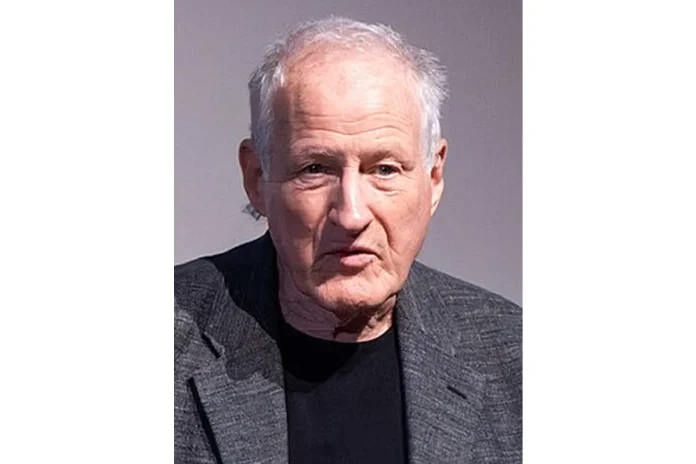
Michael Mann Bio
Michael Kenneth Mann (born February 5, 1943) is an American film director, screenwriter, author, and producer widely recognized for his stylized crime dramas. Over a career that has spanned more than five decades, he has directed acclaimed features such as Thief, Heat, and The Last of the Mohicans, while also serving as executive producer on the iconic television series Miami Vice. He has won two Primetime Emmy Awards and received nominations for four Academy Awards, two Golden Globe Awards, and a BAFTA Award. Mann is known for his meticulous research, atmospheric visuals, and a deep interest in the lives of criminals and the professionals who pursue them.
Early Life and Background
Michael Kenneth Mann was born on February 5, 1943, in Chicago, Illinois. He is the son of Esther Mann and Jack Mann, and his family has Jewish roots; his grandfather left the Russian Empire in 1912 and brought his wife and Mann’s father to the United States in 1922. Growing up in Chicago during the postwar years, Mann attended Amundsen High School, which was also the alma mater of choreographer and director Bob Fosse.
As a young man, Mann studied English literature at the University of Wisconsin, where he earned his Bachelor of Arts degree. While in college, he saw Stanley Kubrick’s Dr. Strangelove or: How I Learned to Stop Worrying and Love the Bomb, and the experience transformed his ambitions. He has often said that the film convinced him a personal, serious statement could still reach a wide audience, a lesson that shaped his approach to filmmaking for the rest of his career.
Path to Directing
After graduating in 1965, Mann moved to London in the mid-1960s to study cinema at the London Film School, where he received a graduate degree in 1967. He then spent roughly seven years in the United Kingdom, working on commercials alongside contemporaries such as Alan Parker, Ridley Scott, and Adrian Lyne. In 1968, footage he shot of the Paris student revolt aired on NBC’s First Tuesday news program, and the experience became the basis for his short film Jaunpuri, which won the Jury Prize at Cannes in 1970.
Following his return to the United States in 1971, Mann began working steadily in television. He wrote episodes for series such as Starsky and Hutch, Police Story, and Bronk, learning the craft of episodic storytelling and first-hand research from writers like Joseph Wambaugh. In 1978, he created and wrote the pilot for the television series Vegas, and soon after, his television movie The Jericho Mile won a Primetime Emmy Award for Outstanding Writing in a Limited Series or Special and a Directors Guild of America Award for Best Director. These achievements positioned him to make the leap to theatrical features.
Michael Mann Career
Early Career (1968–1980)
Mann’s earliest professional credit was the 1968 documentary Insurrection, followed by the short Jaunpuri in 1970. His first feature-length directorial work was the television movie The Jericho Mile (1979), which he filmed on location at Folsom State Penitentiary. The film won the Emmy for Outstanding Writing in a Limited Series or Special and earned Mann the DGA Award for Best Director, establishing his reputation for powerful, realistic storytelling.
During the same period, he built his television résumé with scripts and pilots for series like Starsky and Hutch, Police Story, and Vegas, as well as the sports-themed television film Swan Song (1980). These early assignments sharpened his focus on crime, justice, and character, themes that would define his later work. By the end of the 1970s, he was ready to move into feature filmmaking.
Breakthrough (1981–1999)
Mann’s theatrical debut, Thief (1981), starred James Caan as a professional burglar in Chicago and New York. Mann cast actual former thieves to keep the technical scenes authentic. The film was followed by the supernatural thriller The Keep (1983) and the executive-producing work on the hit television series Miami Vice (1984–1990) and Crime Story (1986–1988). In 1986, he became the first director to bring Thomas Harris’ Hannibal Lecter to the screen with Manhunter, starring Brian Cox in the iconic role.
Mann gained widespread recognition in 1992 with The Last of the Mohicans, an adaptation of James Fenimore Cooper’s novel starring Daniel Day-Lewis. Critics praised the film’s action and atmosphere, with Entertainment Weekly calling Mann a master of violence and lyrical anxiety. He followed that success with Heat (1995), which paired Al Pacino and Robert De Niro in a landmark crime drama. The film was a critical and commercial hit, and Variety hailed it as a stunning, ambitious study of good and evil.
His 1999 drama The Insider, starring Russell Crowe and Al Pacino, examined the tobacco industry whistleblower Jeffrey Wigand. The film earned seven Academy Award nominations, including a nod for Mann’s direction, and was widely regarded as one of the most important films of his career. The decade cemented his standing as a leading auteur of American crime cinema.
Notable Works and Milestones
Among Mann’s signature films are Thief (1981), Manhunter (1986), The Last of the Mohicans (1992), Heat (1995), and The Insider (1999). His work on Miami Vice helped define the look of 1980s television, and his feature adaptation of the show appeared in 2006. Total Film ranked him No. 28 on its 2007 list of the 100 Greatest Directors Ever, while Sight and Sound placed him No. 5 on their list of the 10 Best Directors of the Last 25 Years covering 1977 to 2002.
Michael Mann Career (2001–Present)
Continued Success and Recent Work (2001–2024)
Mann opened the 2000s with the biographical drama Ali (2001), starring Will Smith as Muhammad Ali, marking his first experimentation with digital cinematography. In 2004, he directed Collateral, casting Tom Cruise against type as a hitman; the film earned Jamie Foxx an Academy Award nomination. That same year, Mann produced Martin Scorsese’s The Aviator, which received a Best Picture nomination. He later adapted Miami Vice into a 2006 feature film starring Colin Farrell and Jamie Foxx.
He followed these projects with the crime drama Public Enemies (2009), starring Johnny Depp as John Dillinger and Christian Bale as FBI agent Melvin Purvis. After directing episodes of the HBO series Luck in 2011, he returned to features with the cyber-thriller Blackhat (2015). Mann returned to television in 2022, directing the first episode of the HBO Max crime series Tokyo Vice. In August 2022, he published the novel Heat 2, co-written with Meg Gardiner, and began shooting the biographical drama Ferrari (2023), starring Adam Driver and Penélope Cruz. Ferrari premiered at the 80th Venice International Film Festival and was released in U.S. theaters in December 2023 to generally positive reviews.
Directorial Style
Mann is known for powerfully lit nighttime scenes, atmospheric scores, and a deep commitment to realism, especially in the way gunfire is recorded on film. He frequently uses raw on-set audio and practical effects, with actors attending weapons boot camps to handle firearms with full-load blanks. Cinematographer Dante Spinotti has been a frequent collaborator across his films, helping to define the director’s signature visual look.
Michael Mann Award Nominations
Michael Mann has received nominations from major international organizations across his career, including four Academy Award nominations, two Golden Globe Award nominations, and one BAFTA Award nomination. He has also earned multiple nominations from the Directors Guild of America and other industry bodies for his work in both film and television.
Michael Mann Awards Won
Mann has won two Primetime Emmy Awards, one for Outstanding Writing in a Limited Series or a Special for The Jericho Mile (1979) and another tied to his television work. He has also received the Directors Guild of America Award for Best Director, Cannes Jury Prize recognition for his short film Jaunpuri, and additional industry honors for his contributions to film and television.
Michael Mann Family
Michael Kenneth Mann was born to Esther Mann and Jack Mann, and his family has Jewish heritage tracing back to the Russian Empire. He is the husband of Summer Mann, with whom he has been married since 1974. Mann and his wife have four daughters, including the film director and producer Ami Canaan Mann, who has followed her father into the industry.
Personal Life
Mann has been married to Summer Mann since 1974, and the couple have four daughters. His daughter Ami Canaan Mann is also a working film director and producer. He continues to live and work in the United States while maintaining active projects in both film and television.