
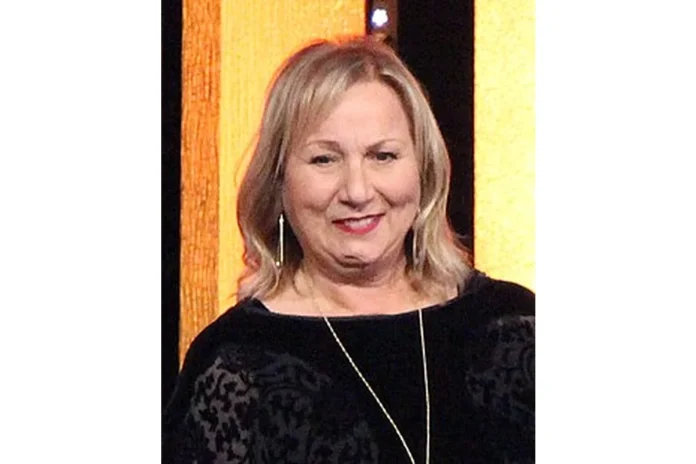
Mimi Leder Bio
Miriam Leder, professionally known as Mimi Leder, is an American film and television director and producer whose career spans more than four decades. Born on January 26, 1952, in New York City, she built a reputation for directing ambitious action films and high-profile television dramas, often handling large ensembles and complex visual effects. She is widely recognized as a trailblazer for women in Hollywood, particularly through her work on the long-running medical drama ER and her feature films The Peacemaker and Deep Impact. Throughout her career, she has earned ten Primetime Emmy Award nominations and two wins, cementing her status as one of the most respected directors in American television and film.
Early Life and Background
Mimi Leder was born in New York City in 1952 and grew up in Los Angeles in a Jewish household. She is the daughter of Etyl Leder, a classical pianist and Holocaust survivor from Brussels, Belgium, and Paul Leder, a director, producer, actor, writer, and editor known for low-budget independent films such as My Friends Need Killing, A*P*E, and I Dismember Mama. Her mother’s experience surviving Auschwitz concentration camp shaped the family’s outlook, and Leder has spoken about being raised as a feminist and protesting the Vietnam War during her formative years.
Her early exposure to filmmaking came through her father, who frequently took her and her siblings onto film sets and dropped her off at the cinema to watch the latest releases. Among the films that left a lasting impression on her during childhood was Federico Fellini’s 8½, a work she has cited as influential in shaping her artistic sensibility. This combination of family artistic tradition and independent cinema culture gave Leder an early and intimate understanding of how films were made, setting the foundation for her future career.
Path to Directing
Leder pursued formal training at the American Film Institute Conservatory, where she studied cinematography and became the first woman to be accepted into the program. She graduated in 1973, marking a historic milestone for women in American film education. Following her studies, she began her professional career in 1976 as a second unit director on her father’s film A*P*E, an experience that gave her firsthand knowledge of on-set logistics and production challenges.
She then worked as a script supervisor on a string of films, including Spawn of the Slithis, Dummy, The Boy Who Drank Too Much, and A Long Way Home, before moving into television on the series Hill Street Blues in 1981. After completing the short film Short Order Dreams, written and funded by her father, she screened it for Hill Street Blues creator Steven Bochco and his associate Gregory Hoblit, who hired her to direct an episode of L.A. Law. This transition from script supervision to episodic television directing launched her path toward becoming a leading Hollywood director.
Mimi Leder Career
Early Career (1976–1991)
During the 1980s, Mimi Leder established herself as a reliable television director, helming episodes of Crime Story, The Bronx Zoo, and Midnight Caller before taking on several episodes of the acclaimed drama China Beach between 1988 and 1991. Her work on China Beach earned her four Primetime Emmy Award nominations, signaling her arrival as a serious dramatic director capable of handling emotional, character-driven storytelling. She also directed the made-for-TV films Woman with a Past in 1992, House of Secrets in 1993, and Baby Brokers in 1994, expanding her range across formats.
These early assignments gave Leder consistent experience managing ensemble casts, balancing serialized narrative arcs, and working within tight broadcast schedules. By the early 1990s, she had become one of the most sought-after episodic directors in television, with a reputation for delivering grounded, visually dynamic episodes across both network dramas and telefilms.
Breakthrough (1994–2000)
Leder’s major breakthrough arrived when she became one of the core directors for the medical drama ER, a series that ran from 1994 to 2009. Her work on ER earned her Primetime Emmy Awards for Outstanding Drama Series in both 1995 and 1996, validating her standing at the top of network television directing. The series also brought her visibility among feature film producers, including Steven Spielberg, who offered her the opportunity to direct The Peacemaker in 1997, her first theatrical feature.
Continuing her collaboration with DreamWorks, Leder directed Deep Impact in 1998, a large-scale disaster film that demonstrated her command of visual effects and action sequences. She followed this success with Pay It Forward in 2000, a character-driven drama that marked her third major studio feature in three years. During this same period she created Sentimental Journey in 1999, a personal love story inspired by her parents’ relationship, reflecting her ability to balance commercial blockbusters with deeply personal projects.
Following the release of Pay It Forward, Leder experienced a prolonged dry spell in feature filmmaking, a period she has described as being placed in Hollywood’s so-called movie jail. Despite this setback, she continued to work steadily in television, shooting nine pilots and producing six series including The Beast, John Doe, Johnny Zero, and Vanished. She also directed several made-for-TV movies such as Thick as Thieves, U.S. Attorney, and Heavenly, sustaining her craft across formats.
Notable Works and Milestones
Leder’s signature works include the action features The Peacemaker and Deep Impact, the emotional drama Pay It Forward, and the biographical legal film On the Basis of Sex, released in December 2018 as her first theatrical feature in eighteen years. Her two Primetime Emmy Award wins for Outstanding Drama Series on ER stand among her most celebrated achievements, alongside her historic role as the first woman to graduate from the AFI Conservatory in 1973. Her continued presence across television and film has established her as both a creative force and a mentor within the industry.
Mimi Leder Award Nominations
Throughout her career, Mimi Leder has received ten Primetime Emmy Award nominations across directing, producing, and series categories. Her early nominations came for her work on the drama China Beach, while additional nominations were earned for her contributions to ER and other television projects. These nominations reflect sustained peer recognition of her ability to lead large-scale productions and deliver consistent creative quality across decades of television work.
Mimi Leder Awards Won
Mimi Leder has won two Primetime Emmy Awards, both for Outstanding Drama Series as a director and producer on ER in 1995 and 1996. These back-to-back wins represent the most significant awards recognition of her career and underscore her central role in shaping one of the most influential medical dramas in television history.
| Award | Wins | Year |
|---|---|---|
| Primetime Emmy Awards – Outstanding Drama Series (ER) | 1 | 1995 |
| Primetime Emmy Awards – Outstanding Drama Series (ER) | 1 | 1996 |
Mimi Leder Family
Mimi Leder is the daughter of Paul Leder, an independent filmmaker who worked as a director, producer, actor, writer, and editor, and Etyl Leder, a classical pianist and Holocaust survivor from Brussels, Belgium. Her father played a central role in introducing her to filmmaking during childhood, both through his own productions and through his habit of taking her to the cinema. She has a daughter, Hannah Leder, and is married to actor Gary Werntz. Her family background, particularly her parents’ artistic and survival experiences, has shaped much of her personal storytelling, including her 1999 film Sentimental Journey.
Personal Life
Mimi Leder is married to actor Gary Werntz, with whom she has a daughter named Hannah. She has spoken publicly about growing up in a feminist household shaped by her mother’s experience as a Holocaust survivor and her father’s independent artistic sensibility. Leder has also described herself as an anti-war protester during the Vietnam War era, a perspective that continues to inform her worldview and creative choices.