
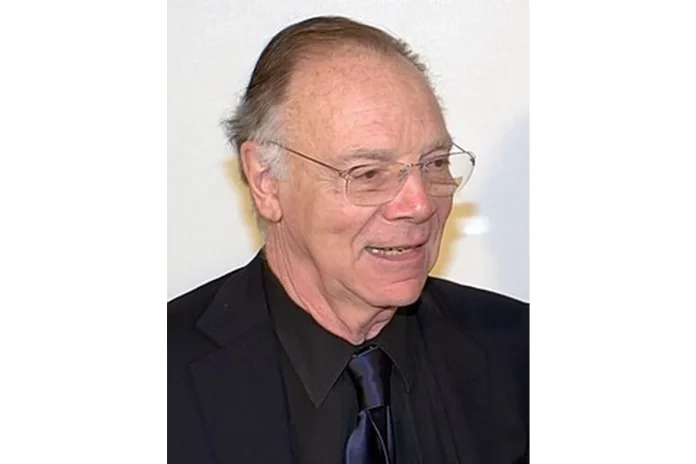
Nicholas Pileggi Bio
Nicholas Pileggi is an American author, screenwriter, producer and journalist whose career has centered on the inner workings of organized crime. Born on February 22, 1933, in Brooklyn, New York, he built a reputation over several decades for translating real-life mob stories into best-selling books and acclaimed films. He is best known for writing the non-fiction book Wiseguy in 1985 and for co-writing the screenplay for its film adaptation, Martin Scorsese’s Goodfellas (1990). Pileggi received an Academy Award nomination for Best Adapted Screenplay for that work, cementing his place as one of the defining voices in true-crime cinema.
Over the course of his career, Pileggi has also collaborated with Scorsese on Casino (1995) and has worked as a writer and producer across both film and television. He is the widower of writer and filmmaker Nora Ephron, his wife from 1987 until her death in 2012.
Early Life and Background
Nicholas Pileggi was born and raised in Brooklyn, New York, in a family shaped by both Italian immigrant roots and American life. He is the elder son of an Italian immigrant father, Nicola Pileggi from Calabria, who played slide trombone in a cinema orchestra during the silent-film era and later owned shoe stores, and an American-born mother named Susie. Growing up in a household connected to the entertainment world of early cinema gave Pileggi a front-row view of storytelling through film from a young age.
The Italian-American neighborhoods of mid-century Brooklyn provided another formative influence. Pileggi grew up surrounded by the sights, sounds and characters of a world in which organized crime was part of everyday conversation. That environment would later shape the subjects of his journalism and books, as he became fascinated by the men and women who lived outside the law.
Path to Writing
In the 1950s, Pileggi began working as a journalist for the Associated Press and later for New York magazine, where he specialized in crime reporting for more than three decades. His long apprenticeship in print journalism taught him how to research complex subjects, conduct lengthy interviews and turn sprawling real-life material into focused narratives. During these years he developed the deep interest in the Mafia that would eventually define his career.
His reporting laid the groundwork for his transition into book-length non-fiction. By the early 1980s, Pileggi had become one of the most knowledgeable crime reporters in the country, and he began thinking about longer-form projects. This combination of journalistic rigor and insider access set the stage for his move from newspapers and magazines to film.
Nicholas Pileggi Career
Early Career
Pileggi’s early career was built almost entirely in print journalism, where he spent more than thirty years covering organized crime for outlets including the Associated Press and New York magazine. His work during this period brought him into contact with federal agents, prosecutors, defense lawyers and mob figures, giving him an unusually detailed understanding of how mafia families actually operated. That depth of reporting became the foundation on which his later screenwriting career was built.
His first major book, Blye, Private Eye, appeared in 1987, but it was the 1985 publication of Wiseguy: Life in a Mafia Family that announced his arrival as a major literary voice. The book traced the life of mob informant Henry Hill and became a national bestseller, drawing the attention of Hollywood almost immediately.
Breakthrough
The breakthrough came when Pileggi adapted Wiseguy into the screenplay for Goodfellas (1990), directed by Martin Scorsese. The film is widely regarded as one of the greatest American movies ever made and earned Pileggi a nomination for the Academy Award for Best Adapted Screenplay. His ability to compress a sprawling real-life story into a tight, cinematic narrative marked him as a distinctive new screenwriting talent.
Following Goodfellas, Pileggi reunited with Scorsese to write Casino: Love and Honor in Las Vegas (1995), the companion book to the film Casino. He also co-wrote the screenplay for Casino, starring Robert De Niro, Sharon Stone and Joe Pesci, and the following year he co-wrote the screenplay for City Hall (1996), starring Al Pacino. These collaborations established a long-running creative partnership with Scorsese that has shaped much of modern crime cinema.
Notable Works and Milestones
Among Pileggi’s most important works are Wiseguy (1985), the film Goodfellas (1990), the book Casino: Love and Honor in Las Vegas (1995) and the film Casino (1995). His Academy Award nomination for Best Adapted Screenplay remains the defining milestone of his screenwriting career, and his long-running collaboration with Martin Scorsese is itself considered a landmark in American filmmaking.
Nicholas Pileggi Award Nominations
Nicholas Pileggi has received recognition from the Academy of Motion Picture Arts and Sciences for his work adapting true-crime stories into film. He earned one Academy Award nomination, for Best Adapted Screenplay, in connection with his work on Goodfellas.
Nicholas Pileggi Awards Won
No individual Academy Award wins for Nicholas Pileggi are documented in the verified sources available for this profile, and no other major individual award wins could be confirmed from the supplied information.
Nicholas Pileggi Family
Nicholas Pileggi is the elder son of Nicola Pileggi, an Italian immigrant from Calabria who played slide trombone in a cinema orchestra during the silent-film era and later owned shoe stores, and Susie Pileggi, his American-born mother. Author and journalist Gay Talese is his first cousin.
Personal Life
Nicholas Pileggi’s first marriage ended in divorce around 1979. He married fellow author, journalist and filmmaker Nora Ephron in 1987, and the couple remained together until Ephron’s death in 2012. Their partnership was widely regarded as one of the notable literary marriages of late twentieth-century New York.