
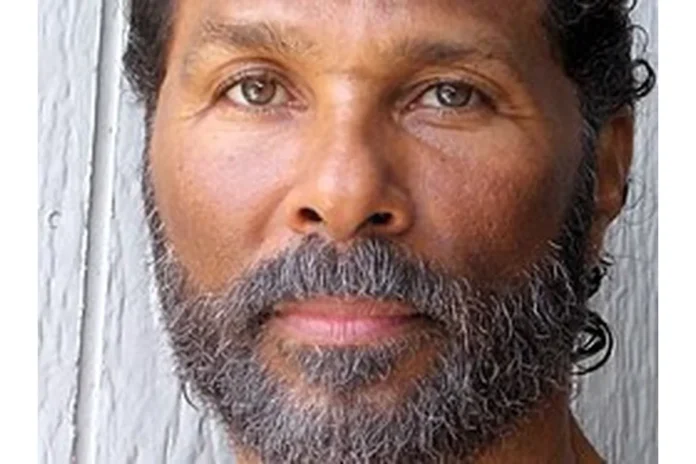
Philip Michael Thomas Bio
Philip Michael Thomas (born May 26, 1949) is an American actor, musician, and composer whose career spans stage, film, television, and video games. He first gained national attention through early 1970s film appearances before achieving international fame as Detective Ricardo Tubbs on the 1980s television series Miami Vice. Beyond acting, Thomas has released recorded music, composed songs, formed his own production company, and lent his voice to one of the most popular video game franchises of the early 2000s.
Although he stepped back from major Hollywood productions in the early 2000s, Thomas remains a recognizable figure in popular culture thanks to the lasting success of Miami Vice and his work in the Grand Theft Auto: Vice City series. His career reflects a steady presence in American entertainment across several decades, beginning in the early 1970s and continuing through 2006.
Early Life and Background
Philip Michael Thomas was born on May 26, 1949, in Columbus, Ohio, and raised in San Bernardino, California. He is of African American, Native American, Irish, and German descent. His father, Louis Diggs, worked as a foreman at a Westinghouse plant, and his mother was Lulu McMorris. Thomas grew up with seven half-brothers and sisters who shared the surname Thomas, the last name of his mother’s first husband. His siblings include Marcus, Michelle, Karen, Anita, Carol, Crystal, and George.
As a child, Thomas acted in his church’s theater group and, by age 15, was singing in the Pentecostal Delman Heights Four Square Gospel Church choir. During this time, he developed an early interest in ministry. He graduated from San Bernardino High School in 1967 and worked briefly as a janitor to save money for college. Thomas then earned a scholarship to Oakwood College in Huntsville, Alabama, a historically Black institution, where he studied religion and philosophy.
After two years at Oakwood College, Thomas transferred to the University of California, Riverside, to continue his studies. While there, he auditioned for and was cast in the San Francisco production of the musical Hair. This casting marked the beginning of his acting career and led him to leave college in order to pursue the craft professionally.
Path to Acting
Thomas’s professional acting career began in 1972, when he joined the cast of the San Francisco production of Hair. The experience introduced him to the demands of stage work and helped him decide to pursue acting full time. He soon transitioned to film and television, taking on supporting roles during the mid-1970s.
His first notable film appearance was in Coonskin (1975), followed by a turn opposite actress Irene Cara in the musical drama Sparkle (1976). These early projects allowed Thomas to build a screen résumé and gain visibility within the industry. By the early 1980s, he had developed the kind of on-screen presence that would soon land him one of the most talked-about television roles of the decade.
Thomas has often spoken about his early training in theater, his religious studies, and his years working odd jobs to support his craft. These experiences shaped his approach to acting and gave him the patience needed to wait for the right opportunity. That opportunity arrived in 1984 with Miami Vice, which transformed him into a household name.
Philip Michael Thomas Career
Early Career (1972–1983)
Philip Michael Thomas launched his professional acting career in 1972 with the San Francisco production of Hair. His first notable film work came in 1975 with Coonskin, and in 1976 he appeared alongside Irene Cara in Sparkle. These roles established him as a working actor with a growing list of credits.
Throughout the late 1970s and early 1980s, Thomas continued to take on stage and screen work while preparing for a larger opportunity. His persistence during this period laid the foundation for the breakthrough that would arrive in the mid-1980s.
Breakthrough (1984–1989)
In 1984, Philip Michael Thomas was cast as Detective Ricardo Tubbs on Miami Vice, the NBC television series created by Anthony Yerkovich and produced by Michael Mann. Tubbs, an ex-New York City Police Department officer from the Bronx, relocates to Miami to avenge the murder of his brother Rafael Tubbs. In Miami, he is paired with undercover detective Sonny Crockett, played by Don Johnson, and the two form one of the most recognizable partnerships in 1980s television.
Thomas reportedly earned $25,000 per episode during the first two seasons of Miami Vice, with his salary rising to $50,000 per episode for Seasons 3 through 5. The show became a cultural phenomenon and made Thomas an international star. In 1985, he released a music album titled Living the Book of My Life on his own label, Spaceship Records, and performed the title song during the Miami Vice episode “The Maze.”
During this period, Thomas coined the acronym “EGOT,” short for Emmy, Grammy, Oscar, and Tony, to describe his ambition of winning all four major entertainment awards. He has received a People’s Choice Award and a Golden Globe Award nomination for his work on Miami Vice, though as of early 2026 he has not received nominations from the Emmys, Grammys, Oscars, or Tonys.
Notable Works and Milestones
Beyond Miami Vice, Philip Michael Thomas starred in the six-part television miniseries Extralarge alongside Bud Spencer in 1991. He later reunited with Spencer for the 1997 miniseries We Are Angels. In 1997, he rejoined Don Johnson for two episodes of the police drama Nash Bridges, playing Deputy United States Marshal Cedrick “Rick” Hawks in the episodes “Wild Card” and “Out of Miami,” the latter airing in 2001. In 2002, he voiced Lance Vance in the video game Grand Theft Auto: Vice City and reprised the role in the 2006 prequel Grand Theft Auto: Vice City Stories, both Rockstar Games titles.
Philip Michael Thomas Award Nominations
Philip Michael Thomas has received a Golden Globe Award nomination for his work as Ricardo Tubbs on Miami Vice. He has not received nominations from the Emmy, Grammy, Oscar, or Tony awards, despite coining the acronym EGOT to describe the goal of winning all four. His verified recognition also includes a People’s Choice Award tied to his television work.
Philip Michael Thomas Awards Won
Philip Michael Thomas has been recognized with a People’s Choice Award related to his work on Miami Vice. Beyond this verified recognition, no other major awards have been confirmed for his film, television, or music work.
Philip Michael Thomas Family
Philip Michael Thomas is the son of Louis Diggs, a foreman at a Westinghouse plant, and Lulu McMorris. He grew up alongside seven half-siblings named Marcus, Michelle, Karen, Anita, Carol, Crystal, and George, all of whom shared the Thomas surname from his mother’s first husband. He later married model Kassandra Green, who is also referenced in some sources as Kassandra Thomas.
Personal Life
Philip Michael Thomas is a vegetarian, nonsmoker, and nondrinker, lifestyle choices that were also written into his Miami Vice character. In 1986, he was sued for child support by Dhaima Matthews, the mother of his then two-year-old daughter and nine-week-old son. He later married model Kassandra Green, who filed a domestic violence complaint against him in 1997, a complaint Thomas publicly dismissed as untrue. Sources from that period describe Green as the mother of five of his 12 children. He has also pursued music outside of acting, releasing the album Somebody in 1988 and forming the Magic Cookie Production Company with Jamaican fitness instructor Sandi Morais in 1993.