
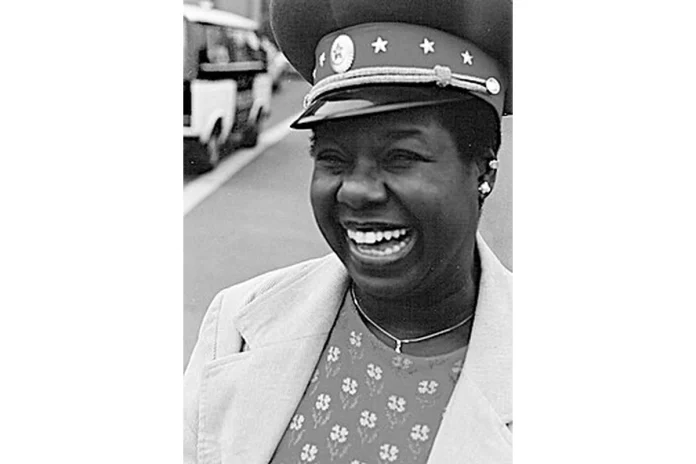
Randy Crawford Bio
Veronica “Randy” Crawford (born 18 February 1952) is an American retired jazz and R&B singer whose career spanned more than four decades. She first rose to prominence in the mid-1970s performing alongside jazz artists such as George Benson and Cannonball Adderley, and she later achieved international recognition as the featured vocalist on The Crusaders’ transatlantic hit “Street Life” in 1979. Despite her American nationality, Crawford built the bulk of her commercial success in Europe, particularly the United Kingdom, where she earned five top-20 singles and six top-10 albums. Her smooth, soulful vocal style and her 1980 number-two hit “One Day I’ll Fly Away” cemented her reputation as one of the most distinctive voices of her generation.
Early Life and Background
Veronica “Randy” Crawford was born on 18 February 1952 in Macon, Georgia, in the United States. She spent her formative years in a region with deep musical roots, where gospel, soul, and R&B were woven into everyday life. Her early interest in music eventually drew her toward a wider stage, and as a young woman she began working with local bands before heading north to chase larger opportunities in the music industry.
Crawford’s first professional appearances took place in small clubs scattered between Cincinnati and Saint-Tropez, giving her an early education in live performance and an unusually broad musical perspective. The European portion of those early gigs exposed her to international audiences and helped shape the polished, jazz-inflected delivery that would later define her recordings. By the time she settled in New York in the mid-1970s, she had already built the stage confidence that would open doors to collaborations with some of the leading jazz musicians of the era.
Path to Music
In New York, Crawford began performing regularly with established jazz figures, including guitarist George Benson and saxophonist Cannonball Adderley. Adderley invited her to contribute vocals to his 1975 album Big Man: The Legend Of John Henry, a credit that established her as a vocalist capable of holding her own alongside major jazz instrumentalists. She also signed with Columbia Records during this period, releasing singles such as “Knock On Wood” / “If You Say the Word” in 1972 and “Don’t Get Caught in Love’s Triangle” during her Columbia tenure.
Her growing reputation led to further session work, including a vocal appearance on Fred Wesley & The Horny Horns’ A Blow For Me, A Toot To You in 1977, and the song “Hoping Love Will Last” on Steve Hackett’s 1978 solo album Please Don’t Touch! In 1978 and 1979, she was invited to front R&B veterans The Crusaders on what would become her signature recording, the track “Street Life.” Released in 1979, the song crossed over to mainstream audiences and reached the top 40 of the Billboard Hot 100, transforming Crawford from a respected session vocalist into an international recording artist.
Randy Crawford Career
Early Career (1972-1979)
Crawford’s recording career began in 1972 with her debut single “Knock On Wood” / “If You Say the Word” on Columbia Records. Throughout the 1970s, she balanced label work with appearances on high-profile jazz and R&B projects, including Adderley’s 1975 album and Fred Wesley & The Horny Horns’ 1977 release. She also contributed to soundtrack work, most notably singing the love theme “People Alone” for the 1980 film The Competition on MCA Records.
Her most consequential early achievement came in 1979, when she fronted The Crusaders on “Street Life,” a song that earned her first appearance on the Billboard Hot 100. A re-recorded version of the track was later featured in the soundtracks for Sharky’s Machine and Jackie Brown and was used in commercials in the early 2000s, giving the song a remarkably long cultural life. In 1980, Crawford was named “Most Outstanding Performer” at the Tokyo Music Festival, an award that highlighted her growing global profile.
Breakthrough (1980-1986)
The 1980 release of “One Day I’ll Fly Away” became Crawford’s signature solo statement, reaching number two on the UK Singles Chart and establishing her as a major solo artist in Europe. She followed that success with “You Might Need Somebody” in 1981, a soul standard that also charted strongly overseas, and with a memorable cover of “Rainy Night in Georgia.” Her 1981 album Secret Combination spent sixty weeks on the UK Albums Chart, an extraordinary run that anchored her commercial peak.
In 1981, Crawford released another single, “One Hello,” from the album Windsong, and continued to record steadily for Warner Bros. Records through the 1980s and 1990s. Her profile dipped slightly after the Secret Combination era, but she returned to the UK Top Ten in 1986 with “Almaz,” reinforcing her reputation as a reliable European chart presence.
Later Career and Collaborations (1995-2018)
Crawford’s 1995 album Naked And True marked a deliberate return to her soul and jazz roots. The record featured George Benson’s “Give Me the Night” and included contributions from Funkadelic members Bootsy Collins, Bernie Worrell, and the Fred Wesley Horns. She enjoyed a renewed burst of visibility in 1997 when rising UK star Shola Ama covered “You Might Need Somebody” and turned it into a worldwide hit, reintroducing Crawford’s classic recording to a new generation of listeners.
Throughout the 2000s, Crawford continued to collaborate widely, recording a live session with Joe Sample at Abbey Road Studios in 2007 for the Live from Abbey Road series. That episode, shared with David Gilmour and Amos Lee, was screened on the Sundance Channel in the United States and Channel 4 in the United Kingdom. In the late 2000s, she received her first two Grammy Award nominations, a long-overdue recognition of her artistic influence.
Notable Works and Milestones
Crawford’s signature works include “Street Life” with The Crusaders, “One Day I’ll Fly Away,” “You Might Need Somebody,” and the album Secret Combination. Her most notable honors include the 1980 Tokyo Music Festival “Most Outstanding Performer” award, the 1982 Brit Award for Best British Female Solo Artist, and two Grammy Award nominations received in the late 2000s. A planned 2018 farewell tour of South Africa was cancelled after she suffered a stroke, leading to her retirement from performing.
Randy Crawford Award Nominations
Randy Crawford received her first two Grammy Award nominations in the late 2000s, a recognition that came after decades of influential work in jazz, R&B, and soul. These nominations reflected the industry’s belated acknowledgment of her distinctive vocal style and her long-standing international success.
Randy Crawford Awards Won
Crawford was named “Most Outstanding Performer” at the 1980 Tokyo Music Festival, an honor she earned at the height of her early international breakthrough. In 1982, she won Best British Female Solo Artist at the Brit Awards, a remarkable achievement for an American artist whose strongest commercial base was in the United Kingdom. Together, these awards trace a career defined by critical respect and a loyal European audience.
Randy Crawford Family
Details about Randy Crawford’s parents and immediate family are not well documented in publicly available sources. Her early life in Macon, Georgia, shaped her musical sensibility, and she later built a career that spanned continents, but specific family information has not been widely reported.
Personal Life
Randy Crawford kept much of her personal life private throughout her decades-long career. She suffered a stroke in 2018, which forced the cancellation of her planned “Farewell South Africa” tour and effectively ended her time as a performing artist. Following the stroke, she retired from music.