
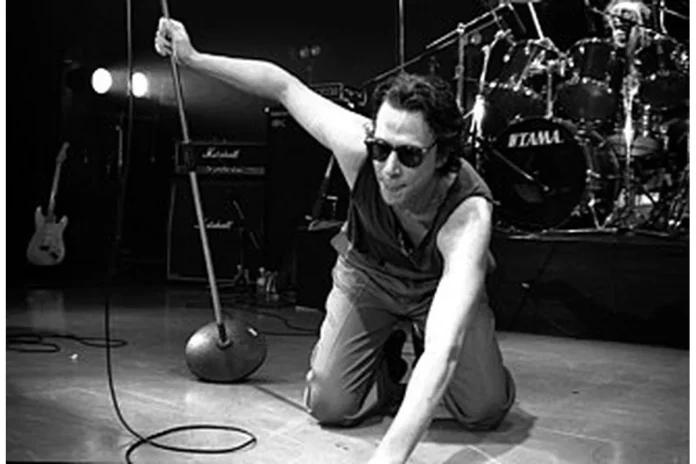
Richard Hell Bio
Richard Lester Meyers, known professionally as Richard Hell, is an American singer, songwriter, bass guitarist, and writer. Born on October 2, 1949, in Lexington, Kentucky, he rose to prominence as a founding figure of the early New York punk rock scene. Over the course of a varied career, he has performed with the Neon Boys, Television, and the Heartbreakers before launching his own band, Richard Hell and the Voidoids. He later turned his focus to literature, publishing novels, poetry, journalism, and memoir.
Hell remains a frequently cited voice in the story of punk rock, particularly for the enduring influence of the 1977 album Blank Generation and its title track. His ripped T-shirts, spiky hair, and safety-pin aesthetics helped define the visual language of punk that followed. Since the late 1980s, he has also built a respected body of literary work, including novels, poetry collections, and nonfiction essays.
Early Life and Background
Richard Lester Meyers was born in Lexington, Kentucky, in 1949. His father was an experimental psychologist who researched animal behavior and was Jewish; he died when Hell was seven years old. Following this loss, Hell was raised by his mother, Carolyn H. Rhodes, who came from Welsh and English ancestry. After her husband’s death, she returned to school and built a career as a professor.
Hell later attended the Sanford School in Delaware for one year, where he became close friends with fellow student Tom Miller, who would go on to perform under the name Tom Verlaine. The two young men ran away from school together and were later arrested in Alabama for arson and vandalism. Hell did not complete high school, choosing instead to move to New York City to pursue poetry.
In New York, Hell met fellow poet David Giannini, and the pair traveled to Santa Fe, New Mexico, for several months. Together they co-founded the small press magazine Genesis:Grasp, using an AM VariTyper with changeable fonts to produce their issues. They began publishing books and magazines before parting ways in 1971, after which Hell created and ran his own imprint, Dot Books. Before turning twenty-one, his poems had already appeared in outlets ranging from Rolling Stone to the New Directions Annuals.
Path to Music
In 1971, Hell and Tom Verlaine collaborated under the pseudonym Theresa Stern, a fictional poet whose portrait was a composite of the two young men in drag. A book of poems credited to Stern, titled Wanna Go Out?, was released by Dot in 1973. The duo’s literary partnership soon evolved into a musical one when Verlaine joined Hell in New York in 1972 to form the Neon Boys.
The Neon Boys added a second guitarist, Richard Lloyd, in 1974 and changed their name to Television. The group became one of the first bands to play at CBGB, helping to spark the first wave of New York punk. Patti Smith wrote the first press review of Television for the SoHo Weekly News in June 1974, and the band’s residency influenced a generation of performers. Hell began performing his signature song “Blank Generation” during his tenure with Television.
Hell parted ways with Television in early 1975 following a dispute over creative control and songwriting credits. That same week, drummer Jerry Nolan and guitarist Johnny Thunders quit the New York Dolls, and the three musicians formed the Heartbreakers in May 1975, soon joined by second guitarist Walter Lure. The short-lived band helped bridge New York punk and the emerging downtown sound before Hell set out on his own.
Richard Hell Career
Early Career (1972–1976)
Hell’s recorded career began in 1972 with the formation of the Neon Boys alongside Tom Verlaine. The duo rehearsed a tight set of short, fast songs that would shape the sound of the coming punk era. Their handful of demos later surfaced as compilation tracks after the groups they fed had already made their mark.
Television’s performances at CBGB inspired artists including Patti Smith and helped establish the venue as a central hub of New York punk. Hell’s early work with the band, including the first public performances of “Blank Generation,” set the template for his later recordings. After leaving Television and the Heartbreakers, he was ready to lead a group of his own.
Breakthrough (1976–1979)
In early 1976, Hell quit the Heartbreakers and formed Richard Hell and the Voidoids with guitarist Robert Quine, guitarist Ivan Julian, and drummer Marc Bell. The band became one of the most important acts of the burgeoning punk movement, recording a debut album that has been cited as a touchstone of the genre. Their sound combined Quine’s jagged guitar lines with Hell’s snarling vocals and a stripped-down rhythm section.
The Voidoids released their debut album, Blank Generation, in 1977, and its title track was later named one of the “500 Songs That Shaped Rock” by the Rock and Roll Hall of Fame. The song was also ranked among the all-time Top 10 punk songs in a 2006 poll of original British punk figures reported in The Rough Guide to Punk. Other notable Voidoids tracks included “Love Comes in Spurts,” “The Kid With the Replaceable Head,” and “Time.”
A second album, Destiny Street, followed with a retooled lineup that retained only Quine, joined by Naux on guitar and Fred Maher on drums. In 2009, the guitar tracks on Destiny Street were re-recorded and released as Destiny Street Repaired, with guitarists Julian, Marc Ribot, and Bill Frisell playing to the original rhythm tracks. That same year, the public-access program Pancake Mountain produced an animated music video for “The Kid With the Replaceable Head,” the Voidoids’ first and only official video.
Notable Works and Milestones
Hell’s signature songs with the Voidoids, including “Blank Generation” and “Love Comes in Spurts,” remain touchstones of early punk rock. A 2005 retrospective, Spurts: The Richard Hell Story, collected highlights from his career. In 2019, a mural created by students from Lexington Montessori High School was completed in Lexington’s North Limestone neighborhood, featuring two profiles of Hell and a quote from his memoir, I Dreamed I Was a Very Clean Tramp.
Richard Hell Award Nominations
There are no major award nominations on record for Richard Hell from the verified sources reviewed. The available biographical and reference material focuses on his influence within punk rock and his literary output rather than on nominations from mainstream music, film, or literary award bodies.
Richard Hell Awards Won
Hell has not received any of the major mainstream music, film, or literary awards documented in the verified sources. His most notable recognitions are honorary in nature, including the 2019 mural in his hometown of Lexington, Kentucky, and the inclusion of “Blank Generation” among the Rock and Roll Hall of Fame’s “500 Songs That Shaped Rock.” His ongoing influence is reflected in the continued citation of his work by writers, musicians, and critics.
Richard Hell Family
Hell’s mother, Carolyn H. Rhodes, raised him on her own after the death of his father, an experimental psychologist, when Hell was seven. Rhodes came from Welsh and English ancestry, returned to school following her husband’s passing, and built a career as a professor. She supported her son’s early creative ambitions, including his move to New York to pursue poetry and music.
In 1985, Hell married Patty Smyth, the lead singer of the band Scandal. The marriage lasted from 1985 to 1986, and the couple had a daughter, Ruby. Little additional information about Ruby’s upbringing has been made public through verified sources.
Personal Life
In 1976, Hell briefly dated Nancy Spungen, later known for her relationship with Sex Pistols bassist Sid Vicious, before she moved to England. He was married to Patty Smyth in 1985 and 1986, and the couple had a daughter together. In January 2020, Hell’s website confirmed that he had begun a relationship with novelist Katherine Faw.
Outside of music, Hell has pursued a parallel career as a writer, publishing poetry, essays, journalism, novels, and memoir. He served as the film critic for BlackBook magazine from 2004 to 2006. His manuscripts, tapes, correspondence, and other personal documents were acquired by New York University’s Fales Library in 2003, preserving a wide record of his creative life.