
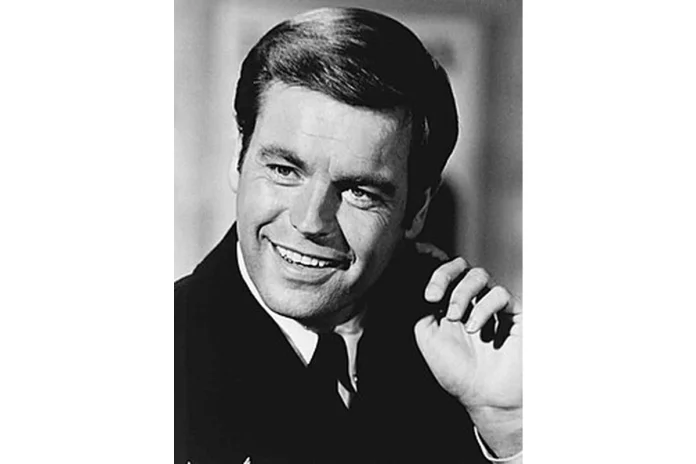
Robert Wagner Bio
Robert John Wagner Jr. (born February 10, 1930) is an American actor whose career in film and television has spanned more than six decades. He first gained attention as a young leading man at 20th Century Fox in the early 1950s and later became a familiar television presence through It Takes a Thief, Switch, and Hart to Hart. He is also widely remembered for his supporting role as Number 2 in the Austin Powers film series and for his appearances in disaster and caper classics such as The Towering Inferno and The Pink Panther. Off screen, his personal life, including his marriages to Natalie Wood and Jill St. John, has drawn sustained public attention.
Early Life and Background
Robert John Wagner Jr. was born on February 10, 1930, in Detroit, Michigan. His father, Robert John Wagner Sr. (1890–1964), was a traveling salesman who worked for the Ford Motor Company, while his mother, Thelma Hazel Alvera (née Boe; 1898–1993), had worked as a telephone operator. Wagner’s father was a native of Kalamazoo, Michigan, with German ancestry, and his mother came from La Crosse, Wisconsin, where her parents, both Norwegian immigrants, had married in 1887. Wagner had one older sister, Mary Scott.
In 1937, the family moved from Detroit to Bel-Air, an upscale neighborhood in Los Angeles, where Wagner spent most of his upbringing. The relocation placed him close to the heart of the American film industry and shaped his early exposure to acting. By his late teens, he had begun pursuing a screen career, eventually landing a contract with 20th Century Fox after an initial, unsuccessful screen test for Fred Zinnemann’s Teresa (1951).
Path to Acting
Wagner’s path into acting began through the studio contract system that defined postwar Hollywood. After his initial screen test failed, the producer Albert R. Broccoli helped represent him, and agent Henry Willson placed him under contract with 20th Century Fox. His uncredited film debut came in The Happy Years (1950), followed quickly by supporting roles in Halls of Montezuma (1951) and The Frogmen (1951), both war films starring Richard Widmark. He continued building his résumé with comedies, dramas, and Westerns throughout the early 1950s.
His first major showcase arrived in the 1953 CinemaScope adventure Beneath the 12-Mile Reef, which was only the third film ever shot in the widescreen format and gave Wagner his first starring role. He went on to appear in Prince Valiant (1954), the Western Broken Lance (1954) opposite Spencer Tracy, and A Kiss Before Dying (1956), the latter earning him strong critical notice. By the end of the decade, Wagner was a recognized leading man, even as the collapse of Fox’s production schedule and the rise of television altered the studio system around him.
Robert Wagner Career
Early Career (1950–1962)
Wagner spent the first half of the 1950s moving steadily up the Fox ladder, working alongside established stars such as Clifton Webb, Dan Dailey, and James Cagney. His early Fox pictures included Stars and Stripes Forever (1952), What Price Glory (1952), Titanic (1953), and The True Story of Jesse James (1957). He also formed his own production company, Rona Productions, with his then-wife Natalie Wood, signing a three-picture deal with Columbia Pictures in January 1961.
During this period, Wagner also made The War Lover (1962) with Steve McQueen and took a small role in the all-star war epic The Longest Day (1962), produced by Darryl F. Zanuck. His first major marriage had ended, and he relocated to Europe for a time, appearing in Vittorio De Sica’s The Condemned of Altona (1962) before returning to Hollywood.
Breakthrough (1963–1984)
Wagner’s commercial breakthrough arrived with the Blake Edwards comedy The Pink Panther (1963), in which he played a supporting role alongside Peter Sellers, David Niven, and Claudia Cardinale. The film was a massive hit and reintroduced him to wide audiences. On his return to America, he took a supporting role in the private-eye hit Harper (1966) with Paul Newman, and signed with Universal Pictures in 1966.
The most important step of his career came in 1967, when Universal chief Lew Wasserman convinced Wagner to make his television series debut in It Takes a Thief (1968–1970) on ABC. The series, in which he co-starred with Fred Astaire, ran for two and a half seasons and earned Wagner an Emmy nomination for Best TV Actor. He followed this with the CBS series Switch (1975–1978) opposite Eddie Albert, and then achieved his greatest television success with Hart to Hart (1979–1984) on ABC, co-starring Stefanie Powers and Lionel Stander. During the same period, he appeared in major theatrical films such as The Towering Inferno (1974), Midway (1976), and The Concorde… Airport ’79 (1979).
Notable Works and Milestones
Wagner’s signature screen roles include the Number 2 henchman in the Austin Powers trilogy of spy spoofs starring Mike Myers, appearing in Austin Powers: International Man of Mystery (1997), The Spy Who Shagged Me (1999), and Goldmember (2002). He also earned recognition for his role as Anthony DiNozzo Sr. on NCIS, a part he reprised in more than a dozen episodes from 2010 to 2019, and for his earlier supporting turn in The Towering Inferno (1974), one of the highest-grossing films of its era. Hart to Hart remains his most celebrated work, defining his image as a suave, light leading man.
Robert Wagner Award Nominations
Wagner’s television work earned him a Primetime Emmy Award nomination for Outstanding Continued Performance by an Actor in a Leading Role in a Dramatic Series for his work in It Takes a Thief in 1970. The series, which paired him with screen legend Fred Astaire, established him as a leading television actor and remains the most prominent formal recognition of his six-decade career.
Robert Wagner Family
Wagner married actress Natalie Wood on December 28, 1957, in Scottsdale, Arizona. They separated in the early 1960s and divorced on April 27, 1962, before remarrying on July 16, 1972, aboard the yacht Ramblin’ Rose anchored off Paradise Cove in Malibu. Wagner also married actress Marion Marshall on July 21, 1963, at the Bronx Courthouse, and the couple had a daughter, Katie, born on May 11, 1964. With Wood, he had a second daughter, Courtney, born on March 9, 1974.
After Wood’s death in 1981, Wagner became the guardian of her daughter from her marriage to producer Richard Gregson, Natasha Gregson Wagner, though he never legally adopted her. His sister-in-law, actress Lana Wood, Natalie’s younger sister, has remained estranged from Wagner for decades, particularly after Wood’s death became the subject of renewed public attention.
Personal Life
Wagner began dating actress Jill St. John on Valentine’s Day 1982, having known her since the late 1950s. The couple married on May 26, 1990, in Pacific Palisades and honeymooned on Little Torch Key. The marriage marked the fourth union for both and has lasted longer than all six of their previous marriages combined. Wagner and St. John co-starred in six films together and also appeared in the touring stage production Love Letters (1996–2004) and in the 1997 Seinfeld episode “The Yada Yada.”
Wagner and St. John sold their Brentwood ranchette in 2007 and now reside in Aspen, Colorado, where they built a vacation home in 1995. Wagner became a first-time grandfather in 2006 when his daughter Katie gave birth to a son, Riley John Wagner-Lewis, his only grandchild. In his memoirs, Wagner has written candidly about his earlier romantic relationships, including a four-year affair he claimed with actress Barbara Stanwyck after they appeared together in Titanic (1953), when he was 22 and she was 45.