
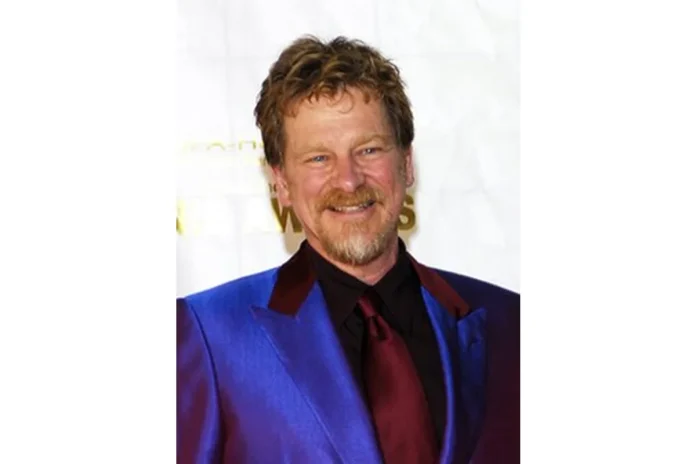
Roger Allers Bio
Roger Allers (June 29, 1949 – January 17, 2026) was an American filmmaker, animator, storyboard artist, and playwright whose work helped shape the modern era of Disney feature animation. He is best known for co-directing The Lion King (1994) alongside Rob Minkoff, a sweeping animated drama that became the highest-grossing traditionally animated film of its time and earned more than $700 million worldwide. Allers also wrote the book for the Broadway adaptation of The Lion King, contributed to Academy Award-winning projects such as Beauty and the Beast and The Little Mermaid, and later directed the Sony Pictures Animation feature Open Season (2006).
Early Life and Background
Roger Allers was born on June 29, 1949, in Rye, New York, to George Allers, who worked as an equestrian, and his mother, Shirley Williams, who ran the home. When he was six years old, his family relocated to Scottsdale, Arizona, where he spent the remainder of his childhood. Growing up in the Arizona desert gave Allers room to experiment, and his father later supported that creativity by giving him an 8mm camera, which he used with friends to film special effects and stop-motion shorts.
Allers became a fan of animation at the age of five after seeing Disney’s Peter Pan (1953), and from that moment he wanted to work alongside Walt Disney. A few years later, at age eight, he was sent off to Disneyland for a do-it-yourself animation kit, which introduced him to the principles of animation, character drawing, and light tables. He was briefly discouraged upon hearing of Walt Disney’s death in 1966, but the dream of working in animation stayed with him through high school and into college.
Path to Director
Allers graduated with a Bachelor of Fine Arts from Arizona State University in 1971. For the next two years, he moved to Greece, where he met Leslee Hackenson in Crete. The two lived simply, selling paintings and crafts to earn money. Returning to the United States, he settled in Boston and audited animation courses at Harvard University, where he completed a 15-second animated short film that became his calling card.
That short film led to a job at Lisberger Studios in 1974, where Allers worked on Sesame Street, The Electric Company, Make a Wish, and various commercials for the Boston Pops. He later relocated to Los Angeles to work on Animalympics (1980) and Tron (1982), moved to Toronto to animate on Rock & Rule (1983) for Nelvana Studios, and then traveled to Tokyo to contribute to Little Nemo: Adventures in Slumberland (1989). These early positions gave him a broad range of experience across American, Canadian, and Japanese animation studios.
Roger Allers Career
Early Career (1974–1985)
During this formative period, Allers built his craft as an animator and story artist on a wide variety of projects. He provided story work, character design, and animation on Animalympics and served as a storyboard artist for Tron, both ground-breaking titles that explored the relationship between live action and animation. His time at Nelvana in Toronto and on Little Nemo in Tokyo expanded his understanding of large-scale feature production and introduced him to international collaborators.
By the mid-1980s, Allers had developed a clear point of view about character-driven storytelling, which made him a natural fit for Disney’s story department. In 1985, he was hired by Disney as a storyboard artist for Oliver & Company (1988), where he eventually rose to the role of head of story. He also worked as a story artist on The Little Mermaid (1989), The Rescuers Down Under (1990), and Aladdin (1992), and served as story supervisor on Beauty and the Beast (1991), projects widely considered part of the Disney Renaissance.
Breakthrough (1991–1994)
When Beauty and the Beast was nearing completion, Allers joined a project then called King of the Jungle as a director alongside George Scribner. He was briefly pulled away to storyboard sequences for Aladdin, but in October 1991 he returned to the project full-time. In November 1991, several lead crew members, including Allers, Scribner, head of story Brenda Chapman, Lisa Keene, and production designer Chris Sanders, traveled on a research safari to Hell’s Gate National Park in Kenya to study the environment for the film.
Scribner eventually left the project because he disagreed with turning it into a musical, and on April Fools’ Day 1992, Rob Minkoff was added as co-director. Allers and Minkoff assembled a brain trust with producer Don Hahn, Sanders, Chapman, and Beauty and the Beast directors Kirk Wise and Gary Trousdale, refining the story around the theme of leaving childhood and facing the realities of the world. The film was retitled The Lion King, premiered on June 15, 1994, and earned more than $700 million worldwide, winning Academy Awards for Best Original Song, for “Can You Feel the Love Tonight,” and Best Original Score.
1994–1998: The Lion King on Stage and Kingdom of the Sun
Following the success of The Lion King, Allers was asked to develop his next project, an exploration of pre-Columbian Incan culture titled Kingdom of the Sun, alongside co-writer Matthew Jacobs and later co-director Mark Dindal. As development continued, however, growing creative differences between Allers’s serious, dramatic approach and Dindal’s comedic tone led Disney management to run a so-called bake-off between the two versions. Dindal’s comedic version was selected, and Allers stepped aside. The project was eventually reworked into The Emperor’s New Groove (2000).
At the same time, Disney Theatrical Group recruited Julie Taymor to adapt The Lion King for the stage, and Allers and Irene Mecchi, his co-screenwriter on the 1994 film, were brought on to write the book. The musical opened on November 13, 1997, at the New Amsterdam Theater and was a critical and commercial triumph, winning six Tony Awards including Best Musical. Allers and Mecchi were nominated for the Tony Award for Best Book of a Musical for their work on the production.
1999–2006: The Little Matchgirl and Open Season
In 2001, Allers was approached by producer Don Hahn to direct The Little Matchgirl (2006), a short film based on Hans Christian Andersen’s 1845 fairy tale. Allers set the story in pre-revolutionary Russia to highlight the divide between wealthy and poor citizens, and built the soundtrack around Alexander Borodin’s String Quartet No. 2. The short premiered at the Annecy International Animation Film Festival in France on June 5, 2006, was included with The Little Mermaid Platinum Edition DVD, and earned a nomination for the Academy Award for Best Animated Short Film at the 79th Academy Awards.
While developing other projects, Allers was recruited as an additional director on Open Season (2006), Sony Pictures Animation’s first feature-length animated film, working alongside director Jill Culton and co-director Anthony Stacchi. The film, which starred the voice talents of Martin Lawrence and Ashton Kutcher, follows the friendship between Boog, a domesticated grizzly bear, and Elliot, a one-antlered mule deer. After Open Season, Allers said he had grown weary of big studio politics and was ready to develop projects outside of major studios.
2007–2023: Independent Work and The Prophet
In 2011, Allers wrote and directed an original performance piece for Heifer International to help raise awareness about world hunger. That same year, actress Salma Hayek sought to adapt Kahlil Gibran’s book The Prophet into a 2D animated film, and Allers was contacted through a mutual friend. He had read Gibran’s writings as a college student, and in January 2012 he was announced as the director overseeing the narrative structure and supervising production. A work-in-progress version was screened at the Cannes Film Festival in May 2014, the film premiered at the Toronto International Film Festival on September 6, 2014, and it was released in select U.S. theaters on August 7, 2015.
Allers continued to work across film and stage into the 2020s. In 2023, he wrote the book and lyrics for an original stage musical called The Grasshopper, based on the life of Jean de la Fontaine, with a table reading premiering at the Pacific Resident Theatre in Venice, California, on October 7. His career reflected a steady movement between animation, story development, and theatrical writing throughout his four-decade career.
Notable Works and Milestones
Allers’s signature work is The Lion King (1994), which won Academy Awards for Best Original Song and Best Original Score and earned more than $700 million worldwide. He also helped shape the Disney Renaissance as a story artist on The Little Mermaid, Beauty and the Beast, and Aladdin, directed Open Season (2006) as Sony Pictures Animation’s first feature, and delivered the animated adaptation of Kahlil Gibran’s The Prophet (2014).
Roger Allers Award Nominations
Across his career in animation and theatre, Roger Allers received several notable nominations recognizing his work as a director and writer. In 1998, he and Irene Mecchi were nominated for the Tony Award for Best Book of a Musical for the Broadway adaptation of The Lion King. He also earned an Academy Award nomination for Best Animated Short Film for his 2006 short The Little Matchgirl, highlighting the range of his contributions from feature animation to stage writing.
Roger Allers Awards Won
Roger Allers’s career is marked by major industry recognition for both his animation and his theatrical work. He shared in two Academy Awards for The Lion King in 1995, winning Best Original Song for “Can You Feel the Love Tonight” and Best Original Score. He also shared in the Tony Award for Best Musical in 1998 as a writer of the Broadway production of The Lion King, which went on to win six Tony Awards overall.
| Award | Wins | Year |
|---|---|---|
| Academy Award for Best Original Song | 1 | 1995 |
| Academy Award for Best Original Score | 1 | 1995 |
| Tony Award for Best Musical | 1 | 1998 |
Roger Allers Family
Roger Allers was born to George Allers, who worked as an equestrian, and his mother, Shirley Williams, who ran the home. He had a sister and grew up in Rye, New York, before his family relocated to Scottsdale, Arizona, when he was six years old. His father later gave him an 8mm film camera during his high school years, which encouraged his early experiments with special effects and stop-motion filmmaking.
Personal Life
Allers married Leslee Hackenson in 1977 after meeting her in Crete, Greece, where the couple lived briefly in a cave and sold paintings and crafts. They had a daughter, Leah, and a son, Aidan. In March 2020, Allers filed for divorce from Hackenson, and in 2021 he married Genaro Pereira, with whom he remained married until his death. Roger Allers died at his home in Santa Monica, California, on January 17, 2026, at the age of 76, and is interred at Woodlawn Memorial Cemetery.