
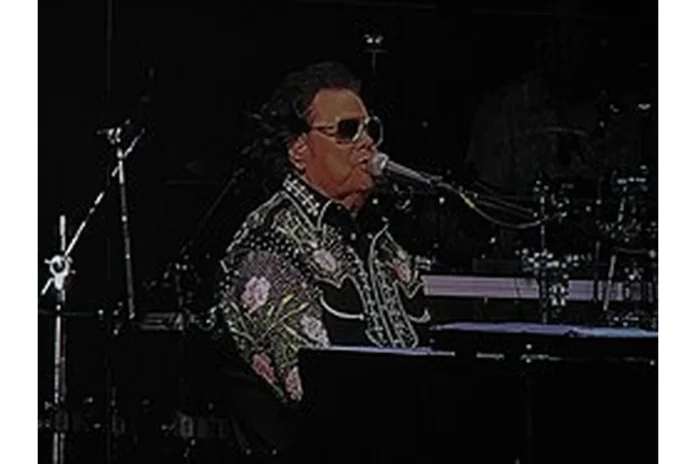
Ronnie Milsap Bio
Ronnie Lee Milsap (born January 16, 1943) is an American country music singer and pianist whose career has spanned more than six decades. Nearly completely blind from birth, he overcame extraordinary personal challenges to become one of country music’s most popular and influential performers of the 1970s and 1980s. His sound blended country, pop, rhythm and blues, and rock, and he is credited with six Grammy Awards and 35 number-one country hits. He was inducted into the Country Music Hall of Fame in 2014 and brought his long touring career to a close in October 2023, while continuing to record.
Early Life and Background
Ronnie Lee Milsap was born on January 16, 1943, in the small community of Robbinsville, North Carolina, in the Smoky Mountains. A congenital disorder left him almost completely blind from birth. Abandoned by his mother as an infant, he was raised in poverty by his grandparents until, at the age of five, he was sent to the North Carolina State School for the Blind and Deaf in Raleigh.
As a child, Milsap fell in love with the late-night radio broadcasts of country music, gospel music, and rhythm and blues that reached the mountains of western North Carolina. By the time he was seven, his teachers at the Governor Morehead School had recognized his musical gifts and arranged formal classical training. He eventually mastered the piano, along with several other instruments. At 14, an incident at school caused him to lose the very limited vision he had remaining in his left eye.
When Elvis Presley exploded onto the national scene in 1956, Milsap redirected his focus toward rock and roll and formed a band called the Apparitions with fellow students. He has often credited Ray Charles, Little Richard, Jerry Lee Lewis, and Presley as defining inspirations. He later earned a full college scholarship and briefly attended Young Harris College in Georgia, where he originally planned to study law.
Path to Music
While attending Young Harris College, Milsap joined a popular local rhythm and blues band called the Dimensions, performing regularly at Atlanta-area clubs including the Royal Peacock Club. In the fall of 1964, he turned down a law school scholarship to pursue music full time. He met Joyce Reeves at a dinner party during this period, and the two were married in 1965.
In 1963, Atlanta disc jockey Pat Hughes became an early supporter and helped Milsap land his first single, “Total Disaster/It Went to Your Head,” which sold around 15,000 copies in the Atlanta area. In 1965, Milsap signed with New York–based Scepter Records and released several singles for the label. His Ashford and Simpson–penned single “Never Had It So Good” peaked at No. 19 on the R&B chart that November, his only significant Scepter hit.
After moving to Memphis, Tennessee, in the late 1960s, Milsap worked for producer Chips Moman and became a weekly attraction at the nightclub T.J.’s. Moman helped him land session work on records with Elvis Presley, including “Don’t Cry Daddy” in 1969 and “Kentucky Rain” in 1970. In 1971, he released his self-titled debut album on Warner Brothers, setting the stage for his eventual move to Nashville and country music.
Ronnie Milsap Career
Early Career (1963–1972)
Milsap’s earliest recordings were rooted in rock and roll and rhythm and blues rather than country. His work as a session musician in Memphis brought him into contact with several of the era’s most important artists, and his 1971 debut album introduced him to a wider audience. During these years he also worked briefly alongside soul artists such as Ray Charles and Stevie Wonder.
A pivotal turning point came in December 1972, when country star Charley Pride saw Milsap perform at the Whiskey A-Go-Go club in Los Angeles. Pride was impressed and encouraged him to focus on country music, introducing him to manager Jack D. Johnson. Milsap signed with RCA Records in 1973, launching the most successful chapter of his career.
Breakthrough (1973–1978)
Milsap’s first RCA single, “I Hate You,” reached No. 10 on the country chart in 1973. The following year, he toured with Pride and scored two No. 1 singles: “Pure Love” and “Please Don’t Tell Me How the Story Ends,” the latter winning him his first Grammy Award. In 1975, he added further No. 1 hits with “(I’d Be) A Legend in My Time” and “Daydreams About Night Things.”
From 1976 to 1978, Milsap became one of country music’s biggest stars, stringing together seven consecutive No. 1 singles, including the Grammy-winning “(I’m a) Stand by My Woman Man” and “What a Difference You’ve Made in My Life.” The peak of this run came in 1977 with “It Was Almost Like a Song,” a piano-driven ballad that topped the country chart, reached No. 16 on the pop chart, and entered the Adult Contemporary chart for the first time, signaling his arrival as a major crossover artist.
Crossover Success (1979–1992)
Milsap’s late-1970s evolution toward string-laden pop ballads produced remarkable crossover results in the early 1980s. From 1980 to 1983, he scored eleven consecutive No. 1 country singles. His 1980 greatest-hits album featured “Smoky Mountain Rain,” a No. 1 country hit that also became his first No. 1 on the Adult Contemporary chart and reached the Top 20 on the pop chart.
Other major crossover hits included the Top 5 pop single “(There’s) No Gettin’ Over Me” and the Top 20 singles “I Wouldn’t Have Missed It for the World” and “Any Day Now,” the latter spending five weeks at No. 1 on the Adult Contemporary chart. His 1985 single “Lost in the Fifties Tonight” earned a Grammy Award and became his last major pop crossover success. In 1987, Milsap won another Grammy for his duet with Kenny Rogers, “Make No Mistake, She’s Mine.” His final No. 1 country single, “A Woman in Love,” arrived in 1989.
Later Career (1993–2023)
Although his country radio airplay declined after the mid-1990s, Milsap continued recording and touring for decades. His 1993 single “True Believer” was a Top 40 country hit. He released the two-disc retrospective 40 No. 1 Hits in 2000 and was profiled on the television series Biography that same year. In 2004, he released the pop and jazz standards album Just for a Thrill, which earned a Grammy nomination. Subsequent albums included My Life (2006), Then Sings My Soul (2009), Country Again (2011), Summer #17 (2014), and Ronnie Milsap: The Duets (2019). His studio album A Better Word for Love was released in 2021, and in 2022 he contributed to Michael Feinstein’s Gershwin Country tribute and launched the podcast Music and Milsap. He brought his touring career to an end with a final concert at Bridgestone Arena in Nashville on October 3, 2023, though he has continued to record since then.
Notable Works and Milestones
Among his signature recordings, “It Was Almost Like a Song,” “Smoky Mountain Rain,” and “Lost in the Fifties Tonight” stand as defining statements of his crossover style. In 2014, Rolling Stone included “Smoky Mountain Rain” among the 100 greatest country songs. That same year, he was inducted into the Country Music Hall of Fame, capping a career that included 35 No. 1 country hits, six Grammy Awards, and recognition from the Academy of Country Music, the Country Music Association, and Billboard. In 2022, he was inducted into the Memphis Music Hall of Fame.
Ronnie Milsap Award Nominations
Across his career, Ronnie Lee Milsap has earned numerous nominations from major country music institutions. Beyond his six Grammy Award wins, he has received additional Grammy nominations for later recordings such as Just for a Thrill (2004). He has also been recognized through nominations from the Academy of Country Music, the Country Music Association, and Billboard, reflecting his standing as one of the format’s most awarded performers.
Ronnie Milsap Awards Won
Ronnie Lee Milsap has collected six Grammy Awards and dozens of honors from the country music industry. His first Grammy came for “Please Don’t Tell Me How the Story Ends” in 1974, and he won again for “(I’m a) Stand by My Woman Man,” “What a Difference You’ve Made in My Life,” “Lost in the Fifties Tonight,” and the duet “Make No Mistake, She’s Mine” with Kenny Rogers. He is a member of the Country Music Hall of Fame following his 2014 induction and was inducted into the Memphis Music Hall of Fame in 2022.
| Award | Wins | Year |
|---|---|---|
| Grammy Awards | 6 | 1974–1987 |
| Country Music Hall of Fame | 1 | 2014 |
| Memphis Music Hall of Fame | 1 | 2022 |
Ronnie Milsap Family
Ronnie Lee Milsap was raised by his grandparents in the Smoky Mountains of North Carolina after being abandoned by his mother in infancy. He has frequently credited his grandparents and his early teachers at the Governor Morehead School with shaping both his character and his musical path. In 1965, he married Joyce Reeves, and together they had one son, Ronald “Todd” Milsap.
Milsap’s family life has been marked by deep loss. His son Todd was found dead on his houseboat in February 2019 at the age of 49, the result of an apparent medical condition. His wife Joyce, who had battled leukemia since 2014, died on September 6, 2021, at the age of 81. On December 2, 2020, six miles of U.S. 129 in Graham County, North Carolina, were officially designated Ronnie Milsap Highway, honoring the singer’s roots in the Smoky Mountains.
Personal Life
Ronnie Lee Milsap married Joyce Reeves in 1965, and the couple remained together until her death in 2021. Their son, Ronald “Todd” Milsap, passed away in 2019. Milsap is an Advanced-class amateur radio operator with the call sign WB4KCG, a hobby that reflects his lifelong interest in technology and sound. After retiring from the road with his final Nashville concert in October 2023, he has continued to record from a home studio he installed in 2020.