
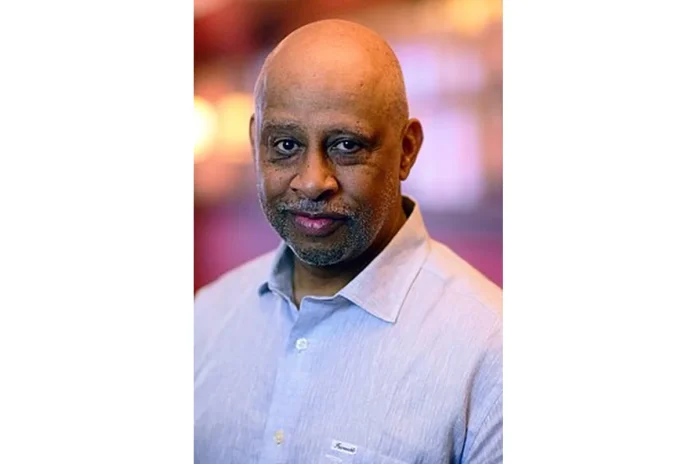
Ruben Santiago-Hudson Bio
Ruben Santiago-Hudson (born Ruben Santiago Jr., November 24, 1956) is an American actor, playwright, and director whose career spans more than three decades across stage and screen. A native of Lackawanna, New York, he is the recipient of a Tony Award, multiple Drama Desk Awards, a Lucille Lortel Award, two Obie Awards, and a Humanitas Prize, along with a Primetime Emmy Award nomination. He first gained wide recognition for his performance in August Wilson’s Seven Guitars on Broadway, and he later built a parallel reputation as the writer and director of works tied to the August Wilson canon. On television, he is perhaps most familiar to general audiences for playing Captain Roy Montgomery on the ABC crime series Castle.
Early Life and Background
Ruben Santiago-Hudson was born Ruben Santiago Jr. on November 24, 1956, in Lackawanna, New York, a working-class steel town near Buffalo. He is the son of Ruben Santiago, a railroad worker, and Alean Hudson. His father was Puerto Rican and his mother was African American, and he later adopted his mother’s maiden name, Hudson, as part of his compound surname, becoming Ruben Santiago-Hudson. He grew up in Lackawanna and attended Lackawanna High School, where he began developing his interest in performance.
He went on to earn a Bachelor of Arts degree from Binghamton University and later completed a Master of Fine Arts at Wayne State University. He has also been recognized with honorary Doctor of Humane Letters degrees from Buffalo State College and Wayne State University. His early exposure to theater in western New York and his formal training in New York and Michigan together shaped the foundation for a career that would move fluidly between acting, writing, and directing.
Path to Acting
When Santiago-Hudson arrived in New York in 1983, he performed under the name Ruben Santiago and initially struggled to find his footing. He auditioned at the Puerto Rican Traveling Theater and was told the company was looking for Spanish-speaking performers, a language he did not speak. He then approached the Negro Ensemble Company and was told that they did not have Puerto Ricans. After combining his surnames, he won a part at the Negro Ensemble Company in Charles Fuller’s A Soldier’s Play, a breakthrough that opened the door to his professional stage career.
He made his feature film debut with a small role in the comedy Coming to America in 1988, the same year his professional career is generally considered to have begun. He followed that with appearances in daytime soap operas, including One Life to Live, Another World, and All My Children, while continuing to build his résumé in theater. These early credits, paired with his classical training, prepared him for the Broadway stage and the larger roles that would soon define his career.
Ruben Santiago-Hudson Career
Early Career (1988-1995)
Santiago-Hudson’s first years in the industry were anchored in television and supporting theater work. He had a recurring role on the NBC daytime soap opera Another World from 1987 to 1993, and appeared on Dear John from 1990 to 1992. These roles helped him establish a steady professional footing in New York while he pursued more substantial stage work.
His Broadway debut came in 1992 with Jelly’s Last Jam, the musical written by George C. Wolfe with a score by Jelly Roll Morton biographer Lynn Ahrens and composer Stephen Flaherty. The production introduced him to a wider Broadway audience and connected him with a generation of Black theater artists who would shape his later work, most notably August Wilson.
Breakthrough (1996-2009)
The defining moment of Santiago-Hudson’s acting career arrived in 1996, when he appeared in the original Broadway production of August Wilson’s Seven Guitars. His performance earned him the Tony Award for Best Featured Actor in a Play, along with widespread critical praise. The role placed him firmly within the lineage of leading American stage actors and cemented his relationship with the works of August Wilson.
In 2001, he wrote and starred in Lackawanna Blues, an autobiographical Off-Broadway play in which he portrayed himself and more than twenty characters drawn from his childhood. He later adapted the work into a 2005 HBO television film, in which the characters were portrayed by a separate ensemble cast. The adaptation won the Humanitas Prize and earned Emmy and Writers Guild of America Award nominations. That same year, he also appeared in the HBO film Their Eyes Were Watching God, playing Mayor Joe Starks.
From 2009 to 2011, Santiago-Hudson starred as New York City Police Captain Roy Montgomery in the ABC crime mystery series Castle, until his character was killed off in the third-season finale. He also appeared in supporting film roles during this period, including parts in The Devil’s Advocate (1997), Shaft (2000), and American Gangster (2007). In 2013, he portrayed civil rights organizer Bayard Rustin in the Ava DuVernay-directed historical drama Selma.
Notable Works and Milestones
Among Santiago-Hudson’s most significant works are his Tony-winning turn in Seven Guitars, his Tony-nominated performance in Lackawanna Blues, his Emmy-nominated writing on the HBO film Lackawanna Blues, his Obie Award-winning direction of The Piano Lesson in 2013, and his Obie Award-winning collaboration on Skeleton Crew in 2016. He is also recognized as a writer on the 2020 Netflix adaptation of Ma Rainey’s Black Bottom, for which he received a Writers Guild of America Award nomination for Best Adapted Screenplay.
Ruben Santiago-Hudson Award Nominations
Throughout his career, Ruben Santiago-Hudson has earned nominations across theater, television, and film. He received a Primetime Emmy Award nomination for the HBO film Lackawanna Blues. He has also been Tony-nominated as an actor for Lackawanna Blues and for Joe Turner’s Come and Gone, and as a director for the August Wilson revival Jitney. In addition, he earned a Writers Guild of America Award nomination for Best Adapted Screenplay for the Netflix film Ma Rainey’s Black Bottom.
Ruben Santiago-Hudson Awards Won
Ruben Santiago-Hudson has collected some of the most respected prizes in American theater and television. His major wins include the 1996 Tony Award for Best Featured Actor in a Play for Seven Guitars, the Humanitas Prize in 2005 for the HBO adaptation of Lackawanna Blues, the Lucille Lortel Award for Outstanding Direction and an Obie Award for Direction in 2013 for The Piano Lesson, an Obie Award Special Citation for Collaboration in 2016 for Skeleton Crew, and the Lucille Lortel Award for Lifetime Achievement in 2024.
| Award | Wins | Year |
|---|---|---|
| Tony Award | Best Featured Actor in a Play (Seven Guitars) | 1996 |
| Humanitas Prize | Lackawanna Blues | 2005 |
| Lucille Lortel Award | Outstanding Direction (The Piano Lesson) | 2013 |
| Obie Award | Direction (The Piano Lesson) | 2013 |
| Obie Award | Special Citation for Collaboration (Skeleton Crew) | 2016 |
Ruben Santiago-Hudson Family
Santiago-Hudson was born to Ruben Santiago, a railroad worker, and Alean Hudson. His father was of Puerto Rican heritage and his mother was African American. He has four children: Broderick Santiago and Ruben Santiago III from previous relationships, and Trey Santiago-Hudson and Lily Santiago-Hudson from his marriage to Jeannie Brittan. He is also a grandfather and has spoken often about how his family and his upbringing in Lackawanna continue to shape his work as a writer and performer.
Personal Life
Ruben Santiago-Hudson is married to Jeannie Brittan. The couple share two children, Trey and Lily. He is a father of four in total, and family remains a central theme in much of his writing, particularly in Lackawanna Blues, the autobiographical piece that draws directly on memories of his mother and his hometown. He has continued to live and work primarily in New York while maintaining close ties to the Lackawanna community.