
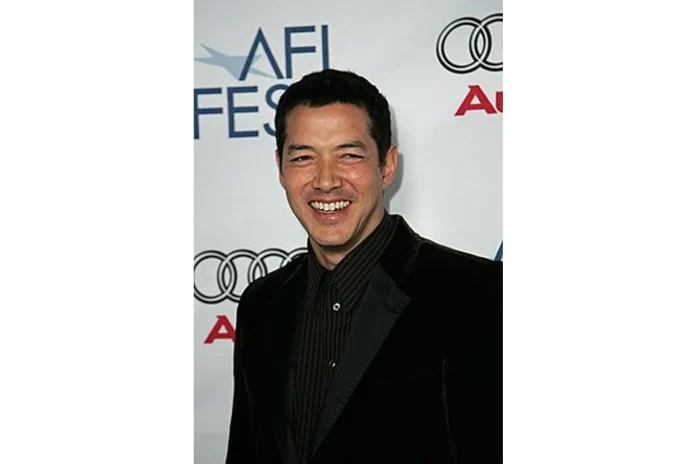
Russell Jan Tak Wong Bio
Russell Jan Tak Wong (Chinese: 王盛德; Jyutping: Wong4 Sing6 Dak1), born on March 1, 1963, is an American actor recognized for helping to change the way Asians are represented in American film and television. Often credited as a pioneer of Asian representation in Hollywood, Wong built a career that bridges American and Hong Kong productions, spanning martial arts films, dramatic television, and mainstream blockbusters. Over several decades, he has appeared in theatrical films, prime-time series, and voice roles in video games, establishing himself as one of the most visible Asian American leading men of his generation.
Born in Troy, New York, Wong grew up in a culturally mixed household and trained as a dancer before pursuing acting. He later relocated to Hong Kong, where he studied Cantonese and martial arts, and that move helped launch his screen career. He continues to work in film, television, and voice acting.
Early Life and Background
Russell Jan Tak Wong was born on March 1, 1963, in Troy, New York. He is the son of William S. Wong, a Chinese-American father whose family emigrated to the United States from Shandong Province in China, and Connie Van Yserloo, a Dutch-American mother. Wong grew up alongside his brother Michael Wong, who also became an actor, and the brothers later shared an interest in performance that shaped their early creative paths.
Raised in a household that blended Chinese and Dutch-American traditions, Wong was exposed to multiple cultural influences during his formative years. He attended Santa Monica City College, where he balanced his studies with intensive dance training. His early commitment to movement and physical discipline later gave him a strong foundation for the martial arts performances that would become a signature element of his screen work.
During his college years, Wong focused on becoming a professional dancer, but his growing interest in acting gradually redirected his ambitions. The combination of his dance training, cultural background, and willingness to learn new skills set the stage for an international career that would soon take him far beyond New York.
Path to Acting
Wong’s decision to pursue acting led him to move to Hong Kong in 1983, where he immersed himself in Cantonese language study and martial arts training. He trained in several disciplines, including Taekwondo, Shoji Ryu Karate, and Fu Jow Pai Kung fu, skills that would prove essential to the action-oriented roles he would later play. This international preparation helped him transition from a trained dancer into a working actor capable of handling demanding physical roles.
His first film role came in The Musical Singer (1985), directed by Dennis Yu, which marked the official start of his screen career. Wong then landed his first English-language film role in Tai-Pan (1986), an international production based on the James Clavell novel. These early projects gave him on-set experience and visibility in both Asian and Western film industries.
Wong went on to collaborate with director Wayne Wang in Eat a Bowl of Tea (1989) and The Joy Luck Club (1993), two films that explored Chinese and Chinese-American family life. Supporting parts in China Cry: A True Story (1990) and New Jack City (1991) further expanded his range, demonstrating his ability to move between cultural dramas and mainstream American genres. By the early 1990s, he had built a versatile résumé that prepared him for leading roles.
Russell Jan Tak Wong Career
Early Career (1985–1993)
Wong’s earliest years in film were marked by steady work in both Asian and American productions. Following his debut in The Musical Singer (1985) and his English-language bow in Tai-Pan (1986), he built momentum through Wayne Wang’s Eat a Bowl of Tea (1989) and the widely seen The Joy Luck Club (1993). He also appeared in supporting roles in China Cry: A True Story (1990) and Abel Ferrara’s China Girl during this period.
These projects established Wong as a dependable screen presence who could portray characters across cultural and stylistic boundaries. His work in The Joy Luck Club in particular connected him to one of the most influential Chinese-American ensemble films of its era, expanding his audience and reinforcing his commitment to authentic Asian representation.
Breakthrough (1994–2008)
In 1994, Wong landed the lead role of Jian-Wa in the syndicated television series Vanishing Son, alongside Chi Muoi Lo as Wago. The series, which began as a string of made-for-television films before becoming a thirteen-episode syndicated show, is regarded as one of the first American dramatic television series to feature an Asian lead. The role cemented Wong’s status as a pioneer and gave him a sustained prime-time presence.
His breakthrough in feature films arrived with Romeo Must Die (2000), an action movie in which he starred opposite Jet Li. The film brought Wong to a wider mainstream audience and showcased his martial arts training in a major Hollywood release. He continued to expand his profile with supporting and leading roles throughout the 2000s, including voice work in the video games True Crime: Streets of LA (2003) and Stranglehold (2007).
Wong reunited with Jet Li in The Mummy: Tomb of the Dragon Emperor (2008), portraying General Ming Guo in the global blockbuster. The role demonstrated his ability to anchor large-scale franchise productions while maintaining the cultural specificity of his characters.
Notable Works and Milestones
Wong’s signature works include Vanishing Son (1994), Romeo Must Die (2000), and The Mummy: Tomb of the Dragon Emperor (2008), along with The Joy Luck Club (1993). His recurring collaboration with Jet Li across two major productions stands as a defining partnership of his career. He is widely recognized for helping to open doors for Asian actors in Hollywood and for challenging long-standing stereotypes through his leading roles in film and television.
Russell Jan Tak Wong Award Nominations
Publicly verified information about specific award nominations for Russell Jan Tak Wong is not clearly documented in the available sources. As a result, this section is limited to the available record, and no individual nominations are listed here. His contributions to Asian representation in American film and television have been noted in critical discussions of his work, though formal nomination details are not confirmed.
Russell Jan Tak Wong Awards Won
Publicly verified information about specific awards won by Russell Jan Tak Wong is not clearly documented in the available sources. While he has been recognized by critics and industry observers for his pioneering role in Asian American representation, no individual award wins are confirmed in the current record. This section is therefore limited to acknowledging his cultural impact rather than listing specific trophies.
Russell Jan Tak Wong Family
Russell Jan Tak Wong was born to William S. Wong, a Chinese-American father whose family emigrated from Shandong Province in China, and Connie Van Yserloo, a Dutch-American mother. His father William S. Wong helped shape the family’s connection to Chinese heritage, while his mother’s Dutch-American background contributed to a culturally blended upbringing.
Wong’s brother is actor Michael Wong, with whom he shares an interest in performance and Asian representation on screen. The brothers’ shared commitment to their craft has been a notable thread in the family’s public story, and Wong often speaks about the influence of his family on his artistic development.
Personal Life
Russell Jan Tak Wong is trained in several martial arts, including Taekwondo, Shoji Ryu Karate, and Fu Jow Pai Kung fu, disciplines he continues to maintain alongside his acting career. He is the father of a daughter, Eja Robinson-Wong, who was born in 1988 and whose mother is dancer Eartha Robinson.
In 2003, Wong married Hong Kong fashion designer Flora Cheong-Leen, and the couple later divorced in 2012. He has also been in a relationship with Eartha Robinson, with whom he shares his daughter. Wong’s personal life reflects his international background, with family ties spanning the United States, Hong Kong, and the broader entertainment industry.