
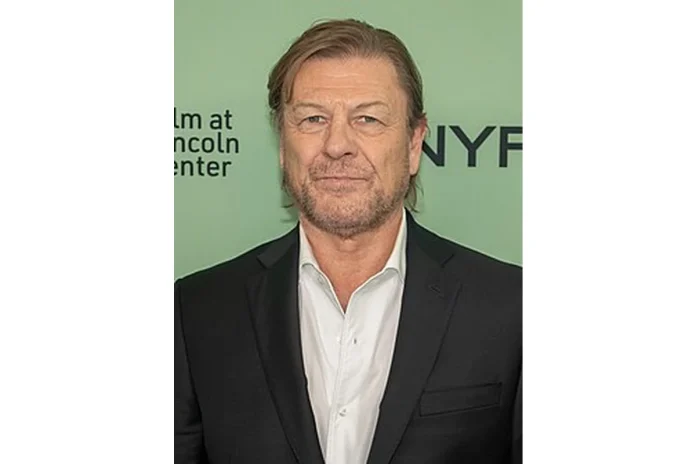
Sean Bean Bio
Shaun Mark Bean is an English actor known for his versatility across stage, film, and television. After graduating from the Royal Academy of Dramatic Art, he made his professional debut in 1983 in Romeo and Juliet at the Watermill Theatre and soon gained mainstream attention as Richard Sharpe in the ITV series Sharpe (1993–1997). Bean’s film breakthrough came with Caravaggio (1986), followed by starring roles in Patriot Games (1992) and GoldenEye (1995). He achieved international fame as Boromir in The Lord of the Rings trilogy and later became a household name for his television work, including Ned Stark in Game of Thrones. He has continued to work across genres, including Time, for which he won a BAFTA Television Award in 2022, and The Martian (2015).
Early Life and Background
Shaun Mark Bean was born on 17 April 1959 in the Handsworth suburb of Sheffield, West Riding of Yorkshire, England. He is the son of Rita (née Tuckwood) and Brian K. Bean. His father owned a fabrication company that employed 50 people, including Bean’s mother, who worked as a secretary. Despite the family becoming relatively wealthy, they remained on the council estate to stay close to friends and family. Bean has a younger sister named Lorraine.
As a child, Bean smashed a glass door during an argument, leaving a piece of glass embedded in his leg that briefly impeded his walking and left a large scar. This injury prevented him from pursuing his childhood ambition of playing football professionally. He attended local schools including Handsworth Junior School, Athelstan School, and Brook Comprehensive School, leaving in 1975 with O levels in Art and English.
After leaving school, Bean worked at a supermarket and for the local council before starting work at his father’s firm. Once a week, he attended Rotherham College of Arts and Technology to study welding. While at college, he discovered an art class that sparked his interest in pursuing acting. After attending courses at two other colleges, he returned to Rotherham College to enroll in a drama course. Following college plays and a performance at Rotherham Civic Theatre, he won a scholarship to the Royal Academy of Dramatic Art, beginning his studies there in January 1981.
Path to Acting
Bean graduated from the Royal Academy of Dramatic Art in 1983 and made his professional acting debut that same year, playing Tybalt in Romeo and Juliet at the Watermill Theatre in Newbury. His early career involved a mixture of stage and screen work. As an actor, he adopted the Irish spelling of his first name, becoming known as Sean Bean. His first national exposure came through a commercial for Barbican non-alcoholic lager.
Between 1986 and 1988, Bean was a member of the Royal Shakespeare Company, appearing in productions of Romeo and Juliet, The Fair Maid of the West, and A Midsummer Night’s Dream. He appeared in his first film, Derek Jarman’s Caravaggio (1986), opposite Tilda Swinton, playing Ranuccio Tomassoni. He also appeared in Jarman’s War Requiem (1988) and had the protagonist role in Stormy Monday (1988), directed by Mike Figgis.
During the late 1980s and early 1990s, Bean established himself as a notable actor on British television. In 1990, he starred in Jim Sheridan’s adaptation of The Field and portrayed the journalist Anton in Windprints, examining apartheid in South Africa. He appeared in BBC productions Clarissa (1991) and Lady Chatterley (1993), with the latter contributing to his emerging image as a sex symbol.
Sean Bean Career
Early Career (1983–1994)
Bean became most closely associated with the character of Richard Sharpe, the maverick Napoleonic Wars rifleman in the ITV television series Sharpe. The series was based on Bernard Cornwell’s novels about the Peninsular War. Starting with Sharpe’s Rifles, the series followed Sharpe’s rise from Sergeant to Lieutenant Colonel by the Battle of Waterloo. Bean was not the first actor chosen for the role; Paul McGann was originally cast but was injured while playing football two days into filming, and Bean replaced him.
The series ran continuously from 1993 to 1997, with three episodes produced each year. It was filmed under challenging conditions, first in Ukraine and later in Portugal. After several years of rumours, more episodes were produced: Sharpe’s Challenge (2006) and Sharpe’s Peril (2008). With his role as Lord Richard Fenton in the TV miniseries Scarlett, Bean made the transition to Hollywood feature films.
Breakthrough (1995–2011)
In 1995, Bean portrayed James Bond’s nemesis Alec Trevelyan (MI6’s 006) in GoldenEye. His rough-cut looks made him a natural choice for villains, and his role in Patriot Games (1992) was the first of several villains he would portray. He also played the weak-stomached Spence in Ronin (1998), a wife-beating ex-con in Essex Boys (2000), and a malevolent kidnapper in Don’t Say a Word (2001).
Bean’s most prominent role came as Boromir in Peter Jackson’s The Lord of the Rings trilogy. His major screen time was in the first instalment, The Fellowship of the Ring, with additional appearances in flashbacks in The Two Towers and The Return of the King. His fear of flying in helicopters caused difficulties during filming in mountainous New Zealand, leading him to sometimes take alternative transport while wearing his full costume.
Following Lord of the Rings, Bean appeared in various films including Equilibrium (2002), National Treasure (2004), Troy (2004), and Flightplan (2005). He played Harry Mason in Silent Hill (2006) and Silent Hill: Revelation (2012). He returned to the stage in 2002 performing in Macbeth in London, with the production running until March 2003 due to popular demand.
Notable Works and Milestones
Bean starred as Ned Stark in the HBO fantasy drama Game of Thrones, adapted from George R. R. Martin’s novels. He and Peter Dinklage were the two actors whose inclusion the show runners considered necessary for the show’s success. His portrayal won him critical praise for portraying Ned as a man who knew he lived in difficult circumstances but hoped for better. HBO’s promotional efforts focused on Bean as the show’s leading man and best-known actor.
Sean Bean Award Nominations
Throughout his career, Sean Bean has received recognition for his performances across film and television. His work has earned him nominations from major award bodies, reflecting his standing as one of Britain’s most accomplished actors.
Sean Bean Awards Won
Sean Bean has received several prestigious awards for his acting work. In 2022, he won the British Academy Television Award for Best Actor for his role in Time, a BBC One drama. He has also received other notable accolades including BAFTA awards for his television work, along with recognition from the Royal Television Society.
| Award | Wins | Year |
|---|---|---|
| BAFTA Television Awards – Best Actor | 1 | 2022 |
| Royal Television Society – Best Actor | 1 | 2012 |
Sean Bean Family
Bean has three children from his previous marriages. He has a total of four grandchildren. He was married to actress Melanie Hill, whom he met at RADA, and they had two daughters together born in October 1987 and September 1991. He also had a daughter with actress Abigail Cruttenden, born in November 1998.
Personal Life
Sean Bean has been married five times. He married his secondary school sweetheart Debra James on 11 April 1981, and they divorced in 1988. He married Melanie Hill on 27 February 1990, and their marriage ended in divorce in August 1997. During the filming of Sharpe, he met actress Abigail Cruttenden, and they married on 22 November 1997; they divorced in July 2000. He began dating actress Georgina Sutcliffe in 2006 and married her on 19 February 2008; they separated in 2010 and their divorce was finalized later that year. Bean married Ashley Moore on 30 June 2017, and they remain married.
Bean has been a fan of Sheffield United since he was eight years old and has a tattoo on his left shoulder that reads “100% Blade.” He opened their Hall of Fame in 2001 and was on their board of directors between 2002 and 2007, making a six-figure contribution to the club’s finances. He also has a tattoo of the number nine on his shoulder, written using Tengwar, in reference to his involvement in The Lord of the Rings films and the fact that his character was one of the original nine companions of the Fellowship of the Ring.