
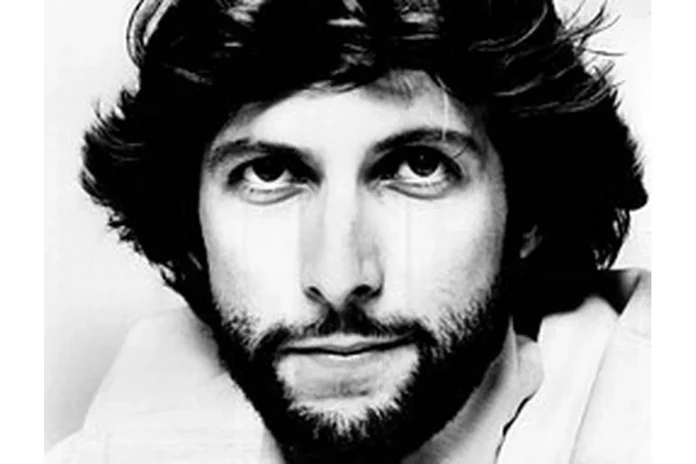
Stephen Bishop Bio
Earl Stephen Bishop (born November 14, 1951) is an American retired singer-songwriter, guitarist, and actor whose career has spanned more than five decades. Best known for the hit singles “On and On,” “It Might Be You,” and “Save It for a Rainy Day,” Bishop built a reputation as a melodic songwriter whose work was widely covered by leading recording artists. He has written songs for performers such as Barbra Streisand, Phil Collins, and Art Garfunkel, and he has contributed both music and acting performances to a series of feature films beginning with National Lampoon’s Animal House.
In addition to his music career, Stephen Bishop established himself as a recognizable screen presence, often appearing in small but memorable roles frequently billed as a “charming” character. He is also recognized for two Academy Award-nominated compositions, including “Separate Lives,” recorded with Phil Collins and Marilyn Martin for the film White Nights.
Early Life and Background
Earl Stephen Bishop was born on November 14, 1951, in San Diego, California, and raised in the same city. He attended Will C. Crawford High School in San Diego, where his interest in music first took shape. Bishop originally played the clarinet before switching to the guitar after watching the Beatles perform on The Ed Sullivan Show. Inspired by that television appearance, he persuaded his brother to buy him a guitar, an instrument that would define his future career.
Growing up in San Diego during the 1960s placed Bishop near the wave of British Invasion acts that dominated American popular music. The sounds he absorbed at home and on television shaped his early songwriting instincts and his eventual interest in soft rock and singer-songwriter storytelling. By his mid-teens, he was ready to put a band together and pursue performing.
Path to Celebrity
In 1967, while still a teenager, Stephen Bishop formed his first group, the Weeds, a British Invasion-style band that performed locally in the San Diego area. After the Weeds eventually folded, Bishop made the move to Los Angeles to seek a solo recording contract. The years that followed were difficult, with Bishop later recalling a long stretch in which he was rejected by nearly every label and producer he approached.
To support himself during that lean eight-year period, Bishop took a $50-a-week job with a music publishing house and continued writing songs. His breakthrough arrived when his friend and fellow songwriter Leah Kunkel passed one of his demo tapes to Art Garfunkel. Garfunkel selected two Bishop songs, “Looking for the Right One” and “The Same Old Tears on a New Background,” for his platinum album Breakaway, and through that connection Bishop secured a recording contract with ABC Records in 1976, launching his career as a recording artist.
Stephen Bishop Career
Early Career (1976-1980)
Stephen Bishop released his first album, Careless, in 1976 on ABC Records, and it quickly established him as a commercial artist. The first single, “Save It for a Rainy Day,” introduced him to a wide audience and reached number 22 on the Billboard singles chart. The follow-up, “On and On,” peaked at number 11, while the album itself rose to number 34 on the Billboard albums chart and eventually went gold.
Bishop’s next album, Bish, arrived in 1978 and also achieved gold certification, anchored by the single “Everybody Needs Love,” which reached number 32. His third album, Red Cab to Manhattan, was released in 1980 and did not chart, marking the end of his initial run of North American releases. Even during this early period, Bishop contributed film music, including songs for National Lampoon’s Animal House in 1978 and The China Syndrome in 1979.
Breakthrough (1982-1989)
Bishop’s profile rose further in 1982 with “It Might Be You,” the theme from the movie Tootsie. Written by Dave Grusin, Alan Bergman, and Marilyn Bergman rather than by Bishop, the song reached number 25 on the charts and earned an Academy Award nomination for Best Original Song, bringing Bishop to the attention of mainstream film audiences. He continued to contribute music and small acting cameos across Hollywood productions throughout the decade.
In 1985, Bishop’s composition “Separate Lives,” performed by Phil Collins and Marilyn Martin for the film White Nights, also received an Academy Award nomination for Best Original Song. He later released the album Bowling in Paris in 1989 with Phil Collins serving as co-producer on several tracks, with contributions from Eric Clapton and Sting. A new version of “Walkin’ on Air” from that album reached number 13 on the Adult Contemporary chart, capping a decade of crossover success.
Notable Works and Milestones
Among Stephen Bishop’s signature achievements are two Academy Award-nominated songs, gold-certified albums, and a string of film themes for motion pictures including Tootsie, White Nights, Micki & Maude, The Boy Who Could Fly, and The Money Pit. He has been publicly cited as a favorite singer-songwriter by Eric Clapton in Clapton’s autobiography. In August 2025, Bishop released his twentieth and final album, THIMK, and announced his retirement from music.
Stephen Bishop Award Nominations
Stephen Bishop has received multiple nominations across his career in songwriting and recording. His most prominent nominations came from the Academy of Motion Picture Arts and Sciences, where “It Might Be You” from the film Tootsie was nominated for Best Original Song in 1982, and “Separate Lives” from White Nights was nominated in the same category in 1985. These nominations reflect Bishop’s standing as a film songwriter during the 1980s.
Stephen Bishop Awards Won
Public records of major industry award wins for Stephen Bishop are limited. His albums Careless (1976) and Bish (1978) both achieved gold certification from the RIAA, marking significant commercial milestones in his recording career.
Stephen Bishop Family
Stephen Bishop was raised in San Diego, California, alongside at least one brother, who purchased his first guitar for him after he saw the Beatles perform on The Ed Sullivan Show. Limited additional information about his parents or siblings is publicly available.
Personal Life
Stephen Bishop is married to Liz Kamlet, who also serves as his manager. The couple married in 2021. In August 2025, Bishop announced his retirement from music following the release of his final album THIMK, expressing his wish to spend more time with his child.