Timothy Hutton Bio
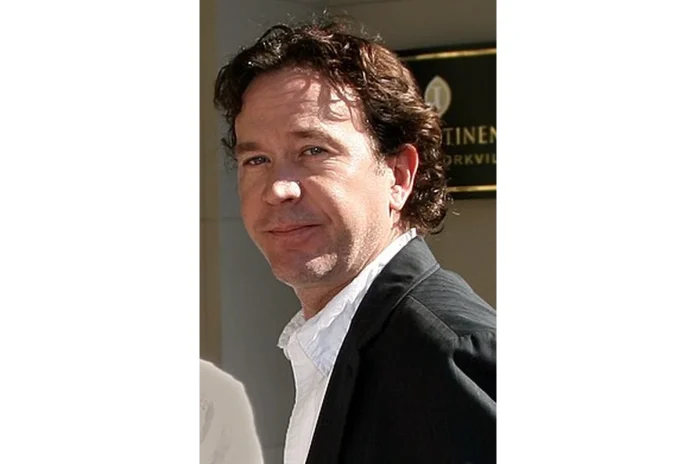
Timothy Hutton (born August 16, 1960) is an American actor and film director whose career has spanned feature films, television, and stage work for more than five decades. He first gained worldwide recognition at age 20, when he became the youngest recipient of the Academy Award for Best Supporting Actor for his role in the drama Ordinary People (1980). Over the following years, Hutton built a versatile résumé that includes the military drama Taps (1981), the spy thriller The Falcon and the Snowman (1985), the horror film The Dark Half (1993), and the ensemble drama Beautiful Girls (1996). In addition to his work in front of the camera, Hutton has directed music videos, feature films, and episodes of television series.
Early Life and Background
Timothy Hutton was born in Malibu, California, to actor Jim Hutton and teacher Maryline Adams, whose maiden name was Poole. His parents divorced when he was three, and his mother relocated with him and his older sister Heidi to Cambridge, Massachusetts, and later to her hometown of Harwinton, Connecticut. The family returned to California when Hutton was twelve. He later moved to Berkeley, where his mother pursued a master’s degree, an experience he has described as far removed from the entertainment industry in which his father was a star.
When Hutton was 15, he reached out to his father and moved in with him in Los Angeles. While attending Fairfax High School, he played Nathan Detroit in a school production of Guys and Dolls, an experience that clarified his interest in acting. With encouragement from both parents, he began taking roles in television. On June 2, 1979, his father died in Los Angeles of liver cancer, only two days after his 45th birthday. Two years later, Hutton thanked his father during his Academy Award acceptance speech.
Path to Acting
Timothy Hutton’s career began with parts in several television movies, beginning as a child performer in the mid-1960s. By 1979, he had appeared in the ABC television film Friendly Fire and the Ross Hunter NBC production The Best Place to Be, in which he played the son of Donna Reed. In 1980, he appeared in two CBS made-for-television films: Young Love, First Love with Valerie Bertinelli, and Father Figure with Hal Linden. That same year, he was cast in his first feature film role, playing Conrad Jarrett in Ordinary People.
For that performance, Hutton won both the Academy Award and the Golden Globe for Best Supporting Actor, and he was also named New Star of the Year in a Motion Picture at the Golden Globes. The success made him one of the most talked-about young actors in Hollywood and opened the door to leading roles in major studio features. His work in Taps (1981) further established him as a serious dramatic talent, sharing the screen with George C. Scott, Sean Penn, and a young Tom Cruise.
Timothy Hutton Career
Early Career (1965–1980)
Hutton began performing in television productions as a child in the mid-1960s, and by the late 1970s he had built a steady résumé of small-screen credits. His early television movies included Friendly Fire (1979) and The Best Place to Be (1979), both of which allowed him to work with established Hollywood talent. These roles served as the training ground that prepared him for his feature film debut.
His first major recognition came with Ordinary People in 1980, a role that won him the Academy Award for Best Supporting Actor, the Golden Globe for Best Supporting Actor, and the Golden Globe New Star of the Year award. Immediately after that success, he starred in the 1981 ABC television film A Long Way Home, co-starring Brenda Vaccaro, reinforcing his standing as one of the most promising actors of his generation.
Breakthrough (1981–1999)
Following his Oscar win, Hutton starred in the military drama Taps (1981) alongside George C. Scott, Sean Penn, and Tom Cruise, a film that was popular with both critics and audiences. The early 1980s brought a series of films, including Iceman, Daniel, Turk 182, Made in Heaven, and Q&A, several of which struggled at the box office. In 1985, he reunited with Sean Penn for The Falcon and the Snowman, a spy thriller based on a true story that received a far more positive reception.
During this period, Hutton also expanded his creative work beyond acting. In 1984, he directed the music video for the song “Drive” by The Cars, and in 1989 he made his Broadway debut in A. R. Gurney’s Love Letters opposite his Ordinary People co-star Elizabeth McGovern. He followed that with another Broadway role in Craig Lucas’s Prelude to a Kiss, alongside Mary-Louise Parker and Barnard Hughes. Throughout the late 1980s and 1990s, he took prominent supporting parts in films such as Everybody’s All-American with Jessica Lange and Dennis Quaid, French Kiss with Meg Ryan and Kevin Kline, and the 1996 ensemble piece Beautiful Girls with Natalie Portman.
Television Stardom and Continued Work (2000–2014)
Between 2000 and 2002, Hutton starred as Archie Goodwin in the A&E drama series A Nero Wolfe Mystery, an adaptation of the Rex Stout novels, while also serving as executive producer and directing several episodes. He also directed the family film Digging to China (1997). In 2001, he starred in the television miniseries WW3, and in 2006 he had a lead role in the NBC series Kidnapped, playing Conrad Cain, the father of a kidnapped teenager. From 2006 to 2008, he appeared in thirteen feature films, maintaining a prolific pace.
From 2008 to 2012, Hutton starred as Nathan “Nate” Ford in the TNT drama series Leverage, leading a group of thieves who acted as vigilantes against corporate and government injustice. In 2014, he was cast opposite Felicity Huffman in John Ridley’s ABC crime drama American Crime. In addition to his on-screen work, Hutton has been involved in other pursuits, including co-owning the New York City restaurant and bar P. J. Clarke’s, serving as president of the New York actors’ club Players from 2003 to 2008, and directing the 2010 music video for “The House Rules” by Christian Kane.
Notable Works and Milestones
Hutton’s signature achievements include his Academy Award-winning performance in Ordinary People, his role in the military drama Taps, and his starring turn in the long-running series Leverage. His work has earned him one Academy Award, two Golden Globe Awards, and a reputation as a versatile actor-director who has worked steadily in film, television, and stage productions across more than five decades.
Timothy Hutton Award Nominations
Throughout his career, Timothy Hutton has received multiple award nominations in recognition of his work in film and television. His early recognition in the 1980s established him as one of the most honored young actors of his generation.
Timothy Hutton Awards Won
Timothy Hutton has won several major awards during his career. His earliest and most prominent honors came in 1981 for his performance in Ordinary People, including the Academy Award for Best Supporting Actor, the Golden Globe for Best Supporting Actor in a Motion Picture, and the Golden Globe New Star of the Year – Male.
| Award | Wins | Year |
|---|---|---|
| Academy Award for Best Supporting Actor | 1 | 1981 |
| Golden Globe Award for Best Supporting Actor – Motion Picture | 1 | 1981 |
| Golden Globe New Star of the Year – Male | 1 | 1981 |
Timothy Hutton Family
Timothy Hutton was born to actor Jim Hutton and teacher Maryline Adams. He has an older sister, Heidi. After his parents’ divorce, Hutton was raised by his mother, first in Cambridge, Massachusetts, then in Harwinton, Connecticut, and later in Berkeley, California. As a teenager, he moved in with his father in Los Angeles. He has two sons: one born in 1987 and another born in 2001.
Personal Life
Timothy Hutton has been married twice. His first marriage, to actress Debra Winger, lasted from 1986 to 1990, and the couple had a son together in 1987. In 2000, he married illustrator Aurore Giscard d’Estaing, the niece of former French president Valéry Giscard d’Estaing. They had a son born in 2001, and the couple separated in 2009. Hutton is also known to have dated several prominent actresses over the years, including Elizabeth McGovern, Diane Lane, Patti Davis, Demi Moore, Mary-Louise Parker, Uma Thurman, and Angelina Jolie.