
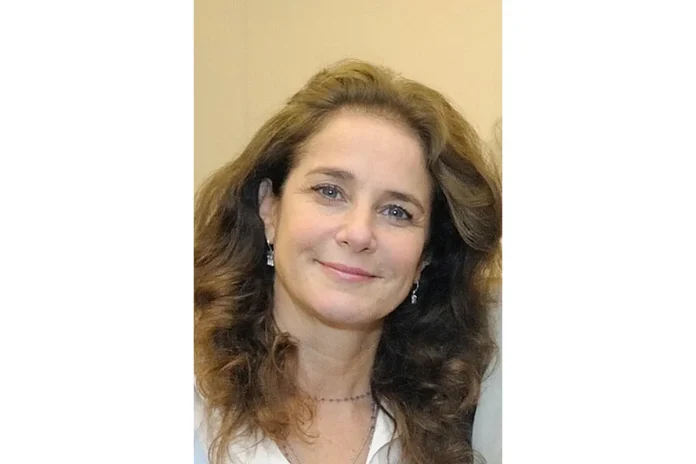
Debra Winger Bio
Mary Debra Winger, known professionally as Debra Winger, is an American actress celebrated for her emotionally raw, naturalistic performances across film, television, and stage. Born on May 16, 1955, in Cleveland Heights, Ohio, she rose to international fame in the early 1980s through a string of critically acclaimed dramas. Her work in An Officer and a Gentleman (1982), Terms of Endearment (1983), and Shadowlands (1993) earned her three Academy Award nominations for Best Actress and established her as one of the defining dramatic actresses of her generation.
Throughout a career marked by bold choices and selective roles, Winger has balanced mainstream Hollywood projects with independent films, documentaries, and stage work. In addition to acting, she has worked as a producer and writer, and has been an outspoken advocate for arts education and Middle East reconciliation. Her performances remain a touchstone for actors drawn to complex, demanding material.
Early Life and Background
Mary Debra Winger was born on May 16, 1955, in Cleveland Heights, Ohio, into a Jewish family. Her father, Robert Winger, worked as a meat packer, and her mother, Ruth Felder, was an office manager. Growing up in the Cleveland area, Winger was raised in a working-class household that valued self-reliance, qualities that would later shape her direct and independent approach to her craft and her public life.
After high school, Winger enrolled at California State University, Northridge, where she began studying criminology and sociology but did not complete a degree. During her college years, she traveled to Israel and spent time on a kibbutz, an experience she later described as formative. At age 18, shortly after returning to the United States, she suffered a serious accident in which she fell off a truck and experienced a cerebral hemorrhage, leaving her partially paralyzed and temporarily blind. The lengthy recovery forced her to reconsider her future, and she resolved that, if she regained her health, she would move to California and pursue acting.
Path to Celebrity
Winger’s first credited screen role came in 1976 with the sexploitation film Slumber Party ’57, in which she appeared under the name “Debbie.” She soon transitioned to television, playing Drusilla, the younger sister of Diana Prince, in three episodes of the ABC series Wonder Woman. Despite the producers’ interest in expanding her role, Winger declined, concerned that being typecast in a television part would limit her opportunities. She followed this with a guest role in the crime drama Police Woman in 1978 and a supporting part in the 1979 coming-of-age film French Postcards.
Her first significant film role arrived with Thank God It’s Friday in 1978, but it was her performance opposite John Travolta in Urban Cowboy (1980) that announced her as a major new talent. Her portrayal of a young woman navigating a turbulent relationship in a Houston honky-tonk community earned her a BAFTA nomination and two Golden Globe nominations, including one for Best New Star. These early credits set the stage for the leading roles that would define the next decade of her career.
Debra Winger Career
Early Career (1976-1981)
Between 1976 and 1981, Winger built her résumé with a mix of television guest spots and small film roles. Following her debut in Slumber Party ’57, she took on the recurring role of Drusilla in Wonder Woman, a part she later admitted to turning down a larger commitment to. Her guest appearance in Police Woman in 1978 introduced her to a wider audience, and the 1978 disco film Thank God It’s Friday gave her a foothold in feature film work.
The turning point of this period was Urban Cowboy (1980), in which she starred opposite John Travolta. The film’s commercial success and her emotionally grounded performance earned her a BAFTA nomination and two Golden Globe nominations, including Best New Star of the Year. These honors positioned her as one of Hollywood’s most promising young leading actresses heading into the 1980s.
Breakthrough (1982-1993)
The years between 1982 and 1993 represented the peak of Winger’s mainstream film career. In 1982, she appeared in two notable films: Cannery Row, opposite Nick Nolte, and the romantic drama An Officer and a Gentleman, in which she starred with Richard Gere. Her performance in An Officer and a Gentleman earned her a nomination for the Academy Award for Best Actress and established her as a defining presence in 1980s Hollywood. Although she famously refused to participate in publicity for the film, her screen work continued to draw praise.
The following year, Winger delivered one of her most celebrated performances in Terms of Endearment (1983), playing a young mother dying of cancer opposite Shirley MacLaine and Jack Nicholson. The role earned her a second Academy Award nomination and, according to verified industry recognition, the National Society of Film Critics Award for Best Actress. She continued to take on challenging material throughout the decade with Legal Eagles (1986), Black Widow (1987), Betrayed (1988), and The Sheltering Sky (1990), the last of which paired her with director Bernardo Bertolucci.
Winger’s third and final Academy Award nomination came for Shadowlands (1993), in which she starred opposite Anthony Hopkins as Joy Davidman. That same year, she earned a Golden Globe nomination for Best Actress for her work in A Dangerous Woman, and she received the Tokyo International Film Festival Award for Best Actress for the same role. By the mid-1990s, after a prolific run of dramatic performances, Winger chose to step back from the film industry, citing frustration with the kinds of roles she was being offered.
Notable Works and Milestones
Winger’s signature work remains Terms of Endearment, a film that earned her the National Society of Film Critics Award for Best Actress and an Academy Award nomination, though her co-star Shirley MacLaine ultimately took home the Oscar. Her body of work from this period, including An Officer and a Gentleman, Betrayed, and Shadowlands, has been widely studied for its emotional honesty and refusal to soften difficult characters. The era cemented her reputation as a fearless performer willing to take on morally complex and physically demanding roles.
Debra Winger Award Nominations
Throughout her career, Debra Winger has received nominations from many of the most respected institutions in the entertainment industry, including the Academy of Motion Picture Arts and Sciences, the British Academy of Film and Television Arts, the Hollywood Foreign Press Association, and the National Academy of Television Arts and Sciences. Her Academy Award nominations for Best Actress, for An Officer and a Gentleman (1982), Terms of Endearment (1983), and Shadowlands (1993), remain the cornerstone of her critical reputation. Beyond these, she has earned BAFTA nominations, multiple Golden Globe nominations, and an Emmy nomination for her work in the television film Dawn Anna (2005).
Debra Winger Awards Won
Debra Winger has been recognized with major critical awards over the course of her career. According to verified records, she won the National Society of Film Critics Award for Best Actress for her performance in Terms of Endearment (1983), and she received the Tokyo International Film Festival Award for Best Actress for A Dangerous Woman (1993). In 2014, she was honored with a lifetime achievement award at the Transilvania International Film Festival, acknowledging her decades-long contribution to international cinema.
| Award | Wins | Year |
|---|---|---|
| National Society of Film Critics Award for Best Actress | 1 | 1983 |
| Tokyo International Film Festival Award for Best Actress | 1 | 1993 |
| Transilvania International Film Festival Lifetime Achievement Award | 1 | 2014 |
Debra Winger Family
Debra Winger was born to Robert Winger, a meat packer, and Ruth Felder, an office manager, in a Jewish family based in Cleveland Heights, Ohio. She was raised alongside siblings in a working-class household, and her parents’ work ethic has been cited as a formative influence on her independent character. Winger’s family background and upbringing in the Midwest are often referenced as the foundation for the grounded, unpretentious quality that defines her public persona.
Personal Life
Winger was married to actor Timothy Hutton from 1986 to 1990, and the couple had a son, Noah Hutton, born in 1987, who has gone on to work as a documentary filmmaker. In 1996, she married actor and director Arliss Howard, whom she met on the set of Wilder Napalm. The couple have a son born in 1997, and Winger is also stepmother to Howard’s son from a previous relationship. Winger has been notably protective of her family’s privacy throughout her decades-long career, and her personal life has remained largely outside the Hollywood spotlight.