
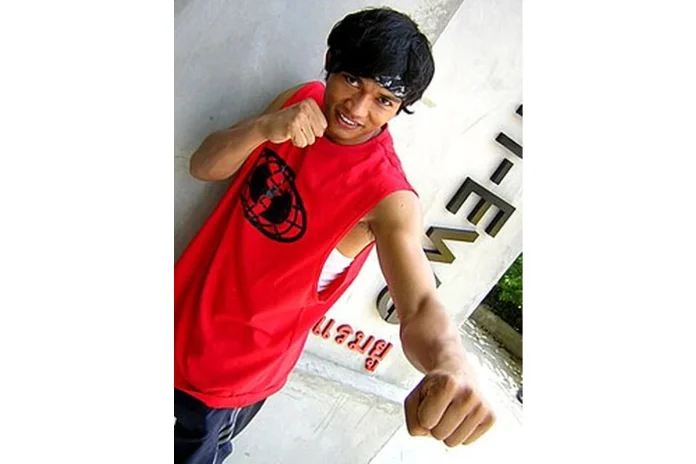
Tony Jaa Bio
Tatchakorn Yeerum, known internationally as Tony Jaa, is a Thai martial artist, actor, action choreographer, stuntman, and director. He first gained worldwide recognition in 2003 for his lead role in the film Ong-Bak, where every stunt was performed without mechanical assistance or computer-generated effects. Over the following decades, he became one of the most recognizable action stars in world cinema and a central figure in popularizing Thai martial arts overseas.
Born on February 5, 1976, in the rural Surin Province of Thailand, Tony Jaa went on to star in Tom-Yum-Goong (2005), Ong Bak 2 (2008), and Ong Bak 3 (2010), the last two of which he also directed. He later expanded into international productions, including Furious 7 (2015) and XXX: Return of Xander Cage (2017). His films have grossed more than $2.7 billion worldwide.
Early Life and Background
Tony Jaa was born on February 5, 1976, in a rural area of Surin Province, Thailand, and raised by his father, Rin Saipetch, and his mother, Thongdee Yeerum. As a child, he watched films starring Bruce Lee and Jackie Chan at temple fairs, and those heroes inspired him to begin practicing martial arts in his father’s rice paddy. He later recalled being struck by the beauty and heroism of their performances and trained until he could recreate their moves exactly.
He began training in Muay Thai at the age of 10 at his local temple and went on to broaden his training in Taekwondo, Muay Boran, Krabi-Krabong, Gymnastics, and Track and Field. His films later showcased additional styles such as Kung Fu, Judo, Aikido, Silat, and Jiu-Jitsu. He also named Jet Li and Donnie Yen among his early inspirations.
He attended Maha Sarakham College of Physical Education in Maha Sarakham Province, where he graduated with a bachelor’s degree. During this period, filmmaker Panna Rittikrai noticed his talent and invited him to try stunt work in film, which set the course for his future career.
Path to Celebrity
Tony Jaa’s entry into film came through Panna Rittikrai, who recruited him as a stuntman for the production company Muay Thai Stunt. He spent roughly fourteen years working as a stunt performer, doubling for martial-arts star Sammo Hung in an energy-drink commercial and appearing in the Thai television series Insee Daeng (Red Eagle). During this time he and Rittikrai trained together in Muay Boran for four years, hoping to build a feature film around their shared passion.
After producing a short demo reel that showcased his abilities, the pair caught the attention of producer-director Prachya Pinkaew. That connection led directly to Ong-Bak (2003), Jaa’s first leading role and the film that introduced him to global audiences. He performed every stunt himself, suffering real injuries such as a ligament strain, a sprained ankle, and burns on his eyebrows, eyelashes, and nose during a scene in which his trousers were set on fire.
The success of Ong-Bak turned Tony Jaa into an international action star almost overnight. He followed it with Tom-Yum-Goong (The Protector) in 2005, which featured a Muay Thai style imitating elephants, and he traveled to New York in August 2006 to promote the U.S. release, appearing at the Museum of the Moving Image. By the late 2000s, his dubbed films were widely shown in theaters and on television across multiple continents.
Tony Jaa Career
Early Career (1994–2002)
Tony Jaa began his professional career in 1994, working as a stuntman for Muay Thai Stunt and appearing in numerous Thai productions under the guidance of Panna Rittikrai. He honed his craft for nearly a decade, doubling for established stars and developing the acrobatic Muay Thai style that would later define his on-screen identity. He also built a working knowledge of Muay Boran and the hybrid style later called Muay Kotchasaan.
During these formative years, Jaa focused on conditioning, choreography, and screen safety, gradually moving from background work to more visible stunt roles. This long apprenticeship laid the foundation for the breakout performance that would arrive at the start of the next decade.
Breakthrough (2003–2010)
Ong-Bak (2003) marked Tony Jaa’s breakthrough, casting him as Ting in a story built around the sacred head of a Buddha statue stolen from his village. The film earned him a Star Entertainment Award and established him as a leading man capable of carrying an action film entirely on the strength of his physical performance.
He reprised elements of his screen persona in Tom-Yum-Goong (2005) as Kham, a role that became iconic for the film’s depiction of Muay Thai inspired by elephants. After a planned project titled Sword was shelved, he and Rittikrai co-directed Ong Bak 2, released in December 2008, with Ong Bak 3 following in 2010 to complete the trilogy.
His rising fame drew the attention of Jackie Chan, who personally recommended Jaa to director Brett Ratner for Rush Hour 3, though scheduling conflicts with Ong Bak 2 kept him from joining the cast. By the end of the decade, Tony Jaa was firmly established as one of the most well-rounded action stars in world cinema.
Notable Works and Milestones
Tony Jaa’s signature work remains Ong-Bak (2003), the film that introduced him to global audiences and earned him a Star Entertainment Award. He later directed and starred in Ong Bak 2 (2008) and Ong Bak 3 (2010), cementing his role not only as a performer but also as a filmmaker. In 2017, he was inducted into the Martial Arts History Museum Hall of Fame, honoring his contribution to martial arts cinema.
Tony Jaa Award Nominations
Tony Jaa has earned recognition across Asian and international film awards circuits, including nominations tied to his breakout work in Ong-Bak and his later Hollywood appearances. Specific totals and categories beyond his verified Star Entertainment Award win have not been fully confirmed.
Tony Jaa Awards Won
Tony Jaa has collected several awards for his on-screen martial arts performances and stunt work. The most widely documented honor from the verified record is a Star Entertainment Award connected to Ong-Bak (2003). In 2017, he was inducted into the Martial Arts History Museum Hall of Fame.
Tony Jaa Family
Tony Jaa was raised in Surin Province by his father, Rin Saipetch, and his mother, Thongdee Yeerum. He grew up in a rural household, where his father’s rice paddy became the unlikely training ground where he first practiced the martial arts moves he had seen in films. His deep family roots in the region shaped the disciplined routine that later carried him into the film industry.
Personal Life
Tony Jaa married his longtime girlfriend, Piyarat Chotiwattananont, in 2011, and the couple has two daughters. Outside of acting, he is widely recognized for popularizing Muay Thai, Muay Boran, and the hybrid system known as Muay Kotchasaan, which he and Panna Rittikrai developed together in 2005.