
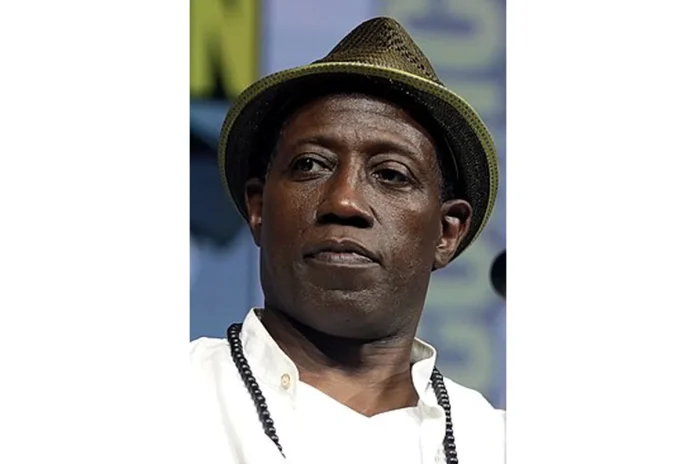
Wesley Snipes Bio
Wesley Trent Snipes (born July 31, 1962) is an American actor, producer, and martial artist whose film career has spanned more than thirty years. He has appeared in thrillers, dramatic feature films, and comedies, but he is best known for his work in action films. Snipes is widely recognized for helping to bring martial arts to mainstream Hollywood and for expanding the representation of Black actors in leading action roles.
Over the course of his career, Snipes has built a filmography that includes both critical favorites and major commercial hits, with his films grossing more than $3.6 billion worldwide. He received an Independent Spirit Award nomination for Best Supporting Male for The Waterdance (1992) and won the Volpi Cup for Best Actor at the Venice Film Festival for One Night Stand (1997). Beyond acting, he is also an author and the founder of the production company Amen-Ra Films.
Early Life and Background
Wesley Trent Snipes was born on July 31, 1962, in Orlando, Florida. He is the son of Wesley Rudolph Snipes, an aircraft engineer, and Marian Long Snipes, a teacher’s assistant. He grew up in The Bronx, one of the five boroughs of New York City, before later returning to Florida.
Snipes began training in martial arts at the age of twelve in 1974, an early discipline that would later shape much of his on-screen career. He attended Fiorello H. LaGuardia High School of Music & Art and Performing Arts in New York but returned to Florida before graduating. He completed his high school education at Jones High School in Orlando.
After finishing high school, Snipes returned to New York and enrolled at the State University of New York at Purchase, where he earned a Bachelor of Fine Arts degree. He also studied at Southwestern College in California, further refining the performance skills that launched his professional acting career.
Path to Acting
Snipes was discovered by an agent at the age of 23 while performing in a competition, which led to his first film role in the 1986 comedy Wildcats, starring Goldie Hawn. That same year, he appeared in a memorable episode of the television series Miami Vice and was featured as a nemesis in Michael Jackson’s 1987 music video Bad, directed by Martin Scorsese. These early appearances quickly positioned him as a rising talent in Hollywood.
His performance in the Bad music video caught the attention of director Spike Lee, who later cast him in major roles. After turning down a small part in Do the Right Thing, Snipes took the role of Willie Mays Hayes in Major League (1989), which became his first major box-office success. He went on to appear in Spike Lee’s Mo’ Better Blues (1990) and Jungle Fever (1991), the crime drama King of New York (1990) with Christopher Walken, and the breakout hit New Jack City (1991), where he played the drug lord Nino Brown in a role written specifically for him.
These early performances established Snipes as a versatile leading man. The Washington Post described him as the most celebrated new actor of the season following the success of Jungle Fever, signaling his transition from promising newcomer to established film star.
Wesley Snipes Career
Early Career (1986-1990)
Wesley Snipes made his film debut in Wildcats (1986) and quickly built momentum with a series of supporting and leading roles in the late 1980s. His appearance in Michael Jackson’s Bad music video introduced him to a wide audience and connected him with director Spike Lee. He followed this with a memorable turn as Willie Mays Hayes in the comedy Major League (1989), which proved to be an early box-office hit.
During this period, Snipes also built his television resume with an appearance on Miami Vice in 1986 and continued to develop his martial arts training, including studies in Shotokan karate and Hapkido. By the end of 1990, he had established himself as a credible dramatic actor in King of New York and Mo’ Better Blues, setting the stage for his breakthrough year.
Breakthrough (1991-2002)
The early 1990s marked Wesley Snipes’s rise to leading-man status. He starred as the drug lord Nino Brown in New Jack City (1991), appeared opposite Anthony Quinn in Jungle Fever (1991), and played an undercover agent in Passenger 57 (1992). He also earned an Independent Spirit Award nomination for his supporting performance in The Waterdance (1992) and paired with Woody Harrelson in the sports comedy White Men Can’t Jump (1992).
Snipes cemented his action-star credentials with a string of high-profile films, including Demolition Man (1993) with Sylvester Stallone, Rising Sun (1993) with Sean Connery, Money Train (1995), and The Fan (1996). In 1997, his dramatic performance in One Night Stand earned him the Volpi Cup for Best Actor at the 54th Venice Film Festival, one of the most prestigious honors in international cinema.
His most defining role came in 1998, when he was cast as Eric Brooks, also known as Blade, in the Marvel Comics-based superhero film Blade. The film was a major commercial success, grossing more than $150 million worldwide, and it led to sequels Blade II (2002) and Blade: Trinity (2004), the latter of which he also produced. He received a star on the Hollywood Walk of Fame and an honorary doctorate in humanities and fine arts from SUNY Purchase in recognition of his contributions to film.
Notable Works and Milestones
Wesley Snipes’s signature role remains Blade, the Marvel vampire hunter he first played in 1998 and reprised in Blade II (2002) and Blade: Trinity (2004). In 2024, he returned to the character in a surprise appearance in Deadpool & Wolverine, a role that reunited him with Ryan Reynolds and earned him two Guinness World Records for the longest career as a live-action Marvel character and the longest gap between character appearances in Marvel films. His action catalog also includes Passenger 57, Demolition Man, and U.S. Marshals, while his dramatic work in The Waterdance, Mo’ Better Blues, and One Night Stand showcased his range as a performer.
Wesley Snipes Award Nominations
Wesley Snipes has received several notable award nominations across his decades-long career in film. He earned an Independent Spirit Award nomination for Best Supporting Male for his performance in the drama The Waterdance (1992). His comedic turn as D’Urville Martin in Dolemite Is My Name also earned him positive reviews and a number of award nominations, further highlighting his range as a performer capable of moving between action, drama, and comedy.
Wesley Snipes Awards Won
Wesley Snipes won the Volpi Cup for Best Actor at the 54th Venice Film Festival in 1997 for his performance in the drama One Night Stand. He was also honored with a star on the Hollywood Walk of Fame and received an honorary doctorate in humanities and fine arts from his alma mater, the State University of New York at Purchase.
Wesley Snipes Family
Wesley Snipes was raised in Orlando, Florida, and The Bronx, New York, by his father, Wesley Rudolph Snipes, an aircraft engineer, and his mother, Marian Long Snipes, a teacher’s assistant. He has a son, Jelani Asar Snipes, born in 1988, from his first marriage to April Dubois. In 2003, Snipes married painter Nakyung Nikki Park, with whom he has four children, bringing his family to five children in total.
Personal Life
Wesley Snipes began training in martial arts at the age of twelve in 1974 and has since earned a 5th degree black belt in Shotokan karate and a 2nd degree black belt in Hapkido. He has also trained in Capoeira under Mestre Jelon Vieira, Kung Fu at the USA Shaolin Temple, Brazilian Jiu Jitsu, kickboxing, and Arnis, disciplines that have shaped his on-screen fighting style. Raised as a Christian, Snipes converted to Islam in 1978 and left the faith in 1988, later saying that Islam had given him a stronger sense of self-worth and connection to African heritage.