John Waters Bio
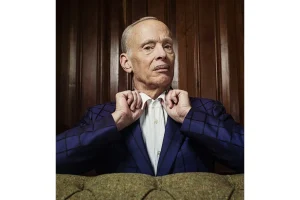
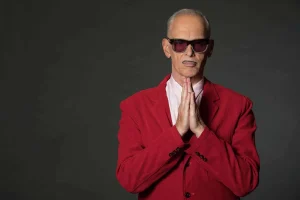
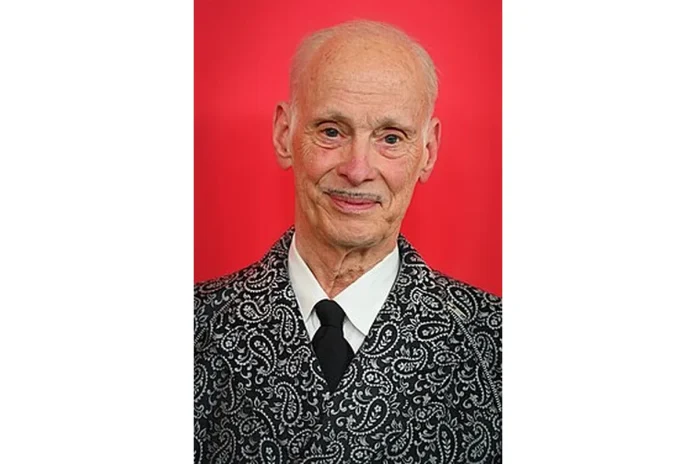
John Samuel Waters Jr. (born April 22, 1946) is an American filmmaker, actor, writer, and artist. He first drew attention in the early 1970s for his transgressive cult films, including Multiple Maniacs (1970), Pink Flamingos (1972), and Female Trouble (1974), and later reached wider audiences with the comedy Hairspray (1988), which was adapted into a hit Broadway musical and a 2007 musical film. His work, often shot in his native Baltimore, blends post-modern comedy with surrealist imagery, and he continues to write, direct, exhibit visual art, and tour one-man shows across the United States.
Early Life and Background
John Samuel Waters Jr. was born on April 22, 1946, in Baltimore, Maryland, one of four children of Patricia Ann Whitaker and John Samuel Waters, a manufacturer of fire-protection equipment. He was raised Catholic by his mother, while his father was not Catholic. Through his mother, who immigrated as a child to the United States from Victoria, British Columbia, Canada, Waters is the third-great-grandson of George P. Whitaker, part of the historic Whitaker iron family.
Waters grew up in Lutherville, Maryland, a suburb of Baltimore, in a house on Morris Avenue that he and his boyhood friend Glenn Milstead, later known as Divine, used as a location for many of their early films, calling the front lawn the Dreamland Lot. He was privately educated at the Calvert School in Baltimore, attended Towson Jr. High School and Calvert Hall College High School, and graduated from the Boys’ Latin School of Maryland. He went on to study at the Maryland Institute College of Art, where his interest in the moving image grew alongside his love of offbeat books and exploitation cinema.
As a child, Waters was captivated by the film Lili, which sparked a fascination with puppets and led him to stage violent Punch and Judy shows at children’s birthday parties. As a teenager, he made frequent trips into downtown Baltimore to loiter outside Martick’s, a beatnik bar where he and Milstead met many of the friends and collaborators who would later become his acting troupe.
Path to Director
Waters’s first short film was Hag in a Black Leather Jacket, made while he was still a student, and it marked the start of a filmography that has continued without pause since 1964. Influenced equally by highbrow art cinema and sleazy exploitation films, he has often said that understanding bad taste requires very good taste. In January 1966, Waters and some friends were caught smoking marijuana on the grounds of New York University, and he was soon kicked out of his dormitory, an event that pushed him back to Baltimore to focus on filmmaking.
Back home, Waters completed a run of short films, including Roman Candles and Eat Your Makeup, before moving into feature-length work with Mondo Trasho and Multiple Maniacs. He assembled a loose company of local performers known as the Dreamlanders, including Divine, Mink Stole, Cookie Mueller, Edith Massey, David Lochary, and Mary Vivian Pearce, and together they made a string of underground films in and around Baltimore. Pink Flamingos, Female Trouble, and Desperate Living, which Waters labeled the Trash Trilogy, pushed hard at the boundaries of conventional propriety and censorship and made him a cult figure in American cinema.
John Waters Career
Early Career (1964–1980)
Waters began directing in 1964 with Hag in a Black Leather Jacket, and over the next decade he built a body of underground features that established his reputation. The early films Multiple Maniacs (1970), Pink Flamingos (1972), Female Trouble (1974), and Desperate Living (1977) were all shot in the Baltimore area with the Dreamlanders and screened in midnight movie venues around the country. These cult favorites played with exaggerated characters, outrageous situations, and hyperbolic dialogue that would become signatures of his style.
The Trash Trilogy in particular earned Waters a devoted following and made Divine a countercultural icon. Throughout the late 1970s, Waters continued to write, direct, edit, and often serve as his own camera operator, supporting himself and his collaborators with the modest returns from his independent productions.
Breakthrough (1981–Present)
Waters’s 1981 film Polyester starred Divine opposite former teen idol Tab Hunter and was the first time he was not the primary camera operator for his own work, as he began collaborating with local film student David Insley. The film marked a shift toward more accessible storytelling, and the comedies Hairspray (1988), Cry-Baby (1990), Serial Mom (1994), Pecker (1998), and Cecil B. Demented (2000) followed, each retaining his trademark inventiveness while reaching larger audiences.
Hairspray became a Broadway musical that swept the 2003 Tony Awards, and a film adaptation of that stage version was released on July 20, 2007, to positive reviews and commercial success. Cry-Baby, itself a musical, also became a Broadway musical. In 2004, the NC-17-rated A Dirty Shame marked a return to his earlier, more controversial work, and after a mixed reception at the box office it has remained his most recent feature film. He has continued to develop new projects, including a 2022 announcement that he would adapt his novel Liarmouth for Village Roadshow Pictures, though in November 2024 it was reported that the film was no longer happening.
Notable Works and Milestones
Waters is best known for Pink Flamingos, Female Trouble, Hairspray, and Cry-Baby, the last of which introduced actor Johnny Depp to a wider audience. Hairspray remains his signature work, and its journey from 1988 film to Tony-winning musical to a 2007 film adaptation stands as a rare crossover success for an underground director. He was twice nominated for the Grammy Award for Best Spoken Word Album, for his audiobooks Carsick in 2014 and Mr. Know-It-All: The Tarnished Wisdom of a Filth Elder in 2020, and on September 18, 2023, he was honored with a star on the Hollywood Walk of Fame.
John Waters Award Nominations
John Waters has earned a small but notable slate of major nominations across his long career. He received two Grammy Award nominations for Best Spoken Word Album, first in 2014 for his audiobook Carsick and again in 2020 for Mr. Know-It-All: The Tarnished Wisdom of a Filth Elder. He has also been recognized with a range of festival and cultural honors, including the 1999 Filmmaker on the Edge Award at the Provincetown International Film Festival and the 2015 Ted M. Larson Award at the Fargo Film Festival.
John Waters Awards Won
Waters has been recognized with several prestigious honors for his work in film, literature, and the visual arts. In 2017, he received the Timeless Star career achievement award from the Gay and Lesbian Entertainment Critics Association, now known as GALECA, in recognition of a career marked by character, wisdom, and wit. In 2018, he was named an Officier of the French Ordre des Arts et des Lettres, a cultural honor bestowed by the French government. He was honored with a star on the Hollywood Walk of Fame in 2023, and in 2022 the Baltimore Museum of Art named its rotunda after him in recognition of a promised donation of 372 artworks from his personal collection.
John Waters Family
Waters is the third-great-grandson of George P. Whitaker, part of the Whitaker iron family, a connection that runs through his mother, Patricia Ann Whitaker, who immigrated as a child to the United States from Victoria, British Columbia, Canada. He was one of four children raised in a Catholic household by his mother, while his father, John Samuel Waters, worked as a manufacturer of fire-protection equipment. At the 2023 unveiling of his Hollywood Walk of Fame star, Waters brought a photograph of his parents and dedicated the honor to them.
Personal Life
Waters resides primarily in Baltimore, Maryland, where he has set and shot all of his films, while also maintaining apartments in New York City and San Francisco’s Nob Hill and a summer home in Provincetown. As a gay man, he is an avid supporter of gay rights and gay pride. In a 2019 interview, he said that he dislikes publicly discussing his personal life and noted that he had a partner, with both preferring to keep the relationship private.
Waters has been open about his lifelong love of Little Richard’s music, dating back to shoplifting a copy of Lucille in 1957 at age 11, and his signature pencil moustache is an homage to the singer. He has also been candid about past recreational drug use, including marijuana and LSD, and about his struggle to quit smoking cigarettes around 2004, an experience he has called the only regret of his life.